


Navigating the Modern Grid: How Hitachi Energy Power Grids and Advanced Storage Forge a Resilient Future
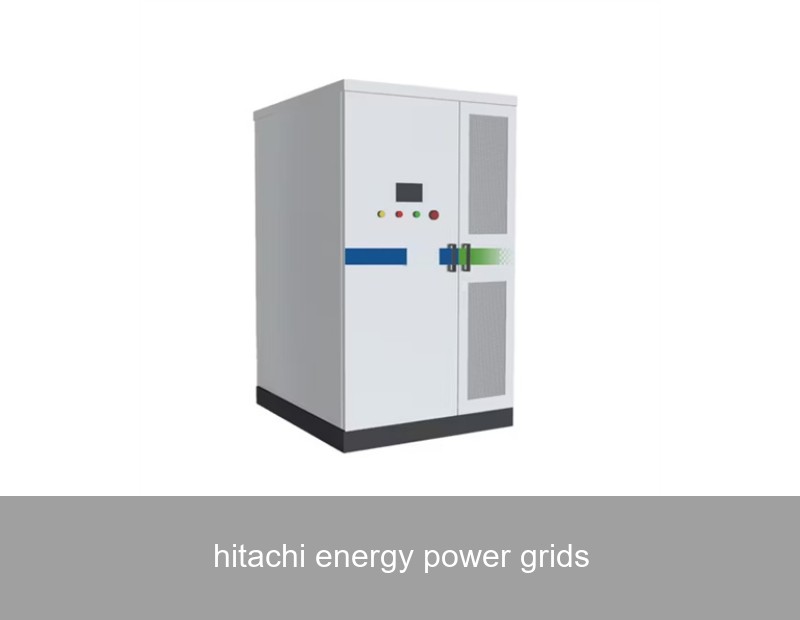
Imagine your local grid not as a one-way street, but as a dynamic, intelligent network. A network where power flows are managed in real-time, renewable energy is seamlessly integrated, and blackouts become a distant memory. This isn't science fiction; it's the evolution of our electrical infrastructure, driven by pioneers in grid technology like Hitachi Energy Power Grids and complemented by the strategic deployment of advanced energy storage systems. For businesses, communities, and entire nations, understanding this synergy is key to unlocking a sustainable and reliable energy future.
Table of Contents
- The Modern Grid Challenge: More Than Just Wires
- The Digital Backbone: Hitachi Energy Power Grids' Role
- The Critical Nexus: Where Hitachi's Grid Meets Advanced Storage
- Case in Point: Grid Stability in Germany's Renewable Heartland
- Highjoule's Intelligent Storage: The Perfect Grid Partner
- Building the Future Grid, Together
The Modern Grid Challenge: More Than Just Wires
Our century-old power grid model is under unprecedented strain. The rapid influx of intermittent solar and wind power, coupled with increasing demand from electrification (think EVs and heat pumps), creates a volatility that traditional grids were never designed to handle. The result? Grid operators face a constant balancing act, sometimes curtailing (wasting) clean energy because the grid can't absorb it, or relying on fossil-fuel peaker plants during periods of high demand or low renewable generation.
This is where the conversation moves beyond generation to grid modernization. It's about building intelligence, flexibility, and resilience into the very fabric of our power networks.
The Digital Backbone: Hitachi Energy Power Grids' Role
When we talk about Hitachi Energy Power Grids, we're referring to a suite of advanced technologies that form the digital nervous system of the modern grid. Their expertise lies in high-voltage equipment, grid automation, and sophisticated software solutions like Energy Portfolio Management (EFM) systems. Think of them as the air traffic controllers for electricity. They provide the hardware and software that:
- Monitor grid health in real-time across vast distances.
- Automatically reroute power to prevent or minimize outages.
- Manage the complex economics of energy trading and dispatch.
- Integrate grid-edge resources like distributed solar farms.
In essence, Hitachi Energy provides the critical "brains" and "arteries" needed to manage power flow. But even the smartest brain needs responsive tools to execute its commands effectively. This is where distributed energy storage becomes indispensable.

Modern grid infrastructure, like substations with digital controls, forms the backbone of a reliable system. (Image: Unsplash)
The Critical Nexus: Where Hitachi's Grid Meets Advanced Storage
This is the most exciting part of the energy transition. A Hitachi Energy Power Grids control system can see a problem coming—say, a forecasted dip in wind power. But to solve it, it needs a fast, reliable, and localized resource. That resource is a battery energy storage system (BESS).
Advanced BESS acts as the grid's "shock absorber" and "power reservoir." It can:
- Provide Frequency Regulation: Inject or absorb power in milliseconds to keep the grid's frequency stable, a service crucial for preventing cascading failures.
- Store Excess Renewable Energy: Soak up surplus solar power at noon and release it during the evening peak, maximizing clean energy use.
- Defer Grid Upgrades: Act as a "virtual power line" in constrained areas, postponing costly infrastructure investments.
- Enhance Resilience: Provide backup power for critical facilities during outages.
The true magic happens when the intelligence of a Hitachi Energy grid platform is directly connected to a fleet of distributed storage systems. The platform can dispatch these batteries as a unified, grid-scale resource, creating a virtual power plant that is more flexible and often cheaper than building a new gas plant.
Case in Point: Grid Stability in Germany's Renewable Heartland
Let's look at a real-world example from Europe. Germany, with its ambitious Energiewende (energy transition), often has days where renewables supply over 50% of its electricity. This high penetration creates significant frequency and voltage control challenges.
In 2021, a major German transmission system operator (TSO) partnered with technology providers to deploy a network of large-scale battery storage systems across its grid. While specific vendor names are often part of larger consortiums, the functional architecture mirrors the synergy we're discussing: the TSO's control center (using advanced systems akin to those from Hitachi Energy Power Grids) sends automatic signals to a distributed network of battery storage units.
The Data-Driven Result: One such project, a 50 MW / 50 MWh battery system in Schleswig-Holstein, successfully provides primary frequency regulation. It responds to grid frequency deviations within seconds, helping to stabilize the network against the fluctuations from nearby wind farms. According to a report by the Fraunhofer Institute for Solar Energy Systems, battery systems in Germany provided over 1,000 MW of primary control reserve capacity in 2023, becoming a cornerstone of grid stability. This demonstrates the tangible value of pairing grid intelligence with physical storage assets.
Highjoule's Intelligent Storage: The Perfect Grid Partner
This is where Highjoule's expertise directly intersects with the modern grid ecosystem. As a leading provider since 2005, we don't just supply battery hardware; we deliver intelligent, grid-aware storage solutions designed to communicate and respond to the needs of both the grid and our clients.
Our H-Series Commercial & Industrial (C&I) and Utility-Scale Storage Systems are engineered with the grid in mind. They feature advanced grid-forming inverters that can "black start" or help stabilize a weak grid, a feature increasingly requested by utilities. Our integrated energy management system (EMS) is built to receive and act on signals from grid operators or third-party aggregators, making our systems ideal partners for the advanced control platforms developed by companies like Hitachi Energy.
For a manufacturing plant in Texas or a solar farm in Spain, a Highjoule system isn't just about backup power or energy arbitrage. It's about becoming an active, revenue-generating participant in the grid. By stacking services—like combining peak shaving with frequency response—our clients maximize their investment return while providing a critical service to their community's grid resilience.

Engineers monitoring a large-scale battery storage installation, a key asset for modern grid services. (Image: Unsplash)
Practical Applications for Your Business
| Grid Challenge | Hitachi Energy (Grid-Side Solution) | Highjoule Storage (Customer/Asset-Side Solution) | Joint Outcome |
|---|---|---|---|
| Voltage Fluctuations from Solar | Advanced distribution management system (ADMS) detects voltage rise. | Highjoule BESS at the substation or commercial site absorbs excess power. | Stable voltage, more solar can be connected, fewer customer complaints. |
| Need for Fast Frequency Response | Grid control platform procures frequency regulation services. | Fleet of Highjoule C&I systems responds automatically to frequency signals. | Enhanced national grid stability, new revenue stream for businesses. |
| Congestion on Transmission Lines | Grid software identifies congestion points. | Utility-scale Highjoule storage is deployed downstream of congestion, acting as a "virtual wire." | Deferred multi-million dollar grid upgrade, faster renewable integration. |
Building the Future Grid, Together
The path to a decarbonized, reliable power system is not a single technology race. It's a symphony of interoperable solutions. Hitachi Energy Power Grids provides the masterful conductor and the sheet music—the overarching intelligence and critical infrastructure. Companies like Highjoule provide the versatile, responsive instruments—the intelligent storage systems—that bring the performance to life, turning a potentially chaotic ensemble into a harmonious one.
For forward-thinking businesses, utilities, and communities, the question is no longer if you should engage with this new energy paradigm, but how. The technology is proven, the economic models are maturing, and the need for grid resilience has never been clearer.
Is your organization ready to explore how intelligent energy storage can future-proof your operations, create new revenue, and contribute to a more stable grid for everyone?
 Inquiry
 Online Chat