


How an Energy Storage Cabinet for the Grid is Revolutionizing Power Management
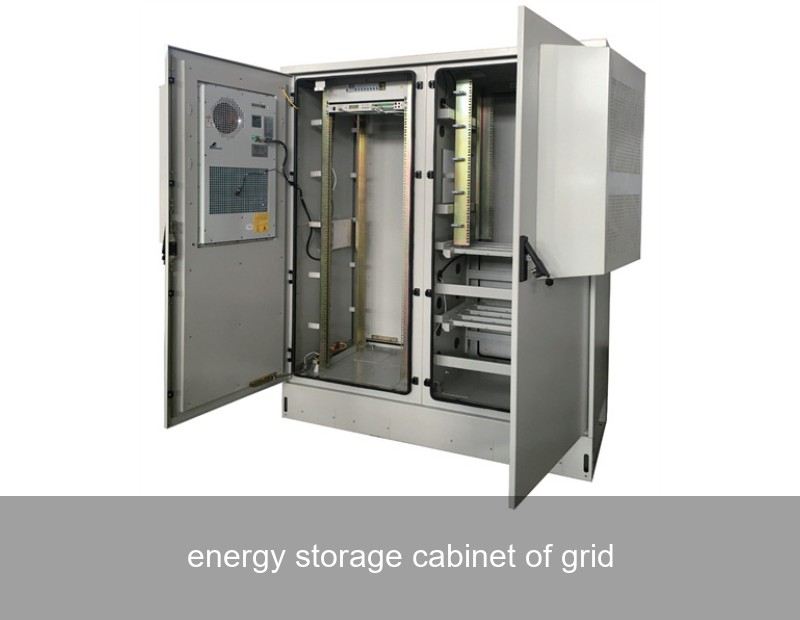
Imagine your local electricity grid as a busy highway. During rush hour, it's congested, stressed, and inefficient. Now, imagine adding smart, flexible lanes that can expand and contract based on traffic. That's precisely what an energy storage cabinet for the grid does for our power networks. These modular, containerized systems are no longer just backup power; they are active, intelligent assets transforming how we generate, distribute, and consume electricity. For grid operators, utilities, and large energy consumers, understanding this technology is key to building a resilient and sustainable energy future.
Table of Contents
The Modern Grid's Critical Challenge: Intermittency and Peak Demand
Our energy landscape is shifting rapidly. The surge in renewable energy, primarily solar and wind, is a triumph for sustainability. However, it introduces a fundamental issue: intermittency. The sun doesn't always shine, and the wind doesn't always blow, creating mismatches between supply and demand. Furthermore, peak demand periods—like hot summer afternoons when air conditioners are maxed out—put immense strain on traditional grid infrastructure, often requiring the activation of expensive and polluting "peaker" plants.
The data underscores this volatility. According to the International Energy Agency (IEA), global renewable capacity is set to grow by almost 2,400 GW between 2022 and 2027. This phenomenal growth makes the need for flexible storage solutions not just beneficial but essential for grid stability. Without a buffer, this clean energy can go to waste or even destabilize the network.

This is where the grid-scale energy storage cabinet enters the scene. It acts as a shock absorber and a strategic reservoir, smoothing out the bumps of renewable generation and providing power exactly when and where it's needed most.
What is a Grid-Connected Energy Storage Cabinet?
Think beyond a simple battery. A modern energy storage cabinet for the grid is a fully integrated, plug-and-play power system. It typically houses lithium-ion battery racks, a thermal management system, power conversion systems (PCS), and a sophisticated energy management system (EMS) all within a secure, standardized enclosure. These cabinets can be deployed singly for smaller applications or combined in arrays to create multi-megawatt storage farms.
Its core function is bidirectional: it stores excess electricity from the grid or renewable sources (charging) and dispatches it back to the grid during shortages (discharging). This cycle can happen in milliseconds, providing services that were previously impossible.
Primary Applications on the Grid:
- Frequency Regulation: Maintaining the grid's delicate balance of supply and demand at 50/60 Hz.
- Peak Shaving: Reducing demand on the grid during high-cost peak periods by discharging stored energy.
- Renewable Integration: Storing surplus solar/wind energy and releasing it when generation drops.
- Grid Deferral: Postponing or eliminating the need for costly upgrades to transformers and transmission lines.
- Backup Power & Resilience: Providing critical backup during outages for essential services or industrial processes.
Key Benefits of Deploying Storage Cabinets
Why are utilities and large commercial entities investing heavily in this technology? The advantages are multidimensional.
| Benefit Category | Description | Impact |
|---|---|---|
| Economic | Reduces peak demand charges, avoids costly grid infrastructure upgrades, and generates revenue through grid service markets. | Lower operational expenditure (OPEX) and new income streams. |
| Reliability | Provides instantaneous response to grid disturbances, enhancing stability and power quality for end-users. | Fewer outages, reduced downtime for businesses, higher grid resilience. |
| Sustainability | Enables higher penetration of renewable sources, reducing reliance on fossil-fuel-based peaking plants. | Direct reduction in carbon emissions and support for net-zero goals. |
| Scalability & Flexibility | Modular design allows for capacity to be added incrementally as needs evolve, with flexible siting. | Future-proof investment that can adapt to changing energy profiles. |
A Real-World Case Study: Stabilizing a Regional Grid in Germany
Let's look at a concrete example from Europe. A regional grid operator in Germany was facing significant challenges with frequency volatility due to a high concentration of wind power in its northern region. Sudden drops in wind generation were causing frequency dips, threatening automatic load-shedding events.
The Solution: The operator deployed a 12 MW / 24 MWh battery energy storage system (BESS) comprised of multiple, high-power energy storage cabinets at a strategic substation. This system was specifically configured for fast frequency response (FFR).
The Data-Driven Outcome: Since commissioning, the system has achieved remarkable results:
- Response Time: The cabinets can go from standby to full power output in under 100 milliseconds, far faster than any conventional generator.
- Frequency Stabilization: The system has successfully arrested over 95% of critical frequency deviations in its service area.
- Renewable Utilization: It has allowed the grid to safely integrate an additional 8% of wind energy capacity without risking stability.
This case, documented in part by the Energy Storage News network, highlights how storage cabinets are not just theoretical tools but are actively solving real grid problems today, enabling the clean energy transition.

The Highjoule Solution: Intelligent Storage for Demanding Grids
At Highjoule, with nearly two decades of experience since 2005, we've moved beyond simply supplying batteries. We engineer intelligent grid assets. Our GridMax™ Series of energy storage cabinets is designed specifically for the rigors of utility and large-scale commercial applications.
What sets the GridMax™ cabinet apart is its deeply integrated NeuroGrid AI Management Platform. While the hardware provides the muscle—featuring industry-leading cell safety, active liquid cooling, and a 20-year design life—the software provides the brain. NeuroGrid uses predictive algorithms to optimize every charge and discharge cycle not just for immediate revenue, but for long-term battery health and maximum return on investment.
"We see our cabinets as active participants in the grid ecosystem," says a Highjoule product lead. "A GridMax installation isn't just storing energy; it's constantly analyzing market prices, grid frequency, weather forecasts for renewables, and even the battery's own degradation curve to make the most profitable and stabilizing decision every second of the day."
Our services encompass everything from initial feasibility studies and system design to long-term performance monitoring and maintenance, ensuring our clients' energy storage cabinets deliver value for their entire operational lifespan.
Highjoule GridMax™ Cabinet Core Features:
- Ultra-Fast Response: Sub-100ms ramp rate for critical grid services.
- AI-Powered Optimization: NeuroGrid platform for dual optimization of economics and asset health.
- Enhanced Safety: Multi-level protection system (electrical, thermal, environmental) with passive safety design.
- Plug-and-Play Scalability: Modular design allows easy expansion from 500 kW to 100+ MW projects.
The Future Outlook for Grid Storage
The trajectory is clear. As noted by research from sources like the National Renewable Energy Laboratory (NREL), the need for grid-scale storage is projected to grow exponentially this decade. We will see energy storage cabinets evolve with new battery chemistries like sodium-ion for lower cost and longer duration, and deeper integration with distributed energy resources (DERs) to form virtual power plants (VPPs).
The question for grid operators and large energy users is no longer if they should consider storage, but how to integrate it strategically into their assets. The technology has proven its worth in reliability, sustainability, and economics.
Considering a Grid Storage Project?
What specific grid constraint or energy cost is your organization looking to solve—is it peak demand charges, renewable curtailment, or the need for enhanced resilience? Identifying your primary driver is the first step toward designing a storage solution that delivers measurable results.
 Inquiry
 Online Chat