


Understanding Energy Storage Cabinet Price in Nigeria: A Guide to Smart Investment
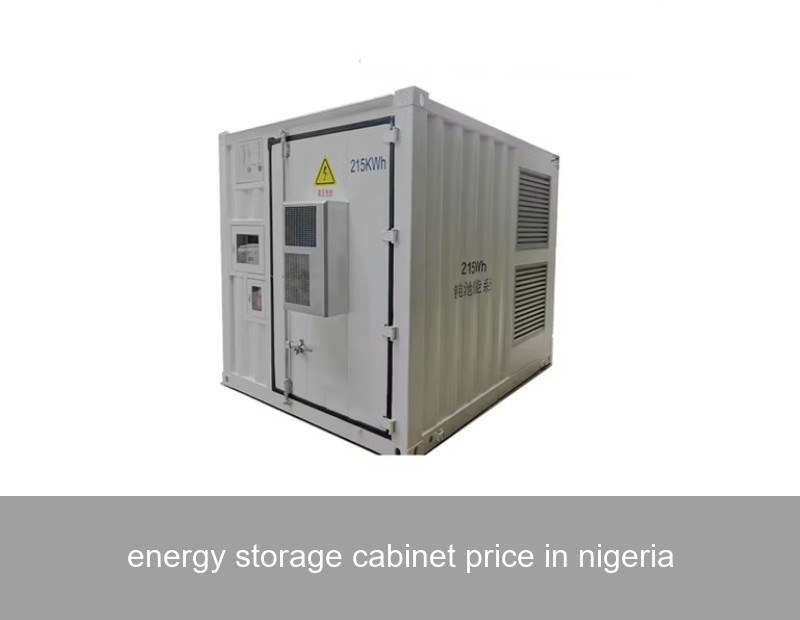
If you're exploring the energy storage cabinet price in Nigeria, you're likely looking beyond the initial cost. You're investing in a solution for unreliable grid power, soaring diesel expenses, and the need for sustainable business continuity. The price tag is just one piece of the puzzle; value, reliability, and total cost of ownership are what truly matter. This article will demystify the factors influencing energy storage system costs in the Nigerian context and guide you toward a smarter, more resilient power investment.
Table of Contents
- The Real Cost Beyond the Price Tag
- Key Factors Determining Energy Storage Cabinet Price
- Case Study: A Lagos Business Transformation
- The Highjoule Solution: Engineered for Demanding Markets
- Calculating Your True ROI
- Your Path to Energy Independence
The Real Cost Beyond the Price Tag: Capex vs. Opex
In markets like Nigeria, the conversation around energy storage must shift from simple cabinet pricing to holistic value analysis. The capital expenditure (CAPEX) for the physical cabinet, batteries, and inverters is visible. However, the operational expenditure (OPEX)—the ongoing cost of running diesel generators, maintenance, fuel theft, and productivity losses during outages—is often the heavier burden. A quality energy storage system, particularly when paired with solar, directly attacks these OPEX costs, turning a power expense into a long-term asset.
Key Factors Determining Energy Storage Cabinet Price in Nigeria
Why is there such a wide range when you request a quote? Several core components drive the final price.
1. Battery Technology and Chemistry
The battery is the heart of the system and the largest cost driver. You'll primarily encounter two types:
- Lithium Iron Phosphate (LFP): This is the current industry standard for commercial/industrial storage. LFP batteries offer excellent cycle life, superior thermal and chemical stability (enhancing safety), and are less prone to degradation. While the upfront energy storage cabinet price might be higher than lead-acid, the lifetime cost is significantly lower.
- Lead-Acid: A lower initial entry point, but with a much shorter lifespan (2-5 years vs. 10-15+ for LFP), deeper maintenance requirements, and poorer performance for daily cycling. For frequent, deep discharges common in Nigeria, LFP is overwhelmingly the more economical long-term choice.

Image: Modern LFP battery modules, the core of a durable storage system. (Source: Unsplash)
2. System Capacity and Power Rating
This is straightforward: How much energy do you need to store (kWh), and how fast do you need to pull it out (kW)? A small retail shop's needs differ vastly from a manufacturing plant or a hospital. A proper energy audit is crucial to right-sizing your system. Oversizing inflates cost, while undersizing leads to disappointment and reliance on backup generators.
3. Inverter and Power Conversion System (PCS)
The inverter manages energy flow between the grid, solar panels, batteries, and your loads. Its efficiency, grid-forming capabilities (essential for operating independently from the grid), and robustness directly impact performance and price. A high-quality inverter ensures maximum usable energy from every naira spent on batteries and solar panels.
4. Thermal Management and Enclosure
Nigeria's climate is a key design factor. Effective thermal management (cooling systems) within the cabinet is non-negotiable for battery longevity and safety. A well-engineered cabinet with IP54 or higher rating protects components from dust and moisture. This built-in resilience, a hallmark of global providers like Highjoule, adds to the initial cost but prevents costly failures.
5. Intelligence and Software
Can your system intelligently decide when to charge from the grid or solar, when to discharge, and when to conserve energy? Advanced Energy Management Systems (EMS) optimize for cost-saving and performance. This "smart" layer, often overlooked in basic energy storage cabinet price comparisons, is what delivers the promised ROI.
Case Study: A Lagos Manufacturing Facility's 60% Diesel Cost Reduction
Let's look at real data. A medium-sized plastic manufacturing company in Ikeja, Lagos, faced an average of 8 hours of grid outage daily. They relied on a 500kVA diesel generator, spending approximately ₦25 million monthly on fuel, maintenance, and ad-hoc repairs.
In 2023, they deployed a hybrid solar-plus-storage solution featuring a Highjoule H-Cube 500 industrial energy storage cabinet. The system included:
- 500kWh LFP battery capacity
- 250kW hybrid inverter with grid-forming capability
- 300kWp rooftop solar PV
- Highjoule's proprietary EMS for predictive load management
| Metric | Before Installation | After Installation |
|---|---|---|
| Monthly Diesel Cost | ~₦25 Million | ~₦10 Million |
| Generator Runtime | 18-24 hours/day | 6-8 hours/day (peak backup only) |
| Carbon Emissions | ~120 tonnes/month | ~45 tonnes/month |
| Payback Period | N/A | Estimated 3.8 years |
The project's success hinged on a system engineered for high-ambient temperatures and volatile grid conditions, proving that the right technology delivers rapid, measurable returns. You can explore more on the critical role of storage in emerging grids from the International Energy Agency (IEA).
The Highjoule Solution: Engineered for Demanding Markets
With nearly two decades of experience since 2005, Highjoule designs its energy storage solutions with markets like Nigeria in mind. Our products are not just cabinets; they are integrated power resilience platforms.
Our H-Cube Commercial & Industrial Series directly addresses the factors that determine energy storage cabinet price and long-term value:
- Market-Proven LFP Technology: We use tier-1 LFP cells with a design life exceeding 6,000 cycles, ensuring the cabinet outlasts cheaper alternatives.
- All-Climate Robustness: Built-in liquid cooling or advanced forced-air systems maintain optimal battery temperature even in 45°C+ ambient heat, a feature not found in all imported systems.
- Grid-Forming Inverters: Our systems can create a stable, independent microgrid, seamlessly powering your facility when the public grid fails—without a flicker.
- Intelligent EMS: Highjoule's software allows for multiple operational modes (e.g., peak shaving, solar self-consumption maximization, backup priority) to adapt to tariff changes and fuel prices, maximizing savings.
For developers and large-scale projects, our containerized BESS solutions offer multi-megawatt-hour storage, turning entire sites toward renewable energy independence. Learn how advanced battery management is key to safety and performance from resources like ScienceDirect.

Image: A containerized BESS solution, scalable for large commercial and industrial needs. (Source: Unsplash)
Calculating Your True ROI: More Than Just Naira per kWh
When evaluating quotes, build a simple TCO model:
- Initial System Price: Include cabinet, batteries, inverters, installation, and commissioning.
- Annual Savings: Projected reduction in diesel/generator costs, reduced grid consumption during peak tariff hours, and lowered maintenance.
- System Lifetime: A quality LFP system should deliver stable performance for 10+ years. Divide the net cost (initial price minus incentives) by the total kWh it will deliver over its life for a true "levelized cost of storage."
- Intangible Value: What is the cost of a production halt due to power failure? Or lost data? Reliable power has a direct impact on revenue and reputation.
The U.S. National Renewable Energy Laboratory provides excellent frameworks for understanding energy storage valuation, principles that apply globally.
Your Path to Energy Independence
The journey to securing stable, affordable power begins with the right questions. Instead of asking only "What is the energy storage cabinet price in Nigeria?", consider asking your potential supplier: What is the projected lifecycle cost per kWh? Can your system's EMS be configured for Nigeria's specific grid and fuel conditions? What is the track record of your installed systems in similar high-temperature, high-cycle environments?
Highjoule's team of experts is ready to help you analyze your load profile, simulate savings, and design a system that turns your energy challenges into a competitive advantage. What would a 40-60% reduction in your monthly energy spend do for your business's bottom line and growth potential?
 Inquiry
 Online Chat