


Paneles Solares para Motores Eléctricos: Uniting Solar Power and Electric Mobility
You've made the switch to an electric vehicle (EV). The quiet ride, instant torque, and zero tailpipe emissions are fantastic. But then, your electricity bill arrives, and a new question emerges: "Am I just moving my energy costs and carbon footprint from the gas pump to the power grid?" This is a common phenomenon for eco-conscious drivers. The solution? Directly powering your electric motor—be it in your car, boat, or industrial equipment—with the sun. Paneles solares para motores eléctricos (solar panels for electric motors) represent the next logical step in sustainable energy, creating a truly closed-loop, clean transportation and operation system. This article explores how this synergy works, its tangible benefits, and how advanced energy storage is the critical component making it all possible.
The Perfect Synergy: Solar + Electric Motors
At their core, both technologies are inherently efficient and complementary. An electric motor converts over 90% of the electrical energy it receives into motion, compared to about 30% for a typical internal combustion engine. Solar panels convert sunlight into direct current (DC) electricity with ever-increasing efficiency. Pairing them seems like a match made in sustainability heaven.
But the relationship goes beyond simple efficiency. Consider the data:
- Cost Reduction: The International Renewable Energy Agency (IRENA) reports that solar PV costs have fallen by over 80% in the last decade. Generating your own fuel (sunlight) locks in long-term, predictable energy costs, insulating you from utility price volatility.
- Carbon Elimination: While an EV charged from a coal-heavy grid reduces local emissions, a solar-charged EV virtually eliminates the lifecycle carbon footprint of your mobility. It's a full-circle clean energy solution.
- Energy Independence: This combination allows you to operate electric motors in remote locations—for agricultural equipment, boating, or off-grid cabins—without relying on diesel generators or lengthy power lines.

Image: Solar carports are a prime example of integrating paneles solares para motores eléctricos into infrastructure. Source: Unsplash.
The Missing Link: Why You Can't Just Plug and Play
Here’s the catch: solar panels produce power intermittently (when the sun shines), and your electric motor needs power on demand (when you need to drive or operate). You can't reliably charge your EV directly from a solar panel without an intermediary system. This mismatch in timing and power delivery is the central challenge.
Furthermore, a typical home EV charger (Level 2) requires about 7-11 kW of power. A residential solar array might produce 5-8 kW at peak sun. If your car is charging during a cloudy moment, you'll draw from the grid. If it's sunny but your car isn't plugged in, you'll export excess solar energy. This is where the true magic happens: intelligent battery storage.
The Heart of the System: Intelligent Battery Storage
A Battery Energy Storage System (BESS) acts as the essential buffer and manager. Think of it as a sophisticated energy reservoir. Your solar panels fill the reservoir, and you draw from it to power your motor whenever needed, day or night.
An advanced BESS, like those developed by Highjoule, does much more than just store energy. It intelligently manages energy flows based on your habits, electricity rates, and solar production. For example, it can:
- Prioritize charging itself with excess solar during the day.
- Dispatch that stored energy to charge your EV overnight.
- Provide backup power to your home or facility in an outage, potentially keeping your EV charger operational.
- Participate in grid services (in some regions), turning your system into a revenue-generating asset.
| Scenario | Energy Source | Cost Control | Carbon Impact | Grid Independence |
|---|---|---|---|---|
| Grid-Only Charging | Utility Mix (Coal, Gas, Renewables) | Low | Medium-Low | None |
| Solar + Direct EV Charging (Daytime) | Solar Only | High | Very Low | Partial (Daytime) |
| Solar + Battery + EV Charging (Anytime) | Solar First, Grid as Backup | Very High | Lowest | High |
A Real-World Case Study: The Solar-Powered Marina in Southern Spain
Let's move from theory to practice. A marina on the Costa del Sol faced rising operational costs and pressure to reduce its environmental impact on the pristine local waters. Their goal: power electric boat hoists, shore power for electric yachts, and small service vehicles using renewable energy.
The Challenge: Boats need to be lifted in and out of the water on demand, requiring high, instantaneous power. Solar production is variable, and grid power was expensive and carbon-intensive.
The Solution: The marina installed a 120 kW rooftop solar array paired with a 240 kWh Highjoule C&I (Commercial & Industrial) battery storage system. The system was integrated with smart energy management software.
The Data & Results (after 12 months):
- Self-Consumption of Solar: Increased from 35% (without storage) to over 85%.
- Cost Savings: Reduced electricity costs from grid consumption by 72% for the targeted operations.
- Reliability: The battery system provides seamless power for the hoist motors, even during brief grid fluctuations, enhancing safety.
- Emission Reduction: Estimated annual CO2 reduction of 18 metric tons, equivalent to taking 4 gasoline cars off the road.
This case perfectly illustrates the application of paneles solares para motores eléctricos in a demanding commercial setting. The electric motors for the hoists and vehicles are now predominantly powered by the sun, thanks to the stabilizing and storing force of the battery system.
Integrated Solutions: How Highjoule Powers This Transition
As a global leader in advanced energy storage since 2005, Highjoule understands that the future of energy is integrated and intelligent. Our products are designed to be the cornerstone of systems that link solar generation to electric motor applications, whether for a home garage, a factory floor, or a microgrid.
For residential customers looking to power their EVs and home, the Highjoule Home Energy Hub is a seamlessly integrated system. It combines a high-cycle life lithium-ion battery, a hybrid inverter, and sophisticated energy management in one unit. It automatically optimizes when to store solar energy, charge your car, power your home, or export to the grid, maximizing your investment in paneles solares para motores eléctricos.

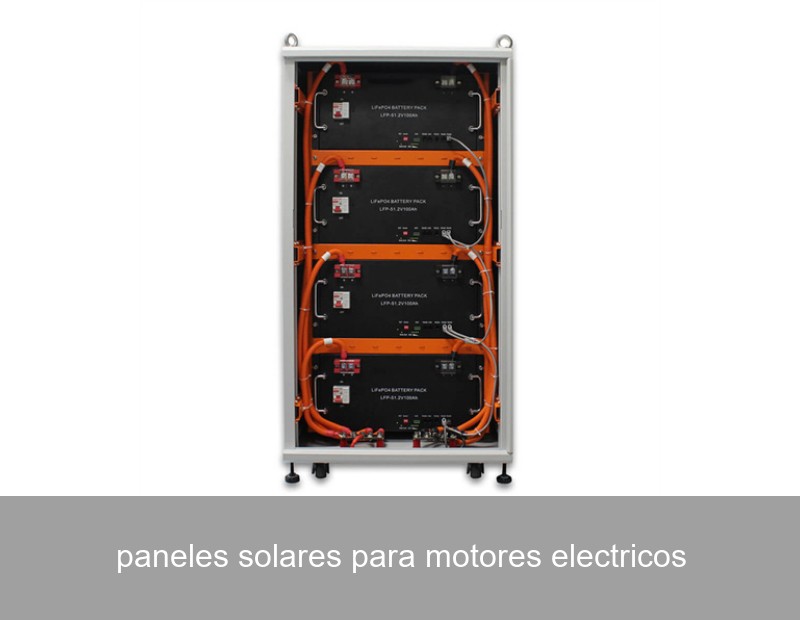
Image: A commercial battery storage system, similar to Highjoule's C&I solutions, enabling large-scale solar integration. Source: Unsplash.
For commercial and industrial applications, like the Spanish marina, our Highjoule C&I Modular Rack Systems offer scalable power and capacity. They are engineered for durability, safety, and easy integration with existing solar PV and building management systems. This allows businesses to electrify their vehicle fleets, machinery, and processes with clean, affordable, and reliable solar power.
Our expertise lies not just in hardware but in delivering a complete smart, efficient, and sustainable power solution. We work with certified installers to ensure your solar, storage, and EV charging infrastructure work in perfect harmony.
How to Get Started with Your Solar-Powered Motor System
Embarking on this journey requires careful planning. Here is a logical step-by-step approach:
- Energy Audit: Assess the energy needs of your electric motor(s). For an EV, review your monthly kWh consumption from driving. For industrial equipment, check motor power ratings and daily runtime.
- Solar Potential: Evaluate your site's solar potential. Tools like PVGIS from the European Commission provide accurate solar yield estimates for your location.
- System Sizing: A qualified installer (like Highjoule's partner network) will size your solar array and battery storage to meet your desired level of self-sufficiency and power demand. The battery is key to bridging the gap between solar production and motor usage.
- Technology Selection: Choose compatible, high-quality components. Ensure your battery storage system, like those from Highjoule, has the power rating (kW) to deliver enough current for your motor and sufficient capacity (kWh) to cover your needs.
- Smart Integration: Implement an energy management system that can intelligently coordinate between solar production, battery state-of-charge, motor charging schedules, and grid interaction.
The convergence of solar power and electric motors is more than a trend; it's the blueprint for truly sustainable mobility and operations. The technology is proven, the economics are increasingly favorable, and the environmental imperative is clear. By integrating intelligent storage, you move from a partial solution to a comprehensive energy ecosystem.
What's the first electric motor application you would power with your own solar energy, and what level of energy independence are you aiming to achieve?
 Inquiry
 Online Chat