


Energy Storage Materials Journal: The Blueprint for Our Sustainable Power Future
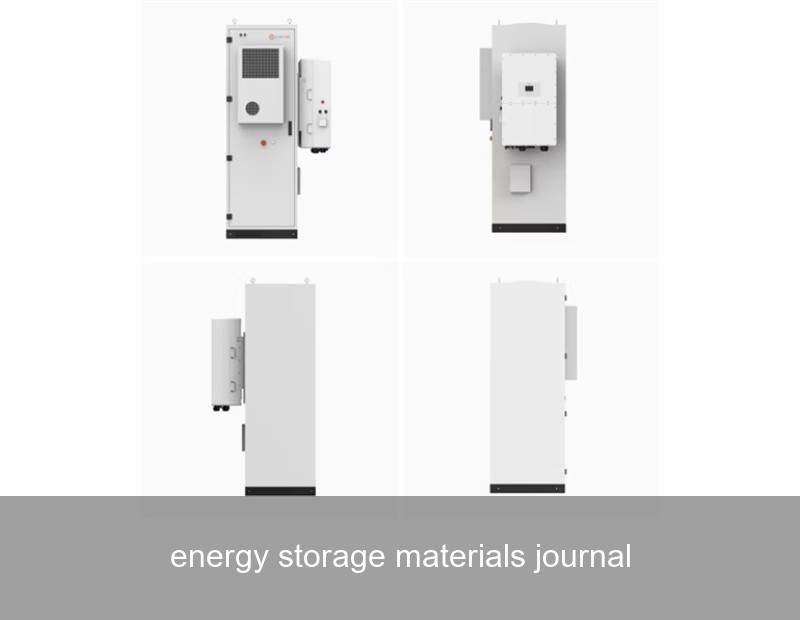
If you're following the energy transition, you've likely heard the buzz about battery technology. But behind every headline-grabbing energy storage system (ESS) lies a less-heralded hero: the advanced materials that make it all possible. This is the domain of the energy storage materials journal – a critical resource where scientists and engineers publish breakthroughs that will define the next generation of power solutions. For industry leaders like Highjoule, a global provider of intelligent ESS since 2005, these journals are more than just academic reading; they are the blueprint for developing safer, more efficient, and longer-lasting storage systems for commercial, industrial, residential, and microgrid applications.
Table of Contents
- The Material World Behind the Megawatt
- From Lab to Grid: The Commercialization Journey
- Case Study: Stabilizing a German Industrial Microgrid
- The Highjoule Approach: Translating Material Science into Reliability
- Future Horizons: What's Next in the Journal Pages?
The Material World Behind the Megawatt
Think of an energy storage system not as a monolithic block, but as a sophisticated ecosystem of interacting materials. The performance, cost, and safety of every ESS are dictated by the chemistry and physics of these components. An energy storage materials journal delves deep into this ecosystem, exploring questions like: Can we find a cathode material with higher energy density? Can we develop a solid electrolyte that eliminates fire risk? How can we source these materials sustainably?
The core components under constant research include:
- Electrode Materials (Cathode & Anode): The heart of the battery's energy capacity. Research focuses on moving beyond traditional lithium-ion chemistries to options like lithium-iron-phosphate (LFP) for safety, or silicon-anodes for greater capacity.
- Electrolytes: The medium that allows ions to move. The quest for solid-state electrolytes is a major theme, promising enhanced safety and energy density.
- Separators: Critical safety components that prevent short circuits. Advances here focus on thermal stability and self-healing properties.
- System-Level Materials: This includes thermal management materials (like advanced phase-change coolants) and enclosure materials that ensure durability in diverse climates.
For a real-world perspective on material challenges and innovations, the U.S. Department of Energy's research portal offers valuable insights (DOE Vehicle Technologies Office).

Image Source: Unsplash (Photographer: ThisisEngineering)
From Lab to Grid: The Commercialization Journey
A promising material in a journal article is just the beginning. The path from a stable lab sample to a gigawatt-hour of manufactured battery cells is fraught with challenges. Scaling a synthesis process, ensuring consistent purity, and integrating the new material into existing manufacturing lines require immense engineering effort. This is where the bridge between academia and applied industry is vital.
At Highjoule, our product development teams actively monitor publications in leading energy storage materials journals. We don't just look for incremental gains; we assess new discoveries through the lens of real-world application: Will this material improve cycle life for our commercial customers facing 5,000+ cycles? Can it enhance safety in our residential ESS units? Does it offer a more sustainable or geopolitically stable supply chain? This pragmatic filter guides our R&D partnerships and technology roadmap.
Case Study: Stabilizing a German Industrial Microgrid with Advanced LFP Chemistry
Let's look at a concrete example. A mid-sized automotive parts manufacturer in Bavaria, Germany, aimed to achieve 85% energy self-sufficiency using onsite solar and wanted to eliminate power quality issues that disrupted sensitive machinery. Their challenge was twofold: they needed an ESS with exceptional cycle life (to maximize ROI over 15+ years) and superior thermal stability for safety within their factory setting.
This is where material science directly informed the solution. Research in journals had long highlighted the superior thermal and chemical stability of Lithium Iron Phosphate (LFP) cathode materials compared to other lithium-ion chemistries. While slightly less energy-dense, LFP offers a longer lifespan and significantly lower risk of thermal runaway.
Highjoule deployed its H-Series Industrial ESS, which utilizes a proprietary LFP cell architecture informed by these material advancements. The results over 24 months:
| Metric | Target | Actual Outcome |
|---|---|---|
| Cycle Life at 80% DoD | >6,000 cycles | Projected >7,000 cycles based on degradation data |
| System Efficiency | >94% | 95.2% round-trip AC efficiency |
| Peak Shaving & Self-Consumption | Increase to 85% | Achieved 89% average |
| Grid Frequency Regulation | Provide service | Successfully registered in the German primary control reserve market |
The data speaks volumes. By choosing a system built on the mature, safe LFP chemistry—a staple of material science research—the client gained a reliable, high-performance asset. The system not only manages their solar power but also generates revenue through grid services, a compelling case of science driving economic value. For more on grid service markets in Europe, see the ENTSO-E overview (ENTSO-E Balancing Market).
The Highjoule Approach: Translating Material Science into Reliability
Our philosophy is that the best material science is meaningless without impeccable system integration. A premium cell can be undermined by poor battery management software, inadequate thermal controls, or subpar power conversion. Highjoule's intelligence lies in the synergy between carefully selected materials and our integrated system design.
For instance, our Residential EnerHub doesn't just use LFP cells. It features a liquid-cooled thermal management system that maintains the cells at their ideal temperature window, a factor proven in journals to exponentially extend calendar life. Our Commercial & Industrial PowerRack series uses cell-level fusing and active balancing BMS, directly addressing failure modes studied in materials research. We transform laboratory-proven stability into field-proven reliability, offering our clients across the U.S. and Europe not just a battery, but a guaranteed performance asset backed by 20-year warranties.

Image Source: Unsplash (Photographer: American Public Power Association)
Future Horizons: What's Next in the Journal Pages?
The pages of the latest energy storage materials journal are hinting at a transformative future. Solid-state batteries, sodium-ion chemistry, and advanced flow batteries are all moving from fundamental research toward pilot production. Each promises different advantages: potentially higher energy, lower cost, or the use of abundant materials.
For Highjoule and our customers, this evolving landscape is about matching the right technology to the right application. The future grid will likely be served by a portfolio of storage technologies. A utility-scale project might prioritize sodium-ion for cost, a data center will demand the ultimate safety of solid-state, and a remote microgrid might utilize long-duration flow batteries. Our role is to continue our vigilant watch on material science, partner with leading innovators, and be ready to deliver these next-generation solutions when they meet our stringent criteria for safety, durability, and total cost of ownership.
An Open Question for Energy Consumers
As material science continues to evolve, the possibilities for your organization's energy resilience and sustainability grow. When evaluating your next energy storage project, will you base your decision on the underlying material chemistry and the system integrator's ability to harness it, or will you focus solely on upfront cost? The answer could determine the performance and longevity of your investment for decades to come.
 Inquiry
 Online Chat