


Grid Scale Energy Storage: The Backbone of a Modern, Resilient Power System
Imagine a world where the lights never flicker during a storm, where solar power generated at noon can light up homes at midnight, and where industries can run on clean, affordable electricity 24/7. This isn't a distant dream; it's the reality being built today, and the cornerstone technology making it possible is grid scale energy storage. As we transition from a grid powered by constant fossil fuels to one dominated by variable renewables like wind and solar, the question is no longer *if* we need massive storage, but *how* we deploy it effectively. This deep-dive explores why grid-scale storage is the critical puzzle piece for a sustainable energy future, and how innovative solutions are already making grids more reliable and efficient.
Table of Contents
- The Challenge: An Imbalance of Supply and Demand
- The Solution: How Grid-Scale Storage Works as a Buffer
- Why Lithium-Ion Batteries Are Leading the Charge
- Real-World Impact: A Case Study from California
- Highjoule's Role: Engineering Intelligence into Grid Storage
- Future Horizons: Beyond the Battery
- What's the Next Step for Your Grid's Stability?
The Challenge: An Imbalance of Supply and Demand
For over a century, electricity grids operated on a simple, brute-force principle: generate power to match demand in real-time. Giant coal or gas plants would ramp up and down to keep the grid's frequency stable. But the energy landscape has fundamentally shifted. The meteoric rise of renewable energy, while environmentally imperative, has introduced a new layer of complexity: intermittency.
Think of it this way: the sun doesn't always shine, and the wind doesn't always blow, but our demand for electricity is often highest when renewable generation is low (like on a calm, cloudy evening). This creates a dangerous and costly mismatch. In fact, the International Energy Agency (IEA) highlights that to achieve net-zero goals, the world needs to add approximately 680 GW of grid-scale battery storage capacity by 2030—a staggering increase from today's levels. Without a buffer, this mismatch leads to:
- Grid Instability: Frequency fluctuations that can cause blackouts.
- Renewable Curtailment: Paying wind and solar farms to *stop* producing because the grid can't absorb the excess power—a wasted clean energy opportunity.
- High Costs: Reliance on expensive, polluting "peaker" plants that fire up only during periods of high demand.

Image Source: Unsplash. Solar farms provide clean power, but their output is variable, creating a need for grid-scale storage.
The Solution: How Grid-Scale Storage Works as a Buffer
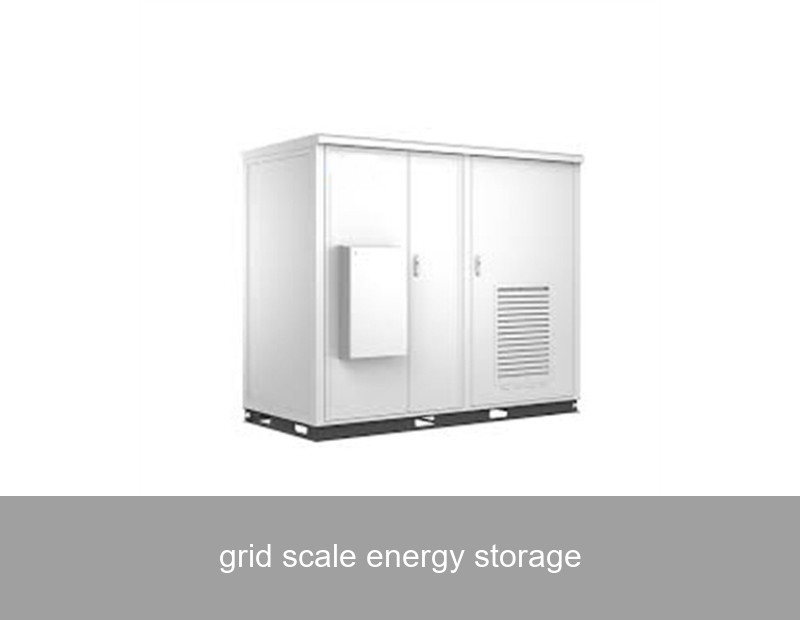
Grid-scale energy storage acts as the shock absorber and time-shifting tool for the modern grid. These are not small home batteries; we're talking about warehouse-sized systems or vast arrays of containers, each capable of storing tens to hundreds of megawatt-hours (MWh) of energy. They perform several critical functions, often called "value stacks":
| Service | Function | Benefit |
|---|---|---|
| Frequency Regulation | Injecting or absorbing power in seconds to maintain grid frequency. | Prevents blackouts, ensures power quality. |
| Renewable Integration | Storing excess solar/wind energy and discharging it later. | Reduces curtailment, maximizes clean energy use. |
| Peak Shaving | Discharging during high-demand periods to offset expensive peak power. | Lowers costs for utilities and consumers. |
| Grid Deferral | Postponing the need for costly upgrades to transmission lines. | Saves significant infrastructure investment. |
By providing these stacked services, a single grid-scale storage project can solve multiple problems simultaneously, delivering a compelling return on investment and enhanced grid resilience.
Why Lithium-Ion Batteries Are Leading the Charge
While technologies like pumped hydro have been used for decades, the current revolution is driven by Lithium-Ion Battery Energy Storage Systems (BESS). Why? Their combination of rapid response time, declining cost, and modular scalability makes them uniquely suited for today's grid needs. According to BloombergNEF, the price of lithium-ion battery packs has fallen by over 90% since 2010. This cost plunge has turned grid-scale batteries from a niche novelty into a mainstream grid asset.
However, deploying a massive battery system isn't as simple as connecting thousands of cell phone batteries. It requires sophisticated power conversion systems (PCS), advanced thermal management for safety and longevity, and, most importantly, intelligent control software that decides when to charge, when to discharge, and which grid service to prioritize to maximize value. This is where specialized engineering expertise becomes non-negotiable.
Highjoule's Role: Engineering Intelligence into Grid Storage
At Highjoule, with nearly two decades of experience since 2005, we've moved beyond just providing battery containers. We deliver turnkey, intelligent storage solutions for utility and large-scale commercial projects. Our HiveGrid BESS Platform is engineered for durability, safety, and profitability. It integrates best-in-class battery cells with our proprietary HiveMind Energy Management System (EMS). Think of HiveMind as the brain of the operation: it continuously analyzes grid conditions, market prices, and asset health to execute optimal dispatch strategies in real-time, ensuring our clients capture every possible value stream from their storage investment.
Our systems are designed with a focus on lifecycle performance and safety, featuring multi-level protection and robust thermal management systems. For grid operators looking to stabilize their network or developers integrating large renewable projects, Highjoule provides the reliable, smart infrastructure needed to make grid-scale storage a cornerstone of their strategy.

Image Source: Unsplash. Technicians monitoring a utility-scale battery storage installation.
Real-World Impact: A Case Study from California
Let's move from theory to practice. California, a global leader in renewable adoption, has also faced significant grid challenges, including the risk of rolling blackouts during heatwaves. In response, the state has aggressively deployed grid-scale storage.
A landmark success story is the Moss Landing Energy Storage Facility in Monterey County. Phase I of this project, operational since 2020, boasts a capacity of 300 MW / 1,200 MWh. To put that in perspective, one megawatt-hour can power roughly 750 homes for an hour. This single facility can therefore provide power to hundreds of thousands of homes during critical peak periods.
The results have been transformative:
- During the September 2022 heatwave, California's battery fleet, spearheaded by large facilities like Moss Landing, discharged a record 3.4 Gigawatts to the grid—equivalent to the output of three large nuclear reactors—preventing widespread outages.
- The system provides critical inertia and frequency regulation, allowing more solar power to operate reliably on the grid.
- It has significantly reduced the state's reliance on gas-fired peaker plants, cutting both emissions and energy costs.
This case underscores a vital lesson: grid-scale storage is no longer a pilot technology. It is a proven, reliable, and essential asset for grid security in the renewable era.
Future Horizons: Beyond the Lithium-Ion Battery
While lithium-ion dominates today, innovation continues. The future of grid-scale storage will likely be a diverse portfolio:
- Long-Duration Energy Storage (LDES): Technologies like flow batteries, compressed air, and advanced thermal storage aim to provide power for 10+ hours, essential for multi-day weather events or seasonal shifts.
- Second-Life EV Batteries: Repurposing electric vehicle batteries for less demanding grid applications offers a promising path to sustainability and cost reduction.
- Green Hydrogen: Using excess renewable energy to produce hydrogen, which can be stored long-term and used in fuel cells or turbines, is gaining traction for seasonal storage and hard-to-electrify sectors.
The key will be matching the right technology to the specific grid need, from sub-second frequency response to week-long seasonal storage.
What's the Next Step for Your Grid's Stability?
The transition to a resilient, low-carbon grid is underway. Grid-scale energy storage is the enabling technology that makes high renewable penetration not just possible, but practical and cost-effective. From preventing blackouts to slashing emissions and lowering costs, the value proposition is clear and backed by real-world success stories.
Whether you are a utility planner, a renewable energy developer, or a large commercial energy user, the question is no longer whether to consider storage, but how to strategically integrate it into your energy assets. What specific challenge—be it peak demand charges, renewable curtailment, or grid modernization mandates—could a smart, scalable storage solution solve for you?
 Inquiry
 Online Chat