


Energy Storage Solar Panels: The Key to Unlocking True Energy Independence
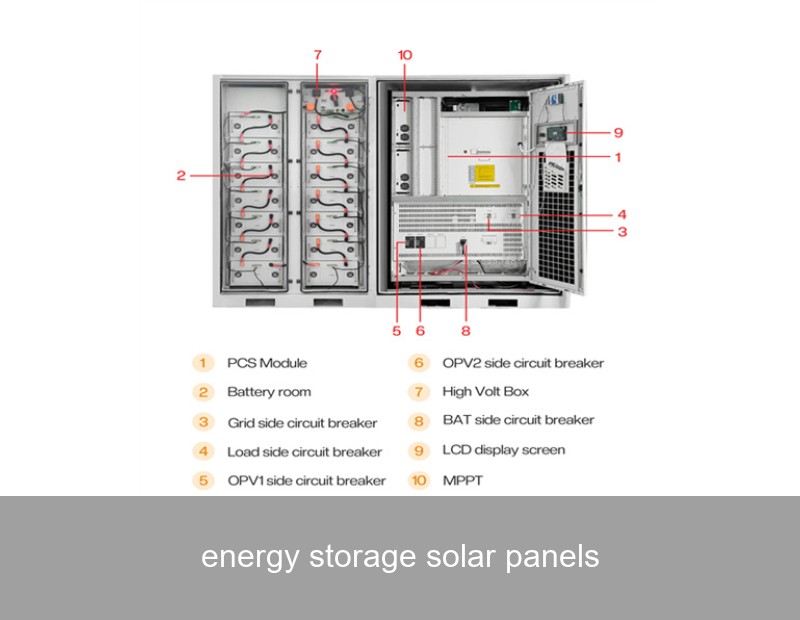
You've made the smart decision to install solar panels. The sun is shining, your meter is spinning backwards, and you're feeling good about your clean energy contribution. But what happens when the sun goes down, or a storm cloud passes over? This is the fundamental gap that energy storage for solar panels fills. Pairing your photovoltaic (PV) system with a battery is no longer a luxury; it's the upgrade that transforms a one-way solar system into a resilient, self-sufficient power station for your home or business. Let's explore how this powerful combination works and why it's becoming essential for energy-conscious consumers across Europe and the United States.
Table of Contents
- The Solar Power Gap: Why Panels Aren't Enough
- How Solar Energy Storage Systems Work: A Simple Breakdown
- Real-World Impact: A Case Study from California
- Choosing the Right Energy Storage System
- How Highjoule Powers Smarter Energy Independence
- The Future of Home and Business Energy
The Solar Power Gap: Why Panels Aren't Enough
Here's a reality many new solar owners face: your solar panels produce the most energy in the middle of the day, precisely when you're likely not at home. Conversely, your energy demand peaks in the early morning and evening—when the sun is low or set. Without storage, excess solar energy is fed back to the grid, often for minimal credit (through net metering schemes that are changing), and you draw power from the grid at night, remaining vulnerable to outages and high tariffs.
This mismatch isn't just an inconvenience. Consider these points:
- Grid Instability: Increasing extreme weather events in the US and Europe are causing more frequent and longer power outages.
- Changing Economics: Feed-in tariffs are decreasing. In markets like Germany and parts of the US, the value of exported solar electricity is falling, making self-consumption more financially attractive.
- Evening Demand Spike: The "duck curve" phenomenon, well-documented by grid operators like California ISO (CAISO), shows a steep ramp in electricity demand just as solar production plummets at dusk.

Image Source: U.S. Department of Energy - Illustrating the "Duck Curve" and grid challenge.
How Solar Energy Storage Systems Work: A Simple Breakdown
Think of your new solar-plus-storage system as a sophisticated personal energy manager. It's more than just a battery; it's an integrated intelligence system.
- Generation: Your solar panels convert sunlight into direct current (DC) electricity.
- Conversion & Prioritization: An inverter converts DC to usable alternating current (AC) for your home. The system's brain first directs power to meet your immediate home's needs.
- Storage: Any excess energy, instead of going straight to the grid, is used to charge your battery storage unit.
- Discharge: When your panels stop producing (at night, or during an outage), the stored energy in the battery is discharged to power your critical loads or entire home seamlessly.
Modern systems like those from Highjoule use advanced software to learn your consumption patterns, weather forecasts, and utility rate schedules to optimize when to charge and discharge, maximizing your savings and convenience.
Key Benefits of Adding Storage to Your Solar Panels
| Benefit | Description | Impact |
|---|---|---|
| Energy Independence & Resilience | Keep the lights on during grid outages. Your essential circuits or entire home can remain powered. | Peace of mind during storms, wildfires, or grid maintenance. |
| Maximized Self-Consumption | Use more of the solar energy you produce, reducing reliance on grid imports. | Directly lowers electricity bills, especially under time-of-use rates. |
| Financial Optimization | Store solar energy when grid prices are low and use it when prices are high (arbitrage). | Enhanced return on investment (ROI) for your overall solar system. |
| Grid Support & Sustainability | Reduces strain on the grid during peak demand, supporting community-wide reliability. | Contributes to a more stable, renewable-based grid for everyone. |
Real-World Impact: A Case Study from California
Let's look at a concrete example. A medium-sized winery in Sonoma County, California, faced two major challenges: frequent Public Safety Power Shutoffs (PSPS) to prevent wildfires, and exceptionally high demand charges on their commercial electricity bill. Their existing 100kW solar array was underutilized.
In 2022, they installed a Highjoule HVC Commercial Series battery energy storage system (BESS) with 250 kWh capacity. The results over one year were significant:
- Outage Protection: The system provided backup power for critical refrigeration and operational loads during 5 separate grid outages, totaling over 60 hours, preventing spoilage and business interruption.
- Demand Charge Reduction: By strategically discharging the battery during peak grid demand periods (4-9 pm), the winery reduced its peak demand draw from the grid by an average of 40%. This led to a 22% reduction in their overall monthly electricity costs, on top of savings from solar.
- ROI: The projected payback period for the storage addition was calculated at under 7 years, accelerated by state incentive programs like SGIP (Self-Generation Incentive Program).
This case mirrors challenges faced by businesses and homeowners in regions with volatile grids or high electricity costs across Europe and North America.
Choosing the Right Energy Storage System: Key Considerations
Not all storage solutions are created equal. When evaluating systems, ask these critical questions:
- Power & Capacity (kW & kWh): How much power can it deliver at once (kW), and what is its total energy storage (kWh)? This determines what appliances you can run and for how long.
- Depth of Discharge & Warranty: What percentage of the battery's capacity can you safely use? A longer, more comprehensive warranty (e.g., 10 years, 70% retained capacity) indicates confidence in battery longevity.
- AC vs. DC Coupling: DC-coupled systems are often more efficient for new solar installations, while AC-coupled can be easier retrofits for existing solar arrays.
- System Intelligence & Integration: Can the system's software integrate with smart home devices, respond to utility signals, and provide real-time monitoring?
How Highjoule Powers Smarter Energy Independence
At Highjoule, with nearly two decades of experience since 2005, we design our systems with these exact considerations at the forefront. Our solutions are engineered for intelligence, safety, and longevity.
For residential clients, our EcoHome+ series is a seamlessly integrated AC-coupled system. Its compact design, scalable capacity (from 10 to 30 kWh), and intuitive mobile app give homeowners complete control. The system features a sophisticated energy management system that can automatically switch to backup power in less than a heartbeat during an outage.
For commercial and industrial applications, our modular HVC Series provides the scale and robustness needed for demanding environments. These systems can be configured from hundreds of kWh to multiple MWh, supporting peak shaving, demand charge management, and backup power for essential operations. Highjoule's proprietary management platform allows facility managers to set custom strategies, track performance, and verify savings in real-time.

Image Source: Unsplash - Example of a modern home battery installation.
Our global focus on markets like the EU and US means our systems comply with the strictest safety standards (like UL 9540 in the US and CE marks in Europe) and are designed to integrate with local grid requirements and incentive structures.
The Future of Home and Business Energy
The trajectory is clear. As noted by the International Energy Agency (IEA), solar PV is set to become the largest source of global electricity capacity by 2027. The logical and necessary companion to this boom is storage. We're moving towards a model where every building with solar panels will be expected to have storage, creating a distributed network of resilient power resources.
This evolution empowers you, the energy consumer, to become a prosumer—both producing and managing your power. The question is no longer if you should consider storage with your solar panels, but how to design the system that best fits your specific energy goals, risk profile, and financial objectives.
What would you power first during an outage, and how would managing your own energy store change your relationship with the grid and the environment?
 Inquiry
 Online Chat