


Domestic Battery Power Storage: The Key to Energy Independence and Lower Bills
Have you ever watched your electricity meter spin and wondered where all that power—and money—is going? For homeowners across Europe and the US, this is a daily reality. But what if you could capture the free energy from your solar panels during the day and use it to power your home at night? This isn't a futuristic dream; it's the practical, present-day solution offered by domestic battery power storage. This technology is transforming homes into resilient, efficient energy hubs, and it's more accessible than you might think.
Table of Contents
- The Problem: Wasted Sun, High Bills, and Unstable Grids
- The Data: Why Home Batteries Are Booming
- How Does a Home Battery System Work? A Simple Breakdown
- A Real-World Case: The Schmidt Family in Bavaria
- Choosing the Right System: What to Look For
- Highjoule's Role: Smart, Integrated Home Energy Solutions
- Your Home's Energy Future: What's Your First Step?
The Problem: Wasted Sun, High Bills, and Unstable Grids
For years, the solar story had a glaring flaw. Homeowners with photovoltaic (PV) panels generated a surplus of clean electricity at midday—often when they were at work and demand was low. This excess was fed back to the grid for a small feed-in tariff. Then, in the evening, when the family was home, the sun was down, and grid electricity prices peaked, they had to buy power back at a much higher rate. It felt like selling wholesale and buying retail. Add to this the increasing frequency of grid instability and power outages due to extreme weather, and the need for a personal energy reserve becomes clear.
The Data: Why Home Batteries Are Booming
The numbers speak volumes. According to the International Energy Agency (IEA), global energy storage capacity is set to multiply exponentially this decade, with behind-the-meter residential systems being a major driver. In markets like Germany and California, declining battery costs (over 70% in the last decade) and rising retail electricity rates have slashed payback periods. For many, a home battery isn't just an eco-statement; it's a sound financial investment that increases energy self-consumption from solar from around 30% to 70% or more.
How Does a Home Battery System Work? A Simple Breakdown
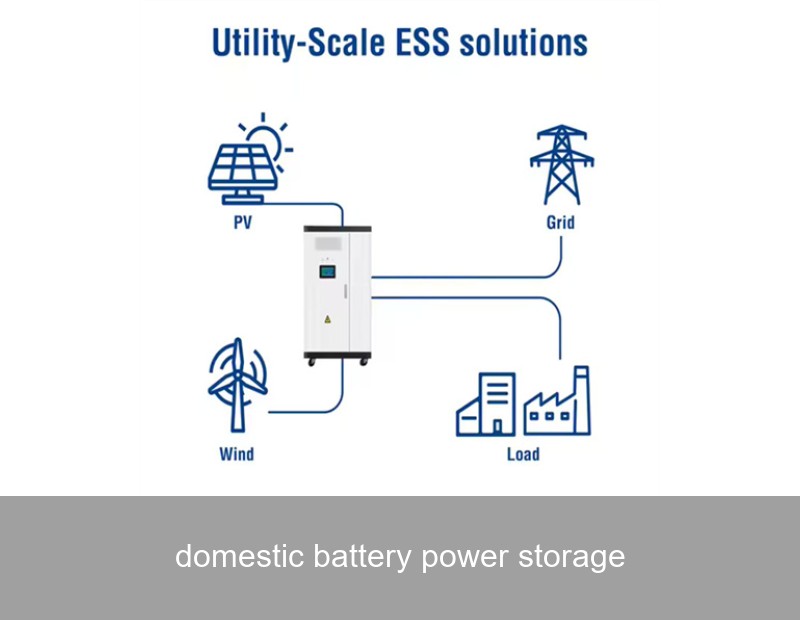
Think of your home battery system as a high-tech energy piggy bank. Here’s the simple cycle:
- Generation: Your solar panels convert sunlight into DC (Direct Current) electricity.
- Conversion & Prioritization: An inverter converts DC to AC (Alternating Current) for home use. Your home uses this solar power in real-time. Any excess, instead of going to the grid, is diverted to charge your battery.
- Storage: The battery (typically Lithium Iron Phosphate or LFP chemistry for safety and longevity) stores this energy as DC power.
- Discharge: When the sun sets or consumption exceeds solar production, an inverter draws energy from the battery, converting it back to AC to power your appliances.
- Grid Interaction (Optional): A smart system can also charge from the grid during ultra-low-cost, off-peak hours (if available) and provide backup power during an outage—a feature that’s becoming a top priority.

Image: A modern, wall-mounted home battery system. Source: Unsplash (Representative image)
A Real-World Case: The Schmidt Family in Bavaria
Let's make this concrete. The Schmidt family in a suburban home near Munich installed a 10 kWp solar array in 2020. While their summer bills plummeted, winter and evenings were still costly. In early 2023, they added a 13.5 kWh domestic battery power storage system.
| Metric | Before Battery (2022) | After Battery (2023-2024) |
|---|---|---|
| Solar Self-Consumption | 35% | 82% |
| Annual Grid Electricity Purchased | 3,200 kWh | 700 kWh |
| Annual Electricity Bill | €1,450 | €320 |
| Grid Independence (approx.) | Low | ~85% of the year |
"The peace of mind during the recent storms, when our neighborhood had a brief blackout but our lights and internet stayed on, was priceless," Mrs. Schmidt notes. Their system is projected to pay for itself in under 8 years, with decades of low-cost power to follow.
Choosing the Right System: What to Look For
Not all home batteries are created equal. As you evaluate options, consider these critical factors:
- Usable Capacity & Power: Capacity (kWh) is your energy "tank size." Power (kW) is how much energy it can deliver at once—crucial for running multiple large appliances simultaneously.
- Depth of Discharge (DoD) & Warranty: A 90% DoD means you can safely use 90% of the battery's rated capacity. Look for a strong warranty, often 10 years or a guaranteed number of cycles.
- Chemistry: LFP (Lithium Iron Phosphate) is now the industry standard for safety, cycle life, and stability, making it ideal for the home.
- System Intelligence & Integration: Can it learn your usage patterns? Integrate with smart home systems? Optimize for time-of-use rates? This software is the "brain" that maximizes value.
- Scalability & Backup Capability: Can you add more batteries later? Does the system include a seamless transfer switch for backup power during an outage?
Highjoule's Role: Smart, Integrated Home Energy Solutions
This is where Highjoule's nearly two decades of expertise comes into play. We don't just sell batteries; we deliver intelligent home energy ecosystems. Our HomeHub ESS (Energy Storage System) is designed specifically for the demands of European and North American homes.
What sets the Highjoule HomeHub apart? It's built on three pillars:
- Uncompromising Safety & Durability: Using premium LFP cells in a UL/Certified, thermally managed enclosure, it's engineered for decades of safe operation.
- Adaptive Intelligence: Our AI-driven energy management software doesn't just store and release power. It forecasts weather, learns your household patterns, and can be configured to capitalize on variable electricity tariffs, ensuring every kilowatt-hour works hardest for your wallet.
- Seamless Integration & Backup: The system integrates with both new and existing solar installations. Its built-in islanding functionality provides instant, uninterrupted backup power to critical circuits the moment the grid fails—a feature homeowners increasingly see as essential.
Image: A modern, wall-mounted home battery system. Source: Unsplash (Representative image)
For homeowners, this translates to a single, reliable point of contact for design, installation, and lifetime support, turning the complex journey of energy independence into a smooth, managed process.
Your Home's Energy Future: What's Your First Step?
The transition to a smarter, more resilient home energy system is underway. Domestic battery power storage is the linchpin, turning intermittent solar generation into a reliable 24/7 power source. It's about control, savings, and contributing to a more stable grid for everyone—by reducing peak demand, as highlighted by research from the U.S. Department of Energy.
So, here's a question to ponder: When you look at your next electricity bill, what part of your energy story do you want to control—the cost, the source, or the reliability? Perhaps it's time to start writing that story yourself.
 Inquiry
 Online Chat