


Flexible Solar Panels: Unlocking Renewable Energy for Every Rooftop and Beyond
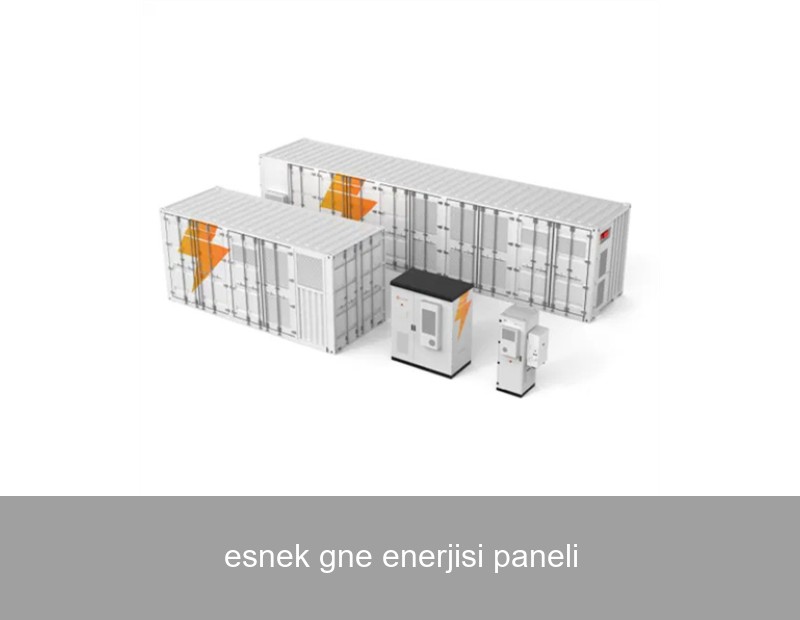
Imagine a solar panel that can bend, curve, and conform to surfaces previously deemed impossible for traditional, rigid modules. This isn't science fiction; it's the reality of flexible solar panels (or esnek güneş enerjisi paneli). As the global push for decarbonization intensifies, both homeowners and businesses are seeking innovative ways to integrate solar power. Flexible panels are emerging as a key solution, breaking the mold—quite literally—and expanding where solar energy can be harvested. But what makes them so special, and are they the right choice for your energy independence journey?
Table of Contents
- What Are Flexible Solar Panels?
- The Technology Behind the Flexibility
- Key Benefits and Unique Applications
- Important Considerations and Challenges
- Real-World Case Study: A Marina's Sustainable Transformation
- The Critical Next Step: Integrating with Energy Storage
- Highjoule's Smart Solutions for Flexible Solar Systems
What Are Flexible Solar Panels?
Unlike their rigid, glass-encased cousins, flexible solar panels are lightweight, thin-film photovoltaic modules that can bend to a certain degree, typically up to a 30-degree curve. They are constructed using advanced materials like amorphous silicon (a-Si), cadmium telluride (CdTe), or, most commonly for consumer applications, monocrystalline silicon cells mounted on a flexible substrate. This design shift opens a world of possibilities beyond the standard pitched roof.

Image Source: Unsplash - Demonstrating installation on a curved RV roof.
The Technology Behind the Flexibility
The secret lies in ditching the heavy aluminum frame and tempered glass. Here’s a simplified breakdown:
- Cell Technology: High-efficiency, thin monocrystalline cells are often used. They are more malleable than their thicker counterparts.
- Substrate: The cells are laminated onto a flexible backing material, such as polymer or a composite sheet, instead of glass.
- Encapsulation: A durable, transparent polymer (like ETFE) top layer protects the cells from the elements while maintaining flexibility and light transmission.
This construction results in panels that are up to 70% lighter than traditional panels, a game-changer for weight-sensitive applications. For more detailed technical specifications on photovoltaic technologies, you can refer to resources from the National Renewable Energy Laboratory (NREL).
Key Benefits and Unique Applications
The "flex" factor translates into tangible advantages for specific scenarios. Let's explore where esnek güneş enerjisi paneli truly shines.
Primary Advantages:
- Versatile Installation: Install on curved surfaces (RV, boat roofs), weak-structure roofs (older warehouses, carports), or even as a temporary setup for events.
- Lightweight & Low-Profile: Minimal structural reinforcement is needed. They lie almost flat, reducing wind load and visual impact.
- Durability: Many are designed to be highly resistant to hail and impact, thanks to their polymer coating.
Ideal Use Cases:
| Application | Why Flexible Panels Excel |
|---|---|
| Recreational Vehicles (RVs) & Boats | Conform to curved roofs, lightweight for fuel efficiency, and vibration-resistant. |
| Commercial Buildings with Lightweight Roofs | Enable solar on warehouses, factories, or retail stores with roof weight limits. |
| Architectural Integration | Can be integrated into curved facades, sunshades, or custom structures for a seamless look. |
| Off-Grid & Mobile Power | Perfect for remote cabins, field research stations, or powering work trailers. |
Important Considerations and Challenges
It's a balanced view. Flexible panels typically have a slightly lower efficiency (15-18%) compared to top-tier rigid panels (20-22%). They may also have a shorter lifespan (15-20 years) due to polymer degradation, and their temperature sensitivity can be higher. Crucially, they often require specific, non-penetrating mounting methods (adhesive, straps) to avoid damaging the cells. The key is matching the technology to the right project.
Real-World Case Study: A Marina's Sustainable Transformation
Let's look at a concrete example from the European market. Porto Lido Marina in Italy faced a challenge: they wanted to power their dock lighting and office facilities with solar, but the curved, tensile fabric structures covering their docking areas couldn't support traditional panels.
The Solution: They deployed a 40 kW array of high-quality flexible solar panels, adhered directly to the curved fabric roofs of several boat docks.
The Data-Driven Outcome (Phenomenon → Data):
- Annual Generation: The system generates approximately 52,000 kWh per year.
- Cost Savings: This covers 90% of the marina's dock-side energy needs, reducing grid reliance and saving over €8,000 annually on electricity costs.
- Spatial Efficiency: They utilized over 800 sq.m of previously "unusable" space for energy production.
The Insight: This project, documented in part by the International Renewable Energy Agency (IRENA) in case studies on innovative PV applications, demonstrates that flexible panels are not a niche product but a viable commercial solution for unlocking renewable energy potential on non-standard surfaces.

Image Source: Unsplash - Example of commercial solar integration.
The Critical Next Step: Integrating with Energy Storage
Here's a pivotal insight: whether your flexible panels are on an RV, a warehouse, or a marina, their true potential is unlocked when paired with intelligent energy storage. Solar generation is intermittent. Without storage, excess energy produced at midday is fed back to the grid (often at low rates), and you're still grid-dependent at night or on cloudy days. A battery energy storage system (BESS) captures that surplus solar energy for use on demand, maximizing self-consumption and providing backup power.
Highjoule's Smart Solutions for Flexible Solar Systems
This is where Highjoule, with nearly two decades of expertise as a global leader in advanced energy storage, becomes an essential partner. We understand that innovative solar solutions like esnek güneş enerjisi paneli require equally intelligent and robust storage to form a complete, reliable power system.
For residential and small commercial applications utilizing flexible solar arrays, our EverHome Series of modular lithium-ion battery systems is the ideal companion. Its compact, scalable design allows it to fit in tight spaces—much like the panels themselves—and its advanced battery management system (BMS) ensures safe, efficient storage of every kilowatt-hour your flexible panels produce.
For larger commercial, industrial, or microgrid projects—think of that marina or a large warehouse with a flexible solar canopy—our GridMax Pro Series provides utility-grade storage solutions. These systems can manage massive amounts of solar energy, provide critical load backup, and even enable energy arbitrage. Highjoule's proprietary energy management software acts as the brain, seamlessly orchestrating between solar production, battery storage, grid interaction, and load demand to optimize your energy economics and resilience.
In essence, Highjoule doesn't just provide batteries; we provide intelligent, sustainable power solutions that ensure the clean energy you generate from even the most unconventional solar installations is never wasted.
Ready to Explore Your Flexible Solar & Storage Potential?
Could your business unlock new renewable capacity with flexible solar technology, and what would achieving 80% or greater energy independence through a tailored storage solution mean for your operational resilience and bottom line?
 Inquiry
 Online Chat