


Placa Fotovoltaica Flexivel: The Ultimate Guide to Flexible Solar Panels
Imagine powering your off-grid adventure, integrating solar seamlessly into a curved roof, or adding clean energy to structures that can't bear traditional panels. This isn't the future; it's the reality made possible by placa fotovoltaica flexivel (flexible solar panels). As the demand for versatile and aesthetic renewable solutions skyrockets across Europe and the US, these lightweight, bendable panels are transforming how and where we harvest the sun's power. But with great flexibility comes important questions about performance, durability, and the right applications. Let's delve into the world of flexible photovoltaics and explore how they fit into a modern, intelligent energy ecosystem.
Table of Contents
What Are Flexible Solar Panels?
Unlike their rigid, glass-encased cousins, flexible solar panels are constructed using thin-film photovoltaic materials (like CIGS or advanced mono-crystalline cells) laminated onto a malleable substrate, such as polymer or thin metal. This fundamental difference in construction is what grants them their superpower: the ability to bend, often up to a 30-degree arc or more. They are incredibly lightweight, typically weighing 70% less than a standard panel, and can be as thin as 2-3 millimeters.

Image Source: Unsplash - Photovoltaic technology on a curved surface.
It's crucial to understand that "flexible" does not mean "indestructible." They are designed for conformability, not repeated flexing. Once installed and adhered to a surface, they should remain in that position for their operational life. Their durability against hail and impact is generally good, but they are more susceptible to scratches and may have a slightly shorter lifespan (15-20 years) compared to high-efficiency rigid panels (25-30+ years).
Benefits vs. Limitations: A Realistic View
Let's break down the pros and cons with a clear-eyed perspective to manage expectations.
| Benefits | Limitations & Considerations |
|---|---|
|
|
Key Applications: Where Flexible Panels Shine
The unique attributes of placas fotovoltaicas flexibles make them the undisputed champion for specific use cases. Here are the top scenarios where they are the optimal choice:
- Marine & Recreational Vehicles (RVs): The #1 application. Their light weight and ability to conform to the curved roofs of boats and RVs is unmatched. They minimize wind drag and don't require heavy racking.
- Commercial & Industrial Buildings with Weight-Limited Roofs: Older warehouses or buildings with specific load constraints can benefit from adhesive-mounted flexible arrays that add minimal weight.
- Architectural Integration: For designers seeking to incorporate PV directly into curved facades, sunshades, or custom metal roofing, flexible modules offer a tailored solution.
- Off-Grid & Portable Power: Their lightweight nature makes them ideal for portable solar kits, camping, or temporary setups for events or construction sites.
Case Study: A Marina's Sustainable Transformation in the Balearic Islands, Spain
Let's look at a real-world example from the Mediterranean. Marina Port de Sóller faced a dual challenge: reducing its carbon footprint and providing clean shore power to its clients without undertaking massive structural renovations on its existing dock facilities. The traditional rigid panels were too heavy for many of the older dock canopies and boat sheds.
The Solution: The marina deployed an array of high-quality placa fotovoltaica flexivel, adhesively mounted onto the curved and flat surfaces of its service buildings and shaded dock structures. This approach required no reinforcement of the existing roofs.
- System Size: 86 kWp of flexible photovoltaic capacity installed.
- Annual Production: Approximately 115 MWh of clean electricity generated.
- Impact: This covers over 40% of the marina's base load electricity needs, significantly cutting operational costs and CO2 emissions. The project also served as a visible commitment to sustainability, enhancing the marina's brand among environmentally conscious boat owners. (EU Energy Observatory)

Image Source: Unsplash - Example of solar integration in a marine environment.
The Critical Step: Integrating with an Energy Storage System
Here's a key insight often missed in discussions about placa fotovoltaica flexivel: their true potential is unlocked not in isolation, but when paired with an intelligent energy storage system (ESS). Why? Flexible panels are often deployed on mobile applications (boats, RVs) or buildings with variable consumption profiles (marinas, workshops).
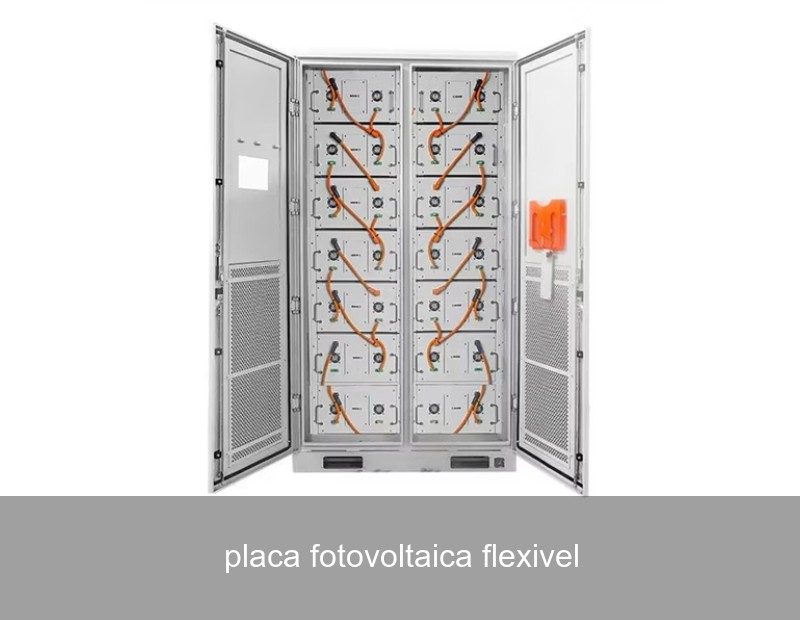
An ESS, like those developed by Highjoule, captures the solar energy produced during the day and stores it for use at night, during peak tariff periods, or when the sun isn't shining. This transforms a variable solar source into a reliable, 24/7 power supply. For a boat owner, this means silent, emission-free power at anchor. For a business with a flexible panel array, it means maximizing self-consumption and providing backup power during grid outages.
Highjoule's expertise lies in creating these seamless, smart energy ecosystems. Our H-Joule Cube series for commercial and industrial applications and H-Joule Home systems for residential use are designed to integrate flawlessly with diverse solar inputs, including arrays using flexible panels. With advanced battery management, AI-driven energy optimization, and scalable design, we ensure every kilowatt-hour your flexible panels produce is used in the most efficient and economical way possible.
Choosing the Right System for Your Needs
So, is a placa fotovoltaica flexivel right for you? Ask these guiding questions:
- Is my primary need driven by weight, curvature, or mounting constraints? If yes, flexible is a top contender.
- Am I prioritizing absolute maximum efficiency and lowest cost per watt over a 30-year period? If yes, high-efficiency rigid panels likely win.
- Have I considered the full energy cycle—generation, storage, and management? This is where partnering with a full-system provider becomes critical.
At Highjoule, we don't just sell components; we provide intelligent, sustainable power solutions. Whether your project involves flexible panels on a fleet of touring vehicles, a remote microgrid for an agricultural site, or a sleek residential installation, our team assesses the entire picture. We help you select the right solar technology and pair it with the ideal storage and management system to meet your specific reliability, financial, and sustainability goals.
What unique surface or challenging application have you been considering for solar power, and how could a flexible, integrated energy solution transform its potential?
 Inquiry
 Online Chat