


Unlocking Grid Independence: Your Guide to the Modern Solar Energy Storage Cabinet Station
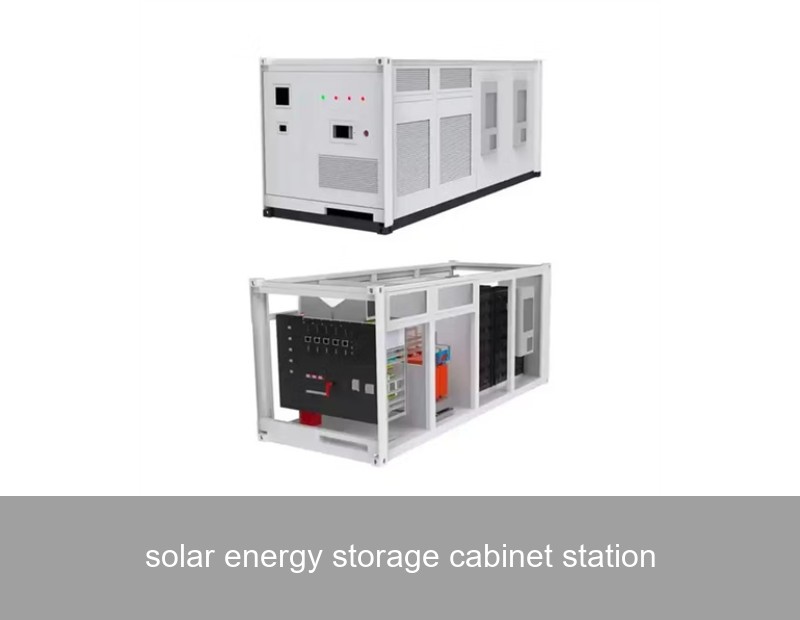
Imagine a world where your business or community isn't at the mercy of the next grid outage or volatile energy price spike. This vision is rapidly becoming a reality, not just with solar panels, but with the brains of the operation: the solar energy storage cabinet station. This isn't a simple battery box; it's an integrated power hub, a cornerstone of modern energy resilience. As grids worldwide face increasing pressure and renewable adoption soars, the ability to capture, store, and intelligently manage solar power is no longer a luxury—it's a strategic necessity. Let's explore how this technology is reshaping energy landscapes.
Table of Contents
- What Exactly is a Solar Energy Storage Cabinet Station?
- The Driving Force: Why the Need is Skyrocketing
- Under the Hood: Key Components of a Robust System
- From Blueprint to Reality: A European Case Study
- Future-Proofing Your Energy Strategy
- Is Your Organization Ready for Energy Autonomy?
What Exactly is a Solar Energy Storage Cabinet Station?
Think beyond a single battery. A solar energy storage cabinet station is a pre-engineered, containerized solution that integrates high-capacity battery banks, advanced power conversion systems (PCS), thermal management, and sophisticated energy management software (EMS) into a single, secure enclosure. It acts as a buffer between your solar photovoltaic (PV) array and your electrical loads or the grid. During sunny hours, excess solar energy that isn't used immediately is stored. When the sun sets, demand peaks, or a grid failure occurs, the station seamlessly dispatches clean, stored power.
Companies like Highjoule specialize in elevating this concept. Our IntelliCubeTM Commercial & Industrial (C&I) Storage Systems are prime examples of next-generation cabinet stations. They go beyond basic storage by incorporating AI-driven energy analytics for optimal charge/discharge cycles, scalable architecture to grow with your needs, and robust safety features like multi-level protection and active climate control, all housed in a durable, footprint-optimized cabinet designed for easy outdoor siting.

Image Source: Unsplash - A representation of a solar installation paired with a storage unit.
The Driving Force: Why the Need is Skyrocketing
The surge in demand for storage solutions isn't accidental. It's a direct response to several converging global phenomena.
The Intermittency Challenge of Solar Power
Solar energy is abundant but not always available. The "duck curve" – a graph showing the timing imbalance between peak solar production and peak evening energy demand – is a real operational headache for utilities and a cost problem for consumers. A storage cabinet station flattens this curve, enabling solar to be a reliable 24/7 power source.
Economic Incentives and Energy Security
With electricity prices experiencing significant volatility, particularly in Europe following recent geopolitical events, the business case has solidified. Storage allows for energy arbitrage: buying or storing energy when it's cheap (or from your own solar) and using it when prices are high. Furthermore, for critical facilities like hospitals, data centers, or manufacturing plants, the cost of a grid outage can be catastrophic. A storage station provides instantaneous backup power, ensuring operational continuity.
Policy and Regulatory Tailwinds
Governments are actively incentivizing storage. The U.S. Inflation Reduction Act (IRA) offers substantial investment tax credits (ITC) for standalone storage. Similarly, European Union initiatives under the REPowerEU plan aggressively promote energy independence and storage integration. These policies directly lower the capital expenditure barrier for adopting technologies like cabinet stations.
Under the Hood: Key Components of a Robust System
Not all storage stations are created equal. A high-performance, durable system hinges on its integrated components.
| Component | Function | Highjoule's Approach |
|---|---|---|
| Battery Bank | The core energy reservoir. Lithium-ion (LFP chemistry is now dominant for its safety and longevity) is the standard. | We use UL-certified, grade-A LFP cells with a design life exceeding 6,000 cycles, ensuring a decade-plus of reliable service. |
| Power Conversion System (PCS) | The "translator" between DC (battery, solar) and AC (grid, building). Manages charge and discharge rates. | Our bi-directional inverters feature >98% efficiency and advanced grid-support functions like frequency regulation. |
| Energy Management System (EMS) | The system's brain. Uses algorithms and weather/data forecasts to optimize economic dispatch and system health. | The Highjoule NeuronTM Platform offers cloud-based monitoring and control, enabling predictive maintenance and revenue-stacking program participation. |
| Thermal Management & Safety | Critical for performance and safety. Maintains optimal battery temperature and mitigates risks. | Our IntelliCubeTM features a closed-loop liquid cooling system for superior temperature uniformity and integrated fire suppression, exceeding local safety codes. |
From Blueprint to Reality: A European Case Study
Let's move from theory to tangible impact. Consider a mid-sized dairy processing plant in Northern Germany. Their challenges were clear: high, time-variable electricity costs, a commitment to sustainability, and vulnerability to even brief power interruptions that could spoil product.
The Solution & Implementation
In 2023, they partnered with Highjoule to deploy a turnkey solar energy storage cabinet station solution. This included:
- A 500 kW / 1 MWh IntelliCubeTM storage system.
- Integration with their existing 800 kW rooftop solar array.
- Connection to the Highjoule NeuronTM platform for intelligent control.
The system was configured for three primary modes: peak shaving (capping grid draw during expensive periods), solar self-consumption maximization, and backup power for critical refrigeration loads.
The Data-Driven Results
After 12 months of operation, the data told a compelling story (source: internal Highjoule performance report with client permission):
- Energy Cost Reduction: Achieved a 34% decrease in monthly electricity bills through arbitrage and reduced peak demand charges.
- Solar Self-Consumption: Increased the direct usage of on-site solar from ~40% to over 85%, dramatically improving ROI on the PV system.
- Reliability: Provided seamless backup during two minor grid disturbances, preventing an estimated €120,000 in potential spoilage losses.
- Carbon Footprint: Enhanced the facility's renewable energy usage, avoiding approximately 720 tons of CO2 annually.
This case exemplifies how a cabinet station isn't just an expense; it's a revenue-protecting, risk-mitigating asset. For more on grid-scale storage benefits, see this report by the International Renewable Energy Agency (IRENA).

Image Source: Unsplash - Technicians working on an industrial energy storage system.
Future-Proofing Your Energy Strategy
Investing in a solar energy storage cabinet station today positions you for the energy ecosystem of tomorrow. We're moving towards interactive, decentralized grids. Your storage asset could soon participate in Virtual Power Plants (VPPs), where aggregators pool distributed resources to sell services to the grid, creating a new revenue stream for you. The technology also paves the way for complete microgrid configurations, allowing campuses or communities to island themselves from the main grid indefinitely.
Choosing the right partner is crucial. Since 2005, Highjoule has been at the forefront, delivering not just hardware but comprehensive energy-as-a-service models, including feasibility studies, financing options, installation, and lifelong performance monitoring. Our solutions are designed to be scalable and software-upgradable, ensuring your investment remains cutting-edge. Understanding battery technology trends is key; resources like the U.S. Department of Energy's battery explanations provide valuable context.
Is Your Organization Ready for Energy Autonomy?
The transition from passive energy consumer to active energy manager is underway. The solar energy storage cabinet station is the physical key that unlocks control, resilience, and economic advantage. It transforms solar power from a partial solution into a comprehensive, reliable energy strategy.
What would a 30% reduction in your energy costs do for your operational budget? How would guaranteed backup power for your most critical loads change your risk profile? The conversation about energy resilience isn't a matter of if anymore, but when and how. What's the first question you need answered to evaluate if this technology is right for your facility?
 Inquiry
 Online Chat