


Demystifying the Price of a 10kWh Lithium Battery: Your Investment in Energy Freedom
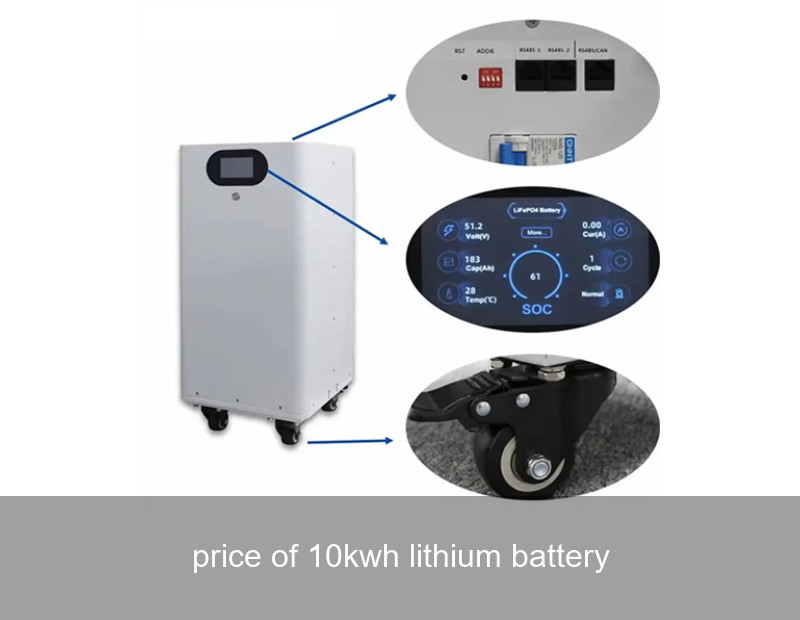
So, you're considering a home battery system and keep seeing that magic number: the price of a 10kWh lithium battery. It's a common starting point, but here's the thing – that single figure you find online is just the tip of the iceberg. It's like asking for the price of a "car" without specifying the make, model, or features. In the world of energy storage, understanding what drives the cost is crucial to making a smart investment that delivers true value over its 15+ year lifespan. Let's peel back the layers and explore what you're really paying for, and how companies like Highjoule are engineering systems that maximize your return on every kilowatt-hour.
Key Components of the Price Tag: It's More Than Just Cells
The quoted price for a battery system encompasses far more than just the lithium-ion cells. It's a sophisticated ecosystem of hardware and intelligence. Breaking it down helps clarify the value proposition.
- The Battery Cells & Module: The core chemistry (like LFP - Lithium Iron Phosphate), brand, and manufacturing quality dictate a significant portion of the cost. LFP has become the residential standard for its safety and longevity.
- The Battery Management System (BMS): This is the brain of the operation. A premium BMS, like the one in every Highjoule system, meticulously monitors cell voltage, temperature, and health, ensuring safety, optimizing performance, and extending the battery's life.
- The Inverter/Charger: Often the most expensive single component. This device converts DC battery power to AC for your home (and vice-versa for charging). Its efficiency, power rating (how much it can deliver at once), and grid-support capabilities are major cost drivers.
- System Integration & Enclosure: This includes the physical cabinet, thermal management (cooling/heating), safety disconnects, and the seamless integration of all components into a plug-and-play unit.
- Software & Smart Energy Management: This is where the magic happens. Advanced software, such as Highjoule's EnergyOS, learns your consumption patterns, integrates with solar forecasts, and automatically decides when to charge, discharge, or hold to maximize self-consumption or savings based on your utility's rate plan.
- Installation & Permitting: Labor, electrical work, and local permitting fees vary widely by region but are a necessary part of the total installed cost.
A Snapshot of Market Pricing
| System Component | Approx. % of Total Cost | Why It Matters |
|---|---|---|
| Battery Cells & Pack | 30-40% | Determines core capacity, cycle life, and safety. |
| Inverter/Charger | 25-35% | Dictates power output, efficiency, and grid interaction features. |
| BMS & Software | 15-20% | Critical for safety, longevity, and financial optimization. |
| Integration, Installation, Permits | 15-25% | Ensures safe, reliable, and code-compliant operation. |
Note: Percentages are illustrative and can vary based on system design and region.
A Real-World Case Study: The German Homeowner's Journey
Let's move from theory to practice with a scenario common across Europe. Consider the Müller family in Bavaria. They have a 8kW solar array but were still exporting 50% of their generation to the grid in summer for a low feed-in tariff, while buying expensive power in the evening. Their goal: increase self-consumption and gain independence.
They evaluated several quotes for a 10kWh storage solution. The lowest quote was €7,500 for a basic battery-and-inverter combo. A more comprehensive quote, including a system like the Highjoule HES-10 with integrated energy management and a hybrid inverter, came in at €9,200 fully installed.
The Data-Driven Decision: The Müller's chose the Highjoule system. Here’s the annual financial impact based on their energy data:
- Increased Solar Self-Consumption: From 50% to 85%, reducing grid purchases by 2,100 kWh/year.
- Savings on Grid Imports: At €0.32/kWh, this saved €672 annually.
- Optimized Time-of-Use Savings: Using the battery to avoid peak pricing (6-10 PM) added another €180 in savings.
- Total Annual Savings: Approximately €852.
While the upfront investment was higher, the payback period for the more capable system was under 11 years, well within the system's warranty. More importantly, it provided resilience during grid outages—a feature the basic system lacked. This case highlights why the price of a 10kWh lithium battery system is less about the cheapest entry and more about the long-term value stack: savings, security, and smart control.

Image Source: Unsplash (Representative image of a modern home with solar energy).
Highjoule's Approach to Value-Driven Energy Storage
At Highjoule, we view the price of a 10kWh lithium battery as an investment in a holistic energy solution. Our HES Series for residential applications is engineered not just to store energy, but to intelligently manage it. We integrate industry-leading LFP cells with our proprietary, adaptive EnergyOS platform. This software is the differentiator—it can seamlessly integrate with existing solar, predict weather patterns, and respond to dynamic utility rates (common in the US and increasingly in Europe) to autonomously maximize your financial return.
For commercial and industrial clients, our CES Series scales this intelligence, offering solutions that manage demand charges, provide backup power for critical operations, and enable participation in grid services markets. In every product, we prioritize safety and durability, with robust thermal management and a modular design that allows for future capacity expansion. Our global service network ensures that your investment is protected for the long haul.
Looking Beyond the Sticker Price: Total Cost of Ownership
The smartest way to evaluate cost is through the lens of Levelized Cost of Storage (LCOS). LCOS accounts for the total cost over the system's life (purchase, installation, maintenance) divided by the total energy it will deliver. A cheaper battery with lower efficiency (say, 92% round-trip vs. 96%) or a shorter lifespan (6,000 cycles vs. 10,000+) will have a higher LCOS, meaning each kilowatt-hour you use actually costs you more.
Factors impacting your LCOS include:
- Warranty: A 10-year, end-to-end warranty (like Highjoule's) protects your investment.
- Efficiency: Every percentage point lost is energy you paid for but can't use.
- Degradation: A battery that retains 70% capacity after 10 years offers far more value than one at 60%.
- Software Updates: A system that improves via remote updates can adapt to new utility tariffs, adding future value at no extra cost.
According to a U.S. Department of Energy report, continued innovation is driving down LCOS faster than upfront prices alone suggest.
Future Trends: What's Next for Battery Pricing?
While raw material costs fluctuate, the long-term trend for the price of a 10kWh lithium battery system is downward, thanks to manufacturing scale and technology improvements. However, the future value will increasingly lie in grid interactivity. In markets like California or parts of the EU, utilities are creating programs that pay homeowners to use their batteries as a virtual power plant (VPP). Highjoule's systems are designed to participate in such programs, potentially creating a new revenue stream that can offset the initial cost even further.
The key takeaway? The conversation is shifting from simple storage cost to energy asset value. As noted by researchers at the National Renewable Energy Laboratory (NREL), the value stacking potential of storage is what truly unlocks its economic potential.

Image Source: Unsplash (Representative image of industrial energy storage system).
Your Next Step Towards Energy Independence
We've explored the intricacies behind the price tag. Now, the most important question isn't "What does a 10kWh battery cost?" but rather "What is the optimal energy storage solution to achieve my specific goals for savings, resilience, and sustainability?" The answer is unique to your home, your energy habits, your local climate, and your utility's rate structure.
Are you ready to move beyond a simple online quote and have a detailed conversation about what a truly intelligent energy storage system can do for you? What would you do with the control and savings that a tailored Highjoule system can provide?
 Inquiry
 Online Chat