


ESS That Can Power a Fridge: Your Gateway to Uninterrupted Power and Energy Independence
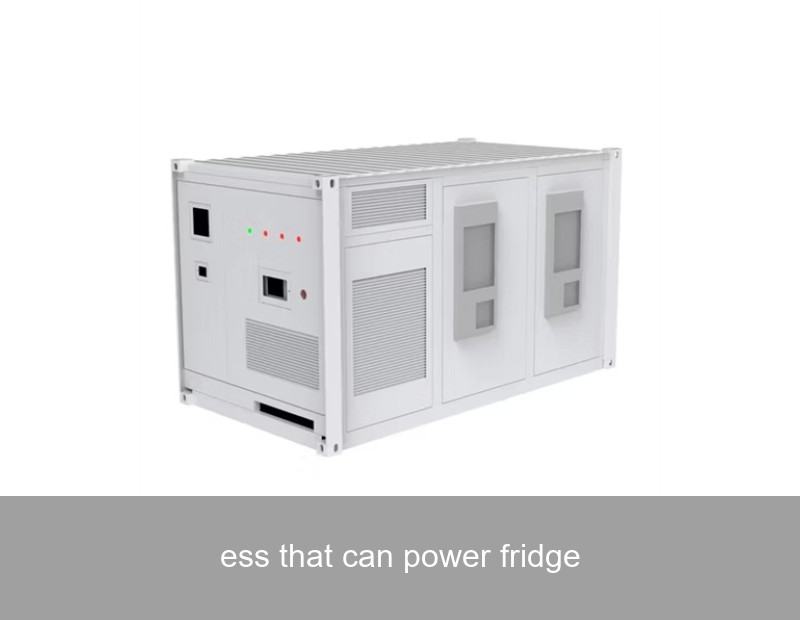
Imagine this: a severe storm knocks out the power in your neighborhood. As hours turn into a day, you hear the dreaded sound—the gentle hum of your refrigerator falls silent. The concern shifts from inconvenience to a real financial loss as food begins to spoil. This common scenario highlights a critical need: a reliable Energy Storage System (ESS) that can power a fridge and other vital appliances. But today's modern ESS solutions are far more than just emergency backups; they are intelligent energy hubs that manage power, save money, and support a sustainable future. Let's explore how the right ESS can be the cornerstone of your energy resilience.
The Core Problem: More Than a Spoiled Meal
Power outages are increasing in frequency and duration. In the US, the average customer experienced just over 8 hours of outages in 2022, with major events driven by severe weather causing the majority of disruption. For a European household or a small business, even a few hours without power can be costly and disruptive. The humble refrigerator, a non-negotiable appliance for food safety and health, becomes the immediate focus. An ESS that can power a fridge addresses this primary pain point, providing peace of mind. But the true value of a modern system lies in its ability to do so much more.
Sizing Your Solution: How Much ESS Power Do You Really Need?
Let's get practical. Powering a fridge is an excellent starting point for sizing your system. A modern energy-efficient refrigerator might use between 100 to 400 watts while running, but its compressor cycles on and off. To ensure it runs for a critical period, you need to consider both power (kW) and energy (kWh).
- Power (kW): Can the ESS deliver the surge power needed when the fridge's compressor kicks in? This is typically 2-3 times its running wattage.
- Energy (kWh): How long do you need to keep it running? 24 hours of backup requires a different battery capacity than 4 hours.
Here’s a simplified look at typical home appliance energy needs:
| Appliance | Average Running Power (Watts) | Estimated Daily Energy Use (kWh) |
|---|---|---|
| Modern Refrigerator/Freezer | 150 - 400 | 1 - 2 |
| LED Lighting (Whole Home) | 100 - 300 | 0.5 - 2 |
| Wi-Fi Router & Modem | 10 - 20 | 0.24 |
| Residential Furnace Fan | 300 - 800 | 2 - 8 |
As you can see, an ESS that can power a fridge often has ample capacity to also keep your lights, internet, and essential circuits running, transforming an outage from a major disruption into a minor inconvenience.

Image Source: Unsplash (Representative image of a home energy storage system)
Beyond the Basics: The Intelligent ESS Ecosystem
The most significant advancement in energy storage isn't just the battery chemistry—it's the intelligence that manages it. A contemporary ESS is a connected system comprising:
- Battery Modules: Where the energy is stored, typically using lithium-ion phosphate (LFP) chemistry for safety and longevity.
- Hybrid Inverter: The brain and the muscle. It converts DC battery power to AC for your home, manages grid connection, and integrates with solar panels.
- Energy Management System (EMS): The smart software that decides when to charge (from the grid or solar), when to discharge, and how to optimize for cost or resilience.
This intelligence allows your system to do more than just wait for an outage. It can perform "peak shaving"—using stored energy during expensive peak-rate hours—and maximize self-consumption of solar energy. So, your ESS that can power a fridge is also actively reducing your electricity bill every single day. For a deeper dive into the benefits of residential storage, the U.S. Department of Energy provides excellent resources.
A Real-World Case: The California Grocery Store
Let's move from the home to a commercial setting, where the stakes are even higher. In 2023, a mid-sized grocery store in Northern California, facing frequent Public Safety Power Shutoffs (PSPS) due to wildfire risk, installed a 250 kWh commercial ESS paired with an existing rooftop solar array.
The Challenge: Prevent spoilage of tens of thousands of dollars worth of perishable goods and keep critical checkout and refrigeration systems operational during multi-day grid outages.
The Solution & Outcome: The system was configured with a dedicated backup panel for refrigeration, lighting, and POS systems. During a 36-hour outage in October 2023, the ESS seamlessly took over. Data from the system showed:
- 0% food spoilage reported.
- Store remained open for 8 hours daily, generating continued revenue.
- The system provided 85 kW of continuous power, well above the critical load requirement of 60 kW.
- Annual savings from solar time-shifting and demand charge reduction paid for nearly 30% of the system cost.
This case perfectly illustrates the dual role of a modern ESS: a financial asset for daily cost management and a critical insurance policy for business continuity. The International Renewable Energy Agency (IRENA) documents the growing role of storage in commercial renewable integration.

Image Source: Unsplash (Representative image of a commercial building with solar)
Highjoule's Tailored Solutions for Home and Business
At Highjoule, we've been engineering advanced energy storage solutions since 2005. We understand that the need for an ESS that can power a fridge is just the entry point to a larger conversation about energy independence and intelligence.
For residential clients, our HomePower+ Series is designed for seamless integration. Starting at 10 kWh of usable capacity (easily enough to power a refrigerator, lights, and communications for 24+ hours), these modular systems feature our proprietary Adaptive Loop Management software. This AI-driven technology learns your household's energy patterns, automatically optimizing for self-consumption of solar power and preparing for forecasted severe weather events. It’s not just a battery; it’s your home's automated energy director.
For commercial and industrial applications, our GridMax Pro Series provides scalable, robust power. These systems are engineered for high-cyclical use, focusing on demand charge reduction and uninterruptible power for critical operations—exactly like the grocery store case study. With power ratings from 100 kW to multi-MW scale, they ensure that businesses don't just survive a blackout; they continue to operate profitably.
Why Highjoule Stands Out
- Proven Longevity: Our LFP battery systems are designed for a 10+ year service life with minimal degradation.
- Intelligent Software: Our EMS platform offers real-time monitoring and customizable control via a user-friendly app.
- Global Support: With a strong presence in Europe and North America, our technical support and warranty services are locally responsive.
- Grid Services Ready: Our higher-end systems can be configured to participate in grid-balancing programs, creating potential revenue streams.
Making the Right Choice for Your Needs
Choosing the right ESS is about asking the right questions. Start with your essential need: "I need an ESS that can power a fridge." Then, expand the conversation:
- What other appliances or systems are critical (medical equipment, sump pumps, business servers)?
- Do you have or plan to install solar PV?
- Are time-of-use electricity rates or high demand charges a significant part of your bill?
- What is your desired backup duration: 4 hours, 12 hours, or multiple days?
Answering these questions moves you from a simple backup device to a comprehensive energy strategy. The Solar Energy Industries Association (SEIA) offers further insights into integrated solar and storage benefits.
So, as you consider taking control of your power, what will be the first load you choose to secure, and how will you build your intelligent energy ecosystem from there? The journey to resilience starts with a single, essential step.
 Inquiry
 Online Chat