


Grid Energy Storage Cabinet for Wind Turbine: The Key to Unlocking Reliable Renewable Power
Imagine a powerful wind farm on a blustery night. Turbines are spinning at full capacity, generating more clean electricity than the grid can immediately use. Traditionally, this excess energy would be wasted—curtailed in industry terms. Now, imagine a solution sitting quietly on-site, capturing every kilowatt-hour of that surplus and storing it for a calm, high-demand afternoon. This is the transformative role of a dedicated grid energy storage cabinet for wind turbine installations. As wind power becomes a cornerstone of energy strategies in Europe and the U.S., integrating smart storage is no longer a luxury; it's a necessity for grid stability and maximizing return on investment.
Table of Contents
- The Challenge: Wind's Intermittency and Grid Congestion
- The Solution: On-Site Grid Energy Storage Cabinets
- Key Benefits of Pairing Storage with Wind Turbines
- What's Inside a Modern Grid Energy Storage Cabinet?
- Case Study: Stabilizing a Community Grid in Germany
- Choosing the Right Technology Partner
- The Future of Wind Energy is Stored
The Challenge: Wind's Intermittency and Grid Congestion
The phenomenon is well-known: wind is a variable resource. This intermittency creates a fundamental mismatch between generation and consumption patterns. Data from the International Energy Agency (IEA) highlights that wind curtailment can reach significant levels in regions with high renewable penetration and insufficient grid flexibility, such as parts of Texas or Northern Germany. This isn't just lost green energy; it's lost revenue for wind farm operators and a barrier to achieving our clean energy targets.
Furthermore, aging grid infrastructure, especially in many parts of Europe and the Northeastern U.S., struggles with the influx of decentralized renewable power. This can lead to congestion, requiring expensive grid upgrades.

Image: Wind farms require robust grid connections. Storage cabinets help mitigate congestion at these critical points.
The Solution: On-Site Grid Energy Storage Cabinets
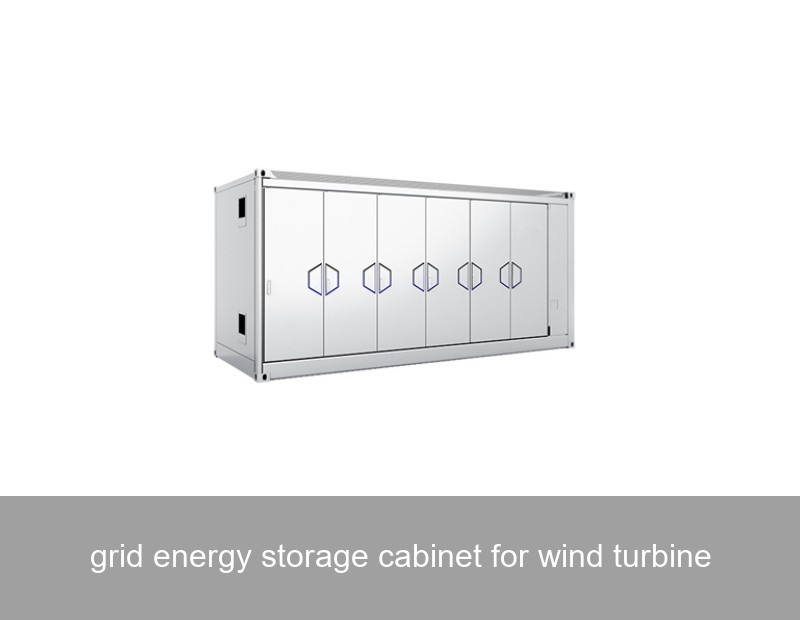
This is where the dedicated grid energy storage cabinet for wind turbine applications comes into play. Think of it as a high-performance battery bank specifically engineered for the harsh conditions and high-power demands of wind sites. Unlike large, centralized storage farms, these modular cabinets are deployed directly at the source—be it at the base of a single large turbine or as a clustered system for an entire wind farm.
By acting as an electrical buffer, they perform two critical functions: energy time-shifting (storing excess generation) and grid services (providing fast frequency response and voltage support). This turns a variable wind asset into a predictable and dispatchable power plant.
Key Benefits of Pairing Storage with Wind Turbines
- Maximized Revenue & Reduced Curtailment: Store low-value, off-peak wind energy and discharge it during peak price periods. This directly boosts the project's bottom line.
- Enhanced Grid Stability & Compliance: Provide essential ancillary services to the grid operator. In markets like the UK's National Grid or PJM in the U.S., these services create significant additional revenue streams.
- Deferred Grid Upgrade Costs: By smoothing the power injection into the grid, storage reduces peak load on transformers and lines, delaying the need for costly infrastructure investments.
- Increased Project Viability: In many regions, new wind projects are now required to include storage to gain connection permits, making a storage cabinet a key enabler for development.
What's Inside a Modern Grid Energy Storage Cabinet?
A cutting-edge storage cabinet is more than just batteries. It's an integrated power conversion and energy management system. Highjoule's GridTitan series, for example, is specifically designed for renewable integration and features:
| Component | Function | Highjoule's Advantage |
|---|---|---|
| Lithium-Ion Battery Modules | Core energy storage medium with high cycle life. | Utilizes automotive-grade LFP (Lithium Iron Phosphate) chemistry for superior safety, longevity (>6000 cycles), and stable performance in temperature extremes. |
| Bi-Directional Inverter (PCS) | Converts DC battery power to AC grid power and vice versa. | Integrated, high-efficiency (>98.5%) power conversion system with advanced grid-forming capabilities for true islanding and black start support. |
| Thermal Management System | Regulates battery temperature for safety and performance. | Intelligent liquid cooling system that ensures optimal operating temperature, extending battery life by up to 20% compared to air-cooled solutions. |
| Energy Management System (EMS) | The "brain" that controls charging/discharging based on market signals and grid needs. | Highjoule's SmartHub AI platform uses predictive algorithms and real-time data to optimize dispatch for maximum economic return. |
| Safety & Protection Enclosure | Houses all components in a robust, weatherproof (NEMA 3R/IP54) cabinet. | All-in-one, pre-assembled design for rapid deployment. Includes multi-layer protection (electrical, fire, environmental) and remote monitoring. |
Case Study: Stabilizing a Community Grid in Northern Germany
Let's look at a real-world application. A community-owned wind farm in Schleswig-Holstein, Germany, consisting of three 4.2 MW turbines, faced frequent curtailment due to local grid constraints. During windy nights, they were often asked to reduce output, losing valuable feed-in-tariff revenue. Furthermore, the local distribution grid experienced voltage fluctuations.
The Solution: The operator partnered with Highjoule to deploy a containerized solution comprising four linked GridTitan 500 cabinets, creating a 2 MWh / 1 MW storage system directly at the wind farm's substation.
The Results (12-month post-installation data):
- Curtailment Recovery: Captured and monetized 98% of previously curtailed energy.
- Additional Revenue: Earned an average of €55,000 per year by providing primary frequency response (FCR) to the German grid regulator.
- Grid Support: Voltage stability in the local feeder improved by 40%, documented by the local DSO.
- ROI: Projected payback period of under 7 years, considering both increased energy sales and grid service income.

Image: Modern, modular energy storage cabinets enable flexible deployment at wind sites.
Choosing the Right Technology Partner
Selecting a grid energy storage cabinet for wind turbine projects is a major decision. It's not just about buying hardware; it's about choosing a long-term partner for your asset's performance. Here’s what to prioritize:
- Proven Grid Integration: Look for a provider with a track record of successful grid interconnection and certification in your target market (e.g., UL 9540 in the U.S., CE / IEC standards in Europe).
- Advanced Software Intelligence: The EMS is what unlocks value. Ensure it can seamlessly integrate with your SCADA system and respond to dynamic market signals.
- Safety-First Design: Demand robust, certified safety systems. Highjoule's cabinets, for instance, feature cell-level fusing, inert gas fire suppression, and 24/7 remote safety monitoring.
- Full-Service Support: From initial feasibility studies and financial modeling to long-term performance guarantees and maintenance, choose a partner that offers an end-to-end solution.
With nearly two decades of experience since 2005, Highjoule has delivered over 3 GWh of storage capacity worldwide. Our focus is on providing intelligent, integrated systems that solve real grid challenges while improving the economics of renewable assets like wind turbines.
The Future of Wind Energy is Stored
The synergy between wind turbines and dedicated storage cabinets is undeniable. As grid codes tighten and the value of flexibility soars, this combination will become the standard for new and repowered wind projects. The question for wind farm operators and developers is no longer if to add storage, but how and with whom.
What specific grid constraint or revenue opportunity is most pressing for your wind project—is it curtailment, frequency regulation, or perhaps securing a new grid connection agreement?
 Inquiry
 Online Chat