


Flashfish S25 Portable Power Station: Your Ultimate Guide to Off-Grid Power
Have you ever been halfway through a crucial work call on a campsite, only to have your laptop battery die? Or perhaps a sudden storm knocked out your home's power, leaving you scrambling for light and a way to keep the fridge running. In our increasingly mobile and electricity-dependent world, reliable power isn't just a convenience—it's a necessity. This is where portable power stations like the Flashfish S25 come into play, offering a compact, gas-free solution for energy on the go and during emergencies. But what exactly can it do, and how does it fit into the broader landscape of modern energy storage? Let's explore.
Table of Contents
What is the Flashfish S25 Portable Power Station?
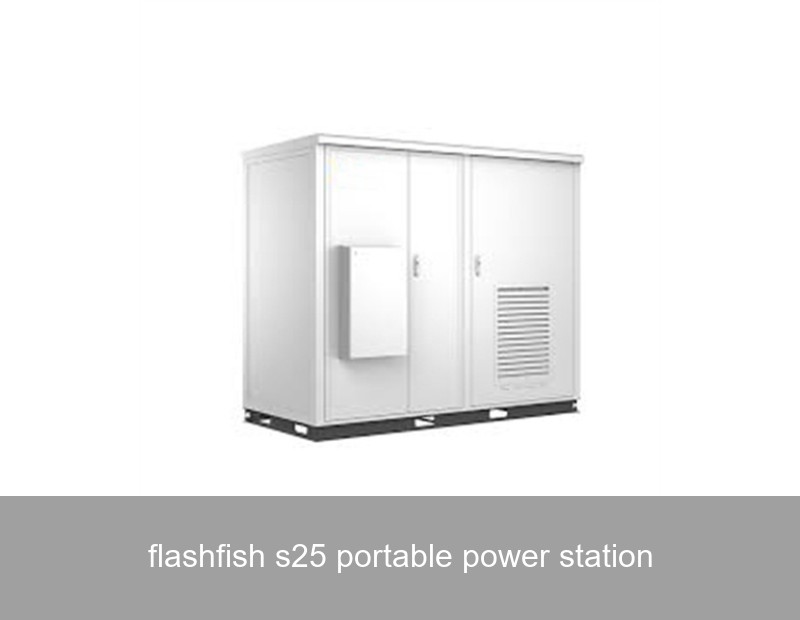
The Flashfish S25 is a compact, lithium-ion battery-powered generator. Unlike traditional gas generators, it operates silently, produces zero emissions, and can be safely used indoors. Think of it as a massive, high-capacity power bank designed to run or charge a variety of devices.
Here are its typical key specifications:
| Feature | Specification |
|---|---|
| Capacity | 222Wh (approximately 61,000mAh) |
| Output Ports | AC outlets (110V), DC carport, USB-A, USB-C |
| Recharging | Wall outlet, car charger, solar panel (compatible) |
| Weight | Around 4.5 lbs (2 kg) |
| Ideal For | Camping, tailgating, short power outages, charging phones, laptops, drones, small CPAP machines, and LED lights. |
Its true value lies in providing peace of mind. For a weekend camping trip, it can keep your string lights glowing and camera gear charged. During a brief blackout, it can power your modem, a lamp, and a fan for several hours.
The Rising Demand for Portable Power: Data & Trends
The market for portable power stations is exploding, and it's not just anecdotal. According to a Grand View Research report, the global portable power station market size was valued at USD 3.9 billion in 2021 and is expected to expand at a compound annual growth rate (CAGR) of 8.5% from 2022 to 2030. What's driving this?
- Increase in Outdoor Recreation & Remote Work: More people are working from non-traditional locations and seeking extended outdoor adventures, requiring reliable power for devices and tools.
- Growing Frequency of Grid Outages: In the U.S. alone, data from the U.S. Energy Information Administration (EIA) shows that customers experienced an average of just over 5 hours of power interruptions in 2020. Severe weather events are a major contributor, making backup power a priority for households.
- The Shift to Clean Energy: Consumers are increasingly opting for clean, quiet alternatives to noisy and polluting gas generators.
This trend reflects a broader societal move towards energy resilience and sustainability—principles that guide companies like Highjoule in developing larger-scale solutions.

Image Source: Unsplash (Photographer: Bill Oxford)
Case Study: Powering a Small Business Through an Outage
Consider "The Roasted Bean," a small coffee shop in rural Texas, USA. In the winter of 2023, an ice storm caused a 9-hour grid outage during their busiest morning hours. Losing power meant not only lost revenue but also spoiling perishables.
Their Solution & Outcome: The owner had invested in two Flashfish S25 units primarily for farmers' market pop-ups. During the outage, they were able to:
- Power a critical point-of-sale (POS) system and tablet for 8+ hours.
- Keep the shop's Wi-Fi router running to process card payments.
- Run several LED shop lights, creating a safe, welcoming environment for the few customers who braved the weather.
- Charge staff phones for communication.
While the espresso machine remained off, this setup allowed them to serve pre-brewed cold brew and pastries, generating approximately $450 in revenue they would have otherwise lost. It also prevented the POS system from going down, avoiding transaction delays and customer frustration. This case highlights how even a modest portable power station can provide critical business continuity during shorter disruptions.
Beyond Portable: The Larger World of Energy Storage
While the Flashfish S25 excels at mobility and small-scale backup, energy needs scale dramatically for homes, businesses, and communities. This is where advanced, stationary battery energy storage systems (BESS) come in. Companies like Highjoule are at the forefront of this technology, providing intelligent systems that do more than just provide backup.
Highjoule's solutions, such as the Highjoule HES Series for Homes and the Highjoule CIB Series for Commercial & Industrial applications, are integrated systems designed for:
- Energy Independence: Pairing seamlessly with solar PV systems to store excess daytime generation for use at night, significantly reducing grid reliance.
- Demand Charge Management: For businesses, utilities often charge based on peak power usage. Highjoule's smart systems can discharge during these peaks, slashing electricity bills.
- Grid Services & Microgrids: Large-scale systems help stabilize the electrical grid and can form the backbone of independent community microgrids, enhancing resilience for entire neighborhoods or industrial parks.
Think of the Flashfish S25 as your personal energy pod—incredibly useful for individual mobility. Highjoule's stationary systems are like the home's or factory's central energy brain, managing flow, efficiency, and security on a much larger scale. Both are essential pieces of the modern energy puzzle.

Image Source: Unsplash (Photographer: Andreas Gücklhorn)
How to Choose the Right Power Solution for Your Needs
Selecting the right power solution depends entirely on your use case. Here’s a simple guide:
For Portable & Short-Term Backup (Choose a unit like Flashfish S25 if you need to):
- Power devices during camping, road trips, or tailgating.
- Keep essential electronics (phones, modem, CPAP) running for up to 8-12 hours during an outage.
- Have a lightweight, grab-and-go power source for hobbies or remote work.
For Whole-Home & Business Resilience (Explore Highjoule solutions if you need to):
- Backup critical home circuits (refrigeration, heating/cooling, medical equipment) for hours or days.
- Maximize self-consumption of solar energy and reduce your electricity bill.
- Protect a commercial operation from costly downtime and demand charges.
- Contribute to community or grid stability with scalable storage.
The journey towards energy resilience often starts with a portable power station. It's a tangible first step that makes the concept of energy storage personal. For many, it naturally leads to questions about larger, more permanent solutions for their home or business.
 Inquiry
 Online Chat