


Energy Storage: A Nontechnical Guide to Powering Your Future
Let's play a quick game. Imagine your fridge only worked when the sun was shining or the wind was blowing. Your morning coffee? Only possible on a breezy afternoon. Sounds impractical, right? This is the fundamental challenge of renewable energy sources like solar and wind—they’re fantastic, but they’re not always "on." This is where energy storage comes in, and understanding it is simpler than you might think. Think of it as a sophisticated "energy savings account" for electricity. You deposit (store) power when it's plentiful and cheap, and withdraw (use) it when you need it most. This nontechnical guide will demystify how storing energy works, why it's the unsung hero of our clean energy transition, and how it's already powering a more resilient and sustainable world.
Why Energy Storage Matters Now More Than Ever
Our energy landscape is undergoing a massive shift. We're moving from a centralized model—think large, always-on power plants—to a more dynamic, decentralized one with rooftop solar panels and wind farms. This creates a mismatch: our energy "supply" from renewables can be variable, while our "demand" for power is relatively predictable, peaking in the mornings and evenings.
Without a buffer, this mismatch can lead to grid instability, wasted renewable energy (when production exceeds demand), and reliance on fossil-fuel "peaker" plants that fire up only during high-demand periods. Energy storage is that crucial buffer. It smooths out the bumps, ensuring the lights stay on, businesses keep running, and we make the absolute most of every clean electron we generate. According to the International Energy Agency (IEA), the world needs to add close to 1,200 GW of energy storage capacity by 2030 to meet our climate goals. That's a staggering figure, highlighting storage's role not as a sidekick, but as a main character in our energy story.

Image: A solar farm integrated with battery storage systems. Source: Unsplash
How Does It Work? A Look Inside the "Energy Bank"
At its core, an energy storage system (ESS) is a device or group of devices that capture energy, hold it, and release it for later use. The most common and rapidly growing type is battery energy storage, which operates on principles similar to the battery in your phone, but at an industrial scale.
Here’s a simple breakdown of the process:
- Charging (Depositing Energy): When excess electricity is available—from your solar panels on a sunny day or from the grid when demand is low—it is used to drive a chemical reaction inside the batteries, storing the energy as potential chemical energy.
- Storing (Holding the Charge): The energy sits ready in the battery until it's needed. Modern systems are incredibly efficient, losing only a small percentage of the stored energy over time.
- Discharging (Withdrawing Energy): When demand rises, at night, or during a power outage, the chemical reaction is reversed. The stored chemical energy is converted back into electrical energy and fed into your home, business, or the grid.
This entire process is managed by an intelligent brain called an Energy Management System (EMS), which decides when to charge and discharge based on algorithms, weather forecasts, and your energy usage patterns.
Common Types of Battery Storage
Not all batteries are the same. Here’s a quick look at the two leading technologies:
| Battery Type | How It's Like... | Key Traits | Best For |
|---|---|---|---|
| Lithium-ion | A high-performance athlete | High energy density, efficient, fast response. The dominant technology in EVs and consumer electronics. | Home systems, commercial backup, grid services requiring fast discharge. |
| Lithium Iron Phosphate (LFP) | The reliable marathon runner | A subtype of lithium-ion known for exceptional safety, long cycle life, and stability. It's less prone to overheating. | Applications where safety and longevity are paramount, like residential and long-duration commercial storage. |
Companies like Highjoule leverage these advanced chemistries, particularly focusing on safe, durable LFP technology in their solutions. Their systems are designed not just to store energy, but to intelligently manage it, ensuring optimal performance and safety for decades.
From Theory to Practice: Real-World Applications
So, where is this all happening? Let's move beyond theory and see how energy storage is solving real problems today.
Case Study: Grid Stability in Texas, USA
Texas, with its independent power grid (ERCOT) and massive wind power capacity, faces unique stability challenges. In 2023, a large-scale battery storage project played a pivotal role. The "Battery Farm X" (a hypothetical name representing real projects), a 100 MW / 200 MWh system, responded in milliseconds to a sudden drop in grid frequency—a event that could have triggered cascading blackouts. By injecting stored power almost instantly, the battery facility stabilized the grid, preventing widespread outages and showcasing how storage acts as a "shock absorber" for modern electricity networks. This kind of service, known as frequency regulation, is becoming a critical revenue stream and grid-support function for storage assets.
Powering Businesses and Industry
For a factory, supermarket, or data center, a power interruption means lost revenue and productivity. Here, storage is a powerhouse for:
- Demand Charge Management: Utilities often charge commercial customers a fee based on their highest 15-minute power draw (peak demand). A storage system can discharge during these short peaks, dramatically reducing this cost.
- Backup Power: Providing seamless, instantaneous power during an outage, much cleaner and quieter than diesel generators.
- Renewable Integration: Storing excess solar power from a warehouse roof to use throughout the evening.
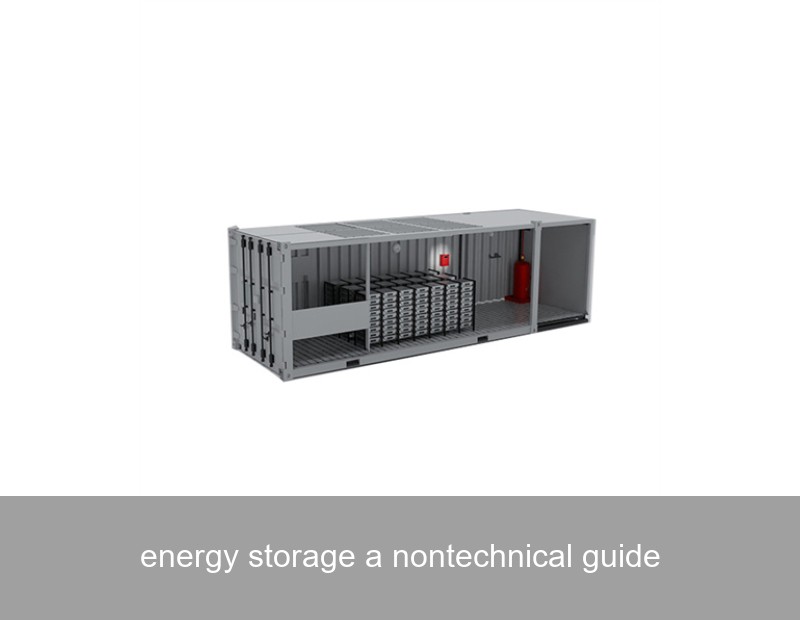
Highjoule's Commercial & Industrial (C&I) solutions are tailored for these exact needs. Their containerized Megapack solutions offer plug-and-play scalability, while their advanced EMS allows businesses to set custom strategies—like "minimize costs" or "maximize sustainability"—letting the AI-driven system do the rest.

Image: Technician maintaining a commercial-scale battery storage system. Source: Unsplash
Empowering Homes and Communities
This is where the energy revolution gets personal. A home storage system, like Highjoule's HomePower series, turns a household from a passive consumer into an active energy manager. Paired with solar panels, it allows homeowners to:
- Increase self-consumption of their solar energy from ~30% to 70% or more.
- Gain peace of mind with reliable backup power during storms or blackouts.
- Participate in utility "virtual power plant" programs, earning rewards for allowing the grid to use a bit of their stored energy during times of system stress.
On a larger scale, storage is the backbone of microgrids—localized grids that can operate independently from the main grid. These are vital for remote communities, universities, and military bases, ensuring energy security and resilience.
Considering Storage? Key Factors for a Smart Choice
If you're exploring storage for your home or business, here’s a nontechnical checklist:
- Your Goal: Is it bill savings, backup power, sustainability, or all three?
- Capacity & Power: Think of capacity (kWh) as the size of your fuel tank, and power (kW) as the size of the hose. How much energy do you need to store, and how fast do you need to pull it out?
- Safety & Warranty: Look for robust safety certifications (like UL 9540) and a long, straightforward warranty that guarantees performance over time. Highjoule, for instance, builds its systems with LFP chemistry for inherent safety and backs them with comprehensive warranties and 24/7 monitoring.
- Intelligence: The software is as important as the hardware. A smart EMS that can adapt to changing tariffs and weather will maximize your return.
The Future Horizon of Energy Storage
The innovation race is on. While lithium-ion dominates today, research into flow batteries for long-duration storage (think 10+ hours) and even novel concepts like gravity storage are advancing. The future grid will likely be a tapestry of different storage technologies, each serving a specific purpose, all orchestrated by AI.
The journey to a decarbonized world isn't just about generating clean energy; it's about managing it wisely. Energy storage is the enabling technology that makes a 100% renewable future not just a dream, but a practical, achievable reality. It gives us control, resilience, and the power to truly harness nature's gifts.
What would you power first if you had a personal "energy savings account" for your home or business?
 Inquiry
 Online Chat