


Unlocking Maximum Solar Yield: Why Your Inverter's Full Load MPPT Voltage Range Matters
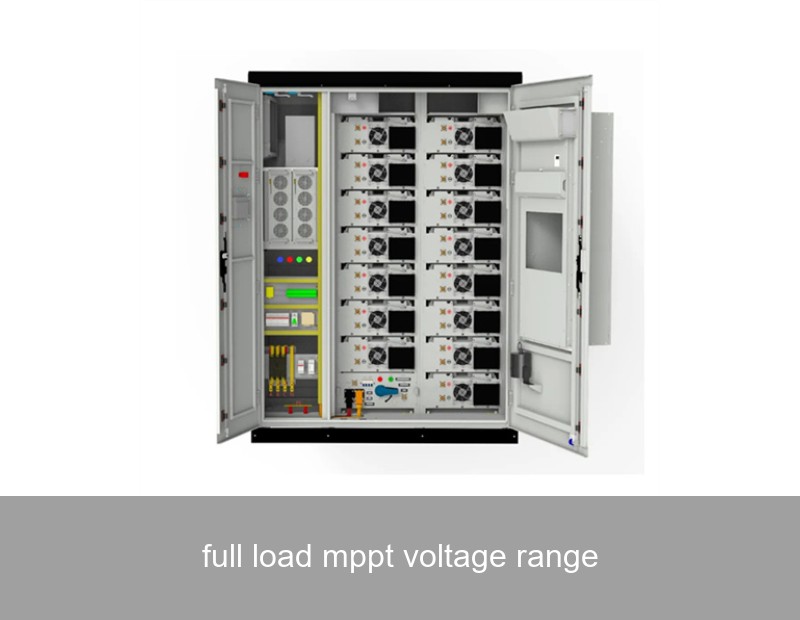
you've invested in a beautiful rooftop solar array. The panels are gleaming, the weather app promises sun, and you're ready to slash your energy bills. But are you truly capturing every possible kilowatt-hour? The secret to maximizing that harvest often lies not just in the panels themselves, but in a critical, yet frequently overlooked, specification of your solar inverter: the full load MPPT voltage range. Think of it as the "sweet spot" window where your inverter works at its absolute peak efficiency to convert sunlight into usable power for your home or business. A wider range isn't just a technical nicety—it's the difference between a system that performs and one that truly excels, day in and day out, in the real, imperfect world.
What is Full Load MPPT Voltage Range? Demystifying the Core Spec
Let's break it down. MPPT stands for Maximum Power Point Tracking. It's the brainy technology inside your inverter that constantly hunts for the optimal voltage and current combination from your solar panels to deliver the maximum possible power. Now, the full load MPPT voltage range is specifically the span of voltages within which the inverter can perform this tracking while operating at its full, rated power output.
Why is the "full load" part so important? Imagine a highway. Many inverters have a wide "MPPT voltage range" where they can *operate*, but at the edges of that range, they might only be able to process a fraction of their capacity—like being stuck in the slow lane. The full load range is the fast lane: it's where the inverter can take in all the power your panels are producing and convert it at peak efficiency. For commercial and industrial setups where every kilowatt counts, this specification is paramount.
A typical spec sheet might list: MPPT Range: 200-1000V, Full Load MPPT Range: 480-800V. This tells you that while the system starts working at 200V, it only reaches its full, nameplate power output when the voltage from the string is between 480V and 800V.
Why a Wide Full Load MPPT Voltage Range is a Game-Changer
In theory, a solar system is designed to operate within an ideal voltage window. In practice, the real world throws constant curveballs.
The Real-World Phenomenon: It's Never a Perfect Sunny Day
Your solar panels' output voltage isn't constant. It fluctuates with temperature (voltage drops on hot summer days, rises on cold mornings), partial shading from a chimney, tree, or new building, panel degradation over time, and even soiling like dust or snow. A narrow full load MPPT range means your inverter could frequently fall out of its high-efficiency zone. On a cold, bright morning, your panels might produce a voltage spike that pushes the inverter to operate outside its optimal full-load range, causing it to "clip" or waste potential energy. Conversely, on a scorching afternoon or under light shading, the voltage might dip too low, forcing the inverter to derate.

Image Source: Unsplash (Photographer: American Public Power Association)
The Data Doesn't Lie: Extended Harvest = Faster ROI
The financial impact is tangible. Research from institutions like the National Renewable Energy Laboratory (NREL) highlights how inverter clipping and suboptimal operation can reduce annual energy production. A system with a wider full load MPPT voltage range can maintain peak production for more hours of the day and across more seasons. Industry analysis suggests that optimizing this single parameter, especially in variable climates like those across Europe and North America, can boost annual energy yield by 2% to 5%. Over a 25-year system life, that additional energy translates directly to thousands of dollars in extra savings or revenue, accelerating your return on investment.
A Case Study: The German Dairy Farm
Consider a real-world example: a dairy farm in Bavaria, Germany. The farm installed a 250 kW solar array on its barn roofs. The initial inverter design had a relatively narrow full load MPPT range. Data loggers showed that during the cold, sunny hours of spring and autumn, the array voltage would rise above the inverter's optimal range, leading to noticeable clipping. Furthermore, early morning mist and occasional shading from silos caused voltage dips that triggered derating.
The solution was an upgrade to a system engineered with a wider full load MPPT voltage range. The new inverter, a Highjoule H-Energy C&I Series model, with a full load range spanning 550V to 850V, could handle the farm's voltage swings effortlessly. The result? Post-upgrade monitoring over one year showed a 4.1% increase in total annual energy production. For this farm, that meant an additional 10,250 kWh per year—enough to power several additional milking machines and significantly reduce their operational carbon footprint. This case underscores that the right inverter isn't just about peak power; it's about sustained, optimized power across all conditions.
The Highjoule Approach: Engineering for Real-World Imperfection
At Highjoule, we've been designing advanced energy storage and conversion systems since 2005 with a core principle: our technology must thrive in the real world, not just in a lab datasheet. This philosophy is deeply embedded in our inverter and integrated solar-plus-storage solutions.
Our product development focuses on maximizing the full load MPPT voltage range without compromising reliability. For instance, our residential Highjoule H-Power Home Hub and commercial H-Energy Series inverters utilize advanced multi-level topology and sophisticated algorithms. This allows them to maintain full-rated output over an exceptionally broad voltage window, ensuring that whether it's a frosty morning in Minnesota or a hazy afternoon in Spain, your system captures more energy.
But we go beyond just the inverter. Our true expertise lies in intelligent system integration. Our inverters are the heart of a smarter ecosystem, seamlessly communicating with Highjoule battery storage (like our high-density H-Cell modules) and energy management software. This allows for dynamic optimization not just of the solar harvest, but of when to store it, when to use it, and when to export it—all based on real-time conditions and your energy tariffs. It’s this holistic, system-level approach that turns a good solar installation into a resilient and highly efficient energy asset.

Image Source: Unsplash (Photographer: Andreas Gücklhorn)
Choosing the Right Inverter: Key Questions Beyond the Voltage Range
While the full load MPPT voltage range is crucial, it's one piece of the puzzle. When evaluating a system for your home or business, consider these factors in tandem:
- String Design Flexibility: A wide voltage range allows for longer or shorter string configurations, giving installers more flexibility to adapt to complex roof layouts or avoid shading issues.
- Temperature Coefficient Consideration: Always calculate your expected voltage range based on local temperature extremes and your specific panels' temperature coefficients. A good installer will model this.
- Future-Proofing: If you plan to add more panels later or your energy consumption changes, an inverter with a generous operating range provides more headroom for expansion.
- Total System Efficiency: Look at weighted efficiency figures (like European or CEC weighted efficiency) which account for performance at different power levels, not just peak efficiency.
| Scenario | Challenge for Inverter | Benefit of a Wide Full Load MPPT Range |
|---|---|---|
| Hot Summer Afternoon | Panel voltage drops significantly due to high cell temperature. | Inverter stays within its high-efficiency zone, avoiding premature derating. |
| Cold, Clear Winter Day | Panel voltage rises above typical operating points. | Inverter can accept the higher voltage without clipping excess power. |
| Partial Shading Over Time | Voltage of affected string sections becomes erratic and lower. | Greater margin to track the reduced voltage while keeping other unshaded strings optimized. |
Is Your System Operating at Its True Potential?
Your solar investment deserves to deliver every watt it was promised to. By now, you understand that the full load MPPT voltage range is a critical lever in achieving that goal. It’s the engineering specification that bridges the gap between ideal laboratory conditions and the messy, variable reality of your rooftop. So, we leave you with this question to ponder or ask your energy provider: When you look at your system's performance data, especially during shoulder seasons and extreme temperatures, are you seeing the flat-top plateau of clipping or the smooth curve of optimized harvest? The answer might reveal the key to your next step in energy independence. What specific weather pattern in your region do you think most impacts your current energy production?
 Inquiry
 Online Chat