


What is a GEM Energy Storage Center and Why is it a Game-Changer for Modern Power Systems?
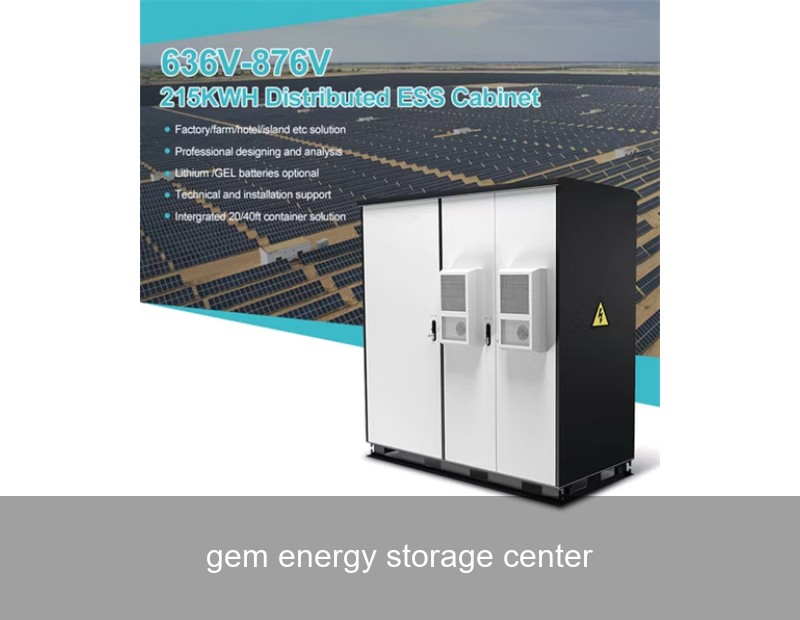
You've likely heard the buzzwords: grid stability, renewable integration, energy independence. But behind these terms lies a critical challenge—how do we manage the intermittent nature of solar and wind power to keep the lights on reliably? The answer is increasingly found in large-scale, intelligent battery systems. Enter the concept of the **GEM Energy Storage Center**. GEM, standing for Grid-Enabling Megawatt-scale storage, represents a new class of energy infrastructure. It's not just a battery in a box; it's a sophisticated hub designed to support entire communities, commercial districts, or industrial facilities. In this article, we'll demystify what a GEM Energy Storage Center truly is, explore its transformative potential, and see how companies like Highjoule are turning this concept into a resilient reality for businesses and grids across Europe and the US.
The Grid's New Reality: Volatility and Opportunity
Let's face it, our electricity grids were built for a different era. They were designed for predictable, centralized power plants feeding energy in one direction. Today, millions of rooftop solar panels and wind farms are injecting power unpredictably, creating a complex, two-way flow. This can lead to frequency fluctuations, voltage instability, and even the risk of blackouts during peak demand or sudden generation drops. The International Energy Agency (IEA) highlights that grid-scale storage is a cornerstone for secure clean energy transitions. This is the precise problem a **GEM Energy Storage Center** is built to solve. It acts as a giant "shock absorber" for the grid, soaking up excess renewable energy when production is high and releasing it precisely when it's needed most.

For commercial and industrial (C&I) users, this volatility translates directly to financial risk. Spikes in demand charges, exposure to volatile wholesale energy prices, and the operational cost of downtime during outages are major concerns. A GEM Center shifts the paradigm from passive consumption to active, intelligent energy asset management.
Deconstructing the GEM Center: More Than Just Batteries
Think of a GEM Energy Storage Center as a symphony orchestra. The battery racks (often lithium-ion or newer chemistries like LFP for enhanced safety and longevity) are the instruments. But the true magic lies in the conductor—the advanced energy management system (EMS). Here’s what makes up a modern GEM Center:
- Core Storage Array: Megawatt-hours (MWh) of battery capacity, engineered for high-cycle life and safety.
- Bi-Directional Inverters: The critical hardware that converts DC battery power to AC grid power and vice versa with high efficiency.
- Intelligent Energy Management System (EMS): The brain of the operation. It uses AI and real-time data to make decisions: when to charge, when to discharge, and how to optimize for cost or grid support.
- Grid Interconnection & Controls: Seamless and safe integration with the local utility grid, often capable of providing grid services like frequency response.
- Thermal Management & Safety Systems: A robust, climate-controlled enclosure ensuring optimal performance and safety in all conditions.
This integrated approach is where Highjoule's expertise shines. Since 2005, Highjoule has specialized in designing and deploying such turnkey systems. Our H-Series C&I Energy Storage Solutions are essentially modular GEM Centers, scalable from hundreds of kilowatt-hours to multi-megawatt installations. They come with our proprietary JouleMind AI Platform, which continuously optimizes the system's performance for economic return and reliability, making the complex simple for our clients.
Data Dive: The Tangible Benefits of Megawatt-Scale Storage
The value proposition of a GEM Center isn't theoretical; it's quantifiable. Let's break it down with some real numbers relevant to the US and European markets.
| Benefit Category | How a GEM Center Delivers | Typical Impact (C&I Example) |
|---|---|---|
| Demand Charge Reduction | Discharges during short periods of peak facility demand, flattening the load profile. | Can reduce peak demand by 15-30%, leading to significant monthly savings on utility bills. |
| Energy Arbitrage | Charges with cheap, off-peak or excess solar power, discharges during expensive peak periods. | Capitalizes on time-of-use (TOU) rate differentials, enhancing ROI. |
| Backup Power & Resilience | Provides seamless transition to backup power during grid outages. | Keeps critical operations online, preventing revenue loss from downtime. |
| Renewable Integration | Stores excess on-site solar/wind generation for use later, increasing self-consumption. | Can increase the utilization of on-site renewables from ~30% to over 60%. |
| Grid Services Revenue | In some markets, systems can bid capacity into grid service programs (e.g., frequency regulation). | Creates an additional revenue stream, improving the asset's payback period. |
According to a report by the National Renewable Energy Laboratory (NREL), the declining cost of batteries is accelerating the adoption of storage for these combined value streams, making projects economically viable without heavy subsidies.
Case Study: A European Industrial Park's Journey to Resilience
Let's move from data to a real-world example. Consider a mid-sized manufacturing industrial park in Northern Germany. The park housed several precision engineering firms, a data processing unit, and shared infrastructure. Their challenges were threefold: rising electricity costs, a desire to increase their on-site solar PV usage, and concerns over grid reliability affecting sensitive machinery.
The Solution: The park operators partnered with Highjoule to design and implement a centralized **GEM Energy Storage Center**. The system featured a 2.4 MWh Highjoule H-Series battery bank, integrated with the park's existing 1.5 MW solar canopy installation, and was managed by the JouleMind AI platform.
The Outcome (One Year Post-Installation):
- Energy Cost Savings: By strategically reducing peak demand and optimizing time-of-use energy arbitrage, the park achieved a 22% reduction in annual electricity costs.
- Renewable Self-Consumption: The share of solar energy used directly within the park jumped from 35% to 78%, dramatically reducing their carbon footprint.
- Enhanced Resilience: During a planned grid maintenance outage, the GEM Center seamlessly powered critical loads for over 4 hours, preventing an estimated €200,000 in production losses.
- Grid Support: The system is enrolled in a local grid balancing scheme, generating modest but steady ancillary service revenue.

This case exemplifies the multi-faceted role of a GEM Center: it's a cost-saving machine, a sustainability enabler, and an insurance policy, all in one.
Highjoule's Role: Building Intelligent GEM Centers for the Future
As a global leader with nearly two decades of experience, Highjoule doesn't just supply equipment; we deliver certainty. Our approach to creating a GEM Energy Storage Center is holistic:
- Consultation & Feasibility: We analyze your energy profiles, local utility rates, and goals to model the optimal system size and financial return.
- Integrated Design: Our engineers design the complete system, ensuring seamless integration with your existing infrastructure, be it solar PV, generators, or complex manufacturing loads.
- Technology Agnosticism: We select the best-in-class battery cells, inverters, and safety systems to meet your specific durability and performance needs.
- AI-Driven Operation: The JouleMind platform is the differentiator. It doesn't just run the system; it learns and adapts to market signals, weather patterns, and your operational schedule to maximize value 24/7.
- Ongoing Support & Monitoring: Our global service network provides remote monitoring and proactive maintenance, ensuring your GEM Center performs for its entire lifespan.
Whether for a large commercial facility in California looking to navigate CAISO's evolving grid rules, a hospital in France requiring absolute power reliability, or a community microgrid in Scandinavia, Highjoule's solutions are tailored to be the intelligent core of a modern, resilient energy strategy.
Is Your Operation Ready for the Next Step in Energy Management?
The transition to a flexible, decentralized grid is not a distant future—it's happening now. A GEM Energy Storage Center is more than an infrastructure project; it's a strategic business decision that addresses financial, operational, and environmental goals simultaneously. The question is no longer "if" large-scale storage will become standard, but "when" and "how" your organization will implement it.
What would a 20% reduction in your annual energy costs do for your competitiveness? How much value would you place on ensuring uninterrupted operations during the next grid disturbance? We invite you to start the conversation. **What's the single biggest energy challenge your facility is facing today, and how could a centralized, intelligent storage solution transform that challenge into an advantage?**
 Inquiry
 Online Chat