


Canadian On-Grid Energy Storage Cabinet: The Key to Grid Stability and Energy Independence
Imagine a typical Canadian winter evening: temperatures plummet, heating demand soars, and the provincial grid is straining under the peak load. Now, imagine a seamless, intelligent solution sitting right on a commercial property, quietly discharging stored, low-cost electricity to keep the lights on and costs down. This isn't a future concept; it's the reality enabled by the modern Canadian on-grid energy storage cabinet. For businesses, utilities, and communities across Canada, these systems are transforming from niche technology to a critical component of a resilient and economical energy strategy. As a global leader with nearly two decades of experience, Highjoule is at the forefront, engineering smart storage solutions that meet the unique demands of the Canadian landscape.
Table of Contents
The Pressure on Canada's Grid: More Than Just Cold Snaps
Canada's electricity story is complex. While blessed with abundant hydro resources in some provinces, others rely heavily on fossil fuels or nuclear. The common thread? Grids are facing unprecedented challenges. Electrification of transport and heating is increasing demand, while aging infrastructure requires costly upgrades. Furthermore, integrating intermittent renewable sources like wind and solar—a growing part of Canada's energy mix—requires new tools for balancing supply and demand in real-time.
This is where the data becomes compelling. According to the Canada Energy Regulator, national electricity demand could increase by over 40% by 2050 under a net-zero scenario. Meanwhile, peak demand periods, often on the coldest winter mornings or hottest summer afternoons, drive disproportionate costs for utilities and, subsequently, for commercial and industrial (C&I) ratepayers through high "global adjustment" charges in markets like Ontario or peak demand charges elsewhere.
What is an On-Grid Energy Storage Cabinet?
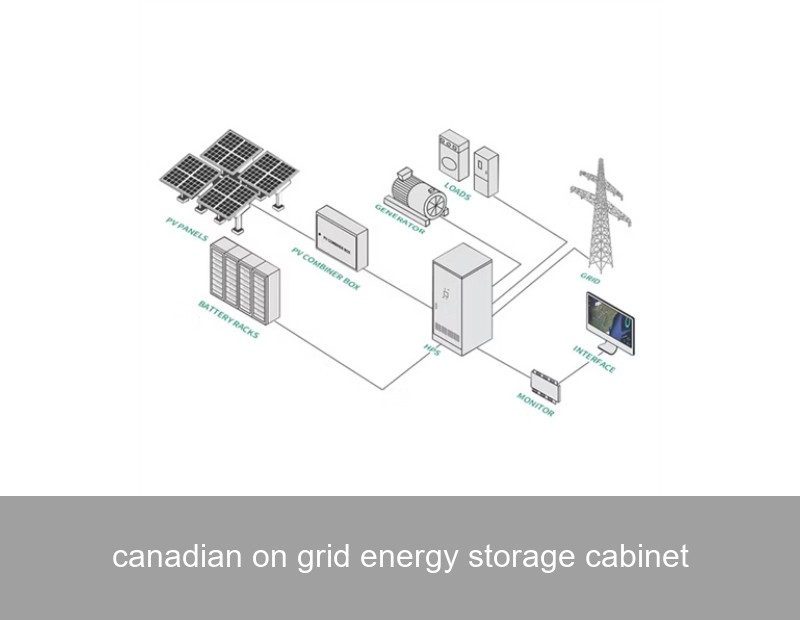
Let's demystify the technology. An on-grid (or grid-tied) energy storage cabinet is a fully integrated, containerized system that stores electrical energy, typically in advanced lithium-ion batteries, for later use while remaining connected to the main utility grid. Think of it as a sophisticated power bank for your business or community, but one that's smart enough to communicate with the grid.
A standard system consists of several key components housed in a robust, weatherized cabinet or enclosure suitable for Canadian climates:
- Battery Racks: The core energy storage units using LiFePO4 (Lithium Iron Phosphate) chemistry, known for its safety, long life, and performance in varied temperatures.
- Battery Management System (BMS): The "brain" of the battery, ensuring cell balance, safety, and longevity.
- Power Conversion System (PCS): The inverter/charger that converts AC from the grid to DC for storage and back to AC for use.
- Energy Management System (EMS): The top-level intelligence that controls when to charge (often during low-cost, off-peak hours) and when to discharge (during expensive peak periods), optimizing for cost savings or grid services.
- Thermal Management & Safety Systems: Critical for Canadian operations, including heating and cooling to keep batteries at optimal operating temperature year-round, alongside comprehensive fire suppression and isolation.

Image Source: Unsplash (Representative image of industrial energy storage cabinets)
Key Benefits for Canadian Stakeholders
So, what does this mean for you? The applications are powerful:
| Stakeholder | Primary Benefit | How It Works |
|---|---|---|
| Commercial & Industrial Businesses | Significant Cost Reduction | Peak Shaving: The EMS discharges the cabinet during short periods of highest energy use, slashing peak demand charges, which can constitute up to 30-50% of an electricity bill. |
| Utilities & Grid Operators | Enhanced Grid Stability & Deferred Capital Investment | Frequency Regulation & Grid Support: Storage cabinets can respond to grid signals in milliseconds to inject or absorb power, stabilizing frequency and avoiding the need for expensive "peaker" plants or infrastructure upgrades. |
| Renewable Project Developers | Increased Project Value & Dispatchability | Solar+Storage Integration: Paired with a solar array, storage captures excess midday generation and dispatches it in the evening, smoothing output and increasing self-consumption. |
| Remote/Indigenous Communities | Reduced Diesel Dependence | Microgrid Support: In hybrid diesel-microgrids, storage maximizes renewable penetration, reduces fuel consumption, and provides backup power, enhancing energy sovereignty. |
A Real-World Case Study: Peak Shaving in Ontario
The theory is solid, but let's look at a concrete example. A large cold storage warehouse in Southern Ontario faced crippling electricity costs, primarily driven by the province's Global Adjustment (GA) and Time-of-Use (TOU) rates. Their refrigeration loads created sharp, unpredictable demand spikes.
The Solution: Highjoule deployed a 500 kW / 1 MWh on-grid energy storage cabinet system at their facility. The system's advanced EMS was programmed with algorithms specific to the IESO (Independent Electricity System Operator) market structures.
The Results (Data from the first 12 months of operation):
- Peak Demand Reduction: Consistently shaved over 400 kW off monthly peak draws.
- Financial Savings: Achieved a reduction of over 28% in monthly electricity costs related to demand and GA charges.
- ROI Timeline: Projected full return on investment within 5 years, thanks to the high cost of peak power in the region.
- Grid Support: The system is also enrolled in a pilot program for dispatchable capacity, providing a small additional revenue stream for the business.
This case highlights the tangible, bottom-line impact a well-engineered storage cabinet can deliver in the Canadian regulatory environment.
Highjoule's Role: Tailored Solutions for Canadian Demands
Not all storage cabinets are built for a Canadian climate or market. Highjoule, drawing on its global experience since 2005, designs its GridTitan series of C&I storage solutions with specific Canadian challenges in mind.
Our systems feature:
- Arctic-Ready Thermal Management: Our cabinets incorporate active liquid cooling and heating systems, ensuring efficient operation and longevity from -30°C winters to +35°C summers.
- Grid-Interactive Intelligence: The Highjoule EMS comes pre-configured with Canadian market protocols (like IESO or AESO rules), allowing for seamless participation in demand response or grid service programs.
- Plug-and-Play Architecture: We deliver fully integrated, pre-tested cabinets to minimize on-site installation time and complexity, a crucial factor in regions with short construction seasons.
- Comprehensive Lifecycle Support: From initial feasibility and financial modeling to long-term performance monitoring and maintenance, Highjoule partners with clients for the entire project lifecycle.

Image Source: Unsplash (Representative image of energy storage system maintenance)
For a dairy farm in Alberta looking to pair storage with wind, a manufacturing plant in Quebec aiming to cut demand charges, or a remote community in Nunavut seeking to integrate more solar, Highjoule provides more than hardware—we provide a customized energy resilience strategy.
The Future Outlook for Energy Storage in Canada
The momentum is undeniable. Federal investment tax credits for clean energy storage, combined with provincial incentives and the sheer economic logic of peak shaving, are accelerating adoption. The Government of Canada's Energy Storage Strategy explicitly recognizes storage as essential for achieving a net-zero grid.
Future advancements will see storage cabinets becoming even more intelligent, acting as autonomous grid assets that trade energy, provide black-start capabilities, and integrate seamlessly with electric vehicle charging hubs. The Canadian on-grid energy storage cabinet is evolving from a cost-saving tool to the fundamental building block of a decentralized, robust, and clean electricity future.
Your Energy, Your Control
The question for Canadian business leaders, utility planners, and community energy managers is no longer if storage will play a role in their operations, but when and how. With volatile energy prices and grid reliability in the spotlight, what is the first step your organization will take to assess its own energy resilience and economic opportunity through storage?
 Inquiry
 Online Chat