


Why a Generator for Solar System is the Key to Unlocking True Energy Independence
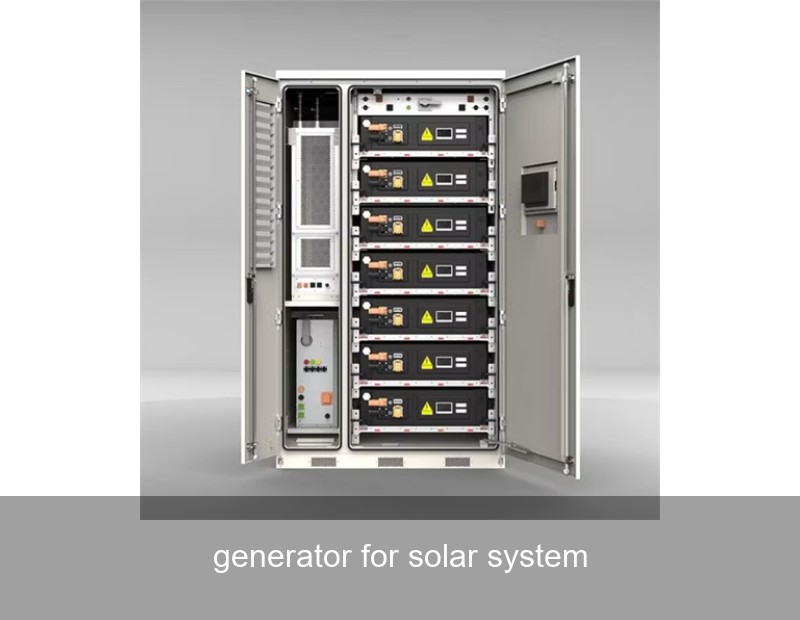
You've made the smart investment in solar panels. You're generating clean energy, reducing your carbon footprint, and watching your electricity bills drop. But what happens when the sun goes down, or during a prolonged grid outage? This is the critical gap that leaves many solar homeowners and businesses still reliant on the traditional grid or noisy, polluting fossil-fuel generators. The true solution lies not in an either-or choice, but in integration: pairing your solar array with a modern, intelligent generator for solar system—specifically, a battery energy storage system (BESS). This article will explore how this combination transforms your solar installation from a partial solution into a robust, resilient, and independent power source.
Table of Contents
- The Problem: Solar's Intermittency and Grid Dependency
- The Data: Rising Outages and the Economic Case for Storage
- The Solution: The Modern Battery as Your Solar Generator
- Highjoule's Role: Intelligent Energy Storage Systems
- A Real-World Case: Resilience in California
- Making the Right Choice for Your Needs
The Problem: Solar's Intermittency and Grid Dependency
Let's face a fundamental truth: solar panels are only productive when the sun shines. At night, your home or business instantly switches back to drawing power from the utility grid. Even during the day, passing clouds can cause significant dips in production. This creates a paradox—you have a clean energy source, but you remain vulnerable to grid failures, time-of-use rates, and you're often exporting your excess solar energy back to the grid for minimal compensation.
The traditional answer to backup power has been the diesel or propane generator. While they provide power, they come with significant drawbacks: noise, emissions, require fuel storage and delivery, need regular maintenance, and don't integrate with your solar system. They're a separate, often clunky, emergency tool rather than a seamless part of your energy ecosystem.
The Data: Rising Outages and the Economic Case for Storage
The need for backup is not theoretical. Data shows a clear and concerning trend. In the United States, the U.S. Energy Information Administration (EIA) reports that the average electricity customer experienced just over eight hours of power interruptions in 2020, with major events driving a dramatic increase from the previous year. In Europe, grid stability concerns are also rising due to aging infrastructure and the increasing frequency of extreme weather events.
Financially, the economics of solar alone are evolving. Many regions, like California with its NEM 3.0 policy, are drastically reducing the credit value for solar energy exported to the grid. This makes storing your excess solar energy for use later in the evening far more valuable than selling it. A generator for solar system in the form of a battery allows you to maximize self-consumption of your solar power, often exceeding 70-80%, shielding you from high peak electricity rates and providing a return on investment through bill savings alone, before even factoring in the value of resilience.

Credit: A modern home energy system combining solar panels and a wall-mounted battery storage unit, the core of a seamless solar generator solution.
The Solution: The Modern Battery as Your Solar Generator
This is where the advanced battery storage system comes in. Think of it as a silent, automated, zero-emission generator for solar system. Its core function is to store the surplus DC electricity your solar panels produce during the day. An inverter then converts this stored energy into usable AC power for your home precisely when you need it—after sunset, during a grid outage, or when electricity rates are at their peak.
Key advantages over traditional generators include:
- Instantaneous Response: Provides backup power in milliseconds, far faster than any fossil-fuel generator.
- Silent & Zero-Local-Emission Operation: Works indoors or outdoors without noise or fumes.
- Seamless Solar Integration: Becomes a charging and discharging hub for your solar array, managed by intelligent software.
- Grid Services & Financial Benefits: Can participate in utility programs (where available) to earn revenue by supporting grid stability.
Highjoule's Role: Intelligent Energy Storage Systems
At Highjoule, we've been at the forefront of this evolution since 2005. We don't just supply batteries; we provide complete, intelligent generator for solar system solutions. Our product line, like the Highjoule H-Series Home Energy Hub, is designed specifically for deep integration with new or existing solar installations.
What sets our systems apart is the intelligence layer. Our proprietary energy management system (EMS) doesn't just store and release energy. It learns your consumption patterns, considers weather forecasts, and can be configured to prioritize either maximum financial return (by avoiding peak tariffs) or maximum resilience (by keeping the battery full for outages). For commercial and industrial clients, our M-Grid solutions offer scalable, containerized storage that can manage demand charges, provide critical backup, and even create energy-independent microgrids.
| Feature | Traditional Fuel Generator | Highjoule Battery Storage System |
|---|---|---|
| Start-up Time | Seconds to Minutes | Milliseconds |
| Noise Level | Very High (70-100 dB) | Silent |
| Fuel/Emission | Requires Fossil Fuels, Produces CO2 | Solar/Electricity, Zero Local Emissions |
| Maintenance | High (Oil changes, filter replacements) | Very Low (Solid-state, automated) |
| Integration with Solar | None | Fully Integrated, Optimizes Self-Consumption |
| Operational Cost | Fuel Cost per kWh generated | Free "fuel" from excess solar |
A Real-World Case: Resilience in California's Fire-Prone Region
Consider the situation in Northern California, where Public Safety Power Shutoffs (PSPS) have become a seasonal reality. A medium-sized winery in Sonoma County had a 100kW solar array but remained completely vulnerable during grid outages, risking the spoilage of entire fermentation batches.
In 2022, they installed a Highjoule C&I battery storage system with a capacity of 240 kWh. During a planned 36-hour PSPS event in October 2023, the system seamlessly took over. The battery, charged by the solar array during the day, provided critical power for refrigeration units, lighting, and essential processing equipment. The result?
- Zero operational downtime during the outage.
- Estimated prevention of $40,000 in product loss.
- Continued solar self-consumption, saving an additional $450 on their electricity bill that month by avoiding peak rates before the outage.
This case, documented in partnership with the California Energy Storage Alliance, illustrates the dual role of a modern generator for solar system: a financial asset in normal times and a critical resilience asset in times of need.

Credit: Agricultural businesses like wineries are prime candidates for solar-plus-storage systems to ensure operational continuity.
Making the Right Choice for Your Needs
Choosing the right storage solution depends on your primary goal: Is it maximum backup duration, maximizing financial ROI, or both? Key specifications to evaluate include:
- Usable Capacity (kWh): How much energy can it store? This determines how long it can power your essential loads.
- Continuous Power Rating (kW): How much power can it deliver at once? This determines if it can start your air conditioner or well pump.
- Depth of Discharge & Warranty: A reliable manufacturer like Highjoule will offer a strong warranty (e.g., 10 years) on a system designed for daily cycling.
- Software & Scalability: Can the system's software be updated? Can you add more batteries later?
The Future is Integrated and Intelligent
The conversation is shifting from simply installing solar to designing holistic energy systems. As noted by researchers at the National Renewable Energy Laboratory (NREL), the value of storage increases exponentially when it is optimized for multiple services—from self-consumption to grid support. The modern generator for solar system is the intelligent node that makes this optimization possible, turning a single-family home or a large factory into an active participant in a more stable and sustainable energy future.
Is your current solar system truly prepared for the next grid outage or the next shift in energy pricing? What would it mean for your peace of mind or business continuity to have a silent, automatic power reserve that works in perfect harmony with your solar panels every single day?
 Inquiry
 Online Chat