


Unlocking Solar Potential: A Deep Dive into the Genus Maxilion 1000 VA Inverter
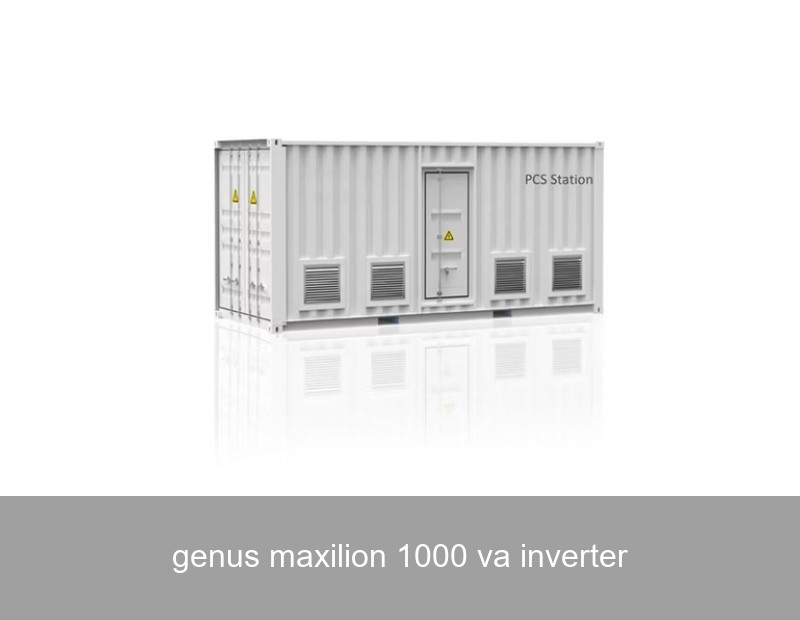
So, you've made the smart decision to invest in solar panels. You're picturing lower bills, energy independence, and a lighter carbon footprint. But here's a secret many discover too late: the true brain and brawn of your solar system isn't just on the roof—it's the often-overlooked box on your wall, the inverter. And not all inverters are created equal. Today, we're focusing on a standout performer for residential and small commercial applications: the Genus Maxilion 1000 VA inverter. This device is more than just a converter; it's the intelligent gateway that determines how much of that precious sunlight actually powers your home and saves you money.
The Phenomenon: Why Your Inverter Choice Matters More Than You Think
Imagine your premium solar panels as a championship sports car. The inverter is the driver, transmission, and pit crew all in one. A basic inverter simply converts the DC power from your panels to AC for your home. But a high-performance inverter like the Genus Maxilion 1000 VA actively manages energy flow, maximizes harvest even on cloudy days, protects your system, and can integrate seamlessly with battery storage. The phenomenon we see repeatedly is that homeowners focus on panel wattage but experience system performance through their inverter. Its efficiency, reliability, and intelligence directly translate to financial return and peace of mind.
The Data: What Separates a Good Inverter from a Great One?
Let's talk numbers. A standard inverter might boast a peak efficiency of 95%. That sounds good, but consider this: losses compound over time. A 97%+ peak efficiency rating, common in advanced models, means significantly more harvested energy over the 25+ year lifespan of your system. For a typical 4kW system, that difference can amount to hundreds of kilowatt-hours annually—energy you paid for in equipment but never get to use.
Furthermore, data from the National Renewable Energy Laboratory (NREL) highlights that inverter reliability is a leading factor in overall system uptime. Advanced features like wide Maximum Power Point Tracking (MPPT) voltage ranges allow inverters to start earlier in the morning, work later in the evening, and perform better in low-light conditions, squeezing every possible watt from your installation.
| Metric | Standard Inverter | Advanced Inverter (e.g., Genus Maxilion 1000 VA class) | Impact |
|---|---|---|---|
| Peak Efficiency | ~94-95% | >97% | Higher energy yield, faster ROI |
| MPPT Voltage Range | Narrow | Wide | Better performance in low-light & variable weather |
| Grid Support Functions | Basic or None | Advanced (Volt/VAR, Freq-Watt) | Improves grid stability, may be required by utilities |
| Battery Readiness | Often Not Ready | Native Hybrid Capability | Easy, cost-effective future battery addition |
A Real-World Case: The Genus Maxilion 1000 VA in Action
Let's move from theory to practice. Consider a case from Southern California, a market with high electricity rates and strong solar adoption. A family in San Diego had a 5.2kW solar array installed in 2019 with a generic inverter. While they saw savings, their system clipped production daily during peak sun hours, losing valuable energy, and offered no backup during frequent public safety power shutoffs.
In 2023, they upgraded their system's core by integrating a Genus Maxilion 1000 VA inverter alongside a Highjoule 10kWh lithium-ion battery. The results were striking:
- Energy Harvest Increase: The superior MPPT algorithms of the Genus Maxilion reduced clipping and improved low-light performance, leading to a 7.5% increase in annual energy production from the same panels.
- Bill Savings: Coupled with time-of-use load shifting using the battery, their monthly electricity bill dropped from an average of $90 post-solar to a net $12 monthly minimum charge.
- Reliability: During a 14-hour grid outage, the system seamlessly powered critical loads (refrigeration, lighting, communications) without interruption, a feature made robust by the inverter's stable islanding capability.

Image Source: Unsplash (Representative image of a modern solar-powered home)
This case exemplifies the transformative role of a capable inverter. It wasn't just an upgrade; it was a system evolution.
Expert Insights: Key Features of the Genus Maxilion 1000 VA Inverter
From a technical perspective, what makes this category of inverter so effective? Here’s a breakdown of the features that matter, embodied by solutions like the Genus Maxilion 1000 VA:
- True Hybrid Architecture: Unlike simple battery backup systems, a true hybrid inverter like this manages multiple energy sources—solar, battery, and grid—simultaneously and intelligently. It decides the most economical and efficient path for every watt of energy.
- Robust Grid Compliance: For markets in Europe and North America, meeting grid codes (like UL 1741 SA in the US, VDE-AR-N 4105 in Germany) is non-negotiable. Advanced inverters provide essential grid support functions, making installation approval smoother and contributing to community grid health.
- Scalability and Monitoring: The best systems think ahead. The ability to easily add battery capacity and monitor system performance in real-time via a user-friendly app turns homeowners into informed energy managers. You can see your self-consumption rate, savings, and environmental impact daily.
As highlighted by the Solar Energy International resource center, selecting an inverter with these future-proof features is critical for long-term satisfaction.
Where Highjoule Fits In
At Highjoule, we don't just supply components; we engineer integrated solutions. Our expertise lies in matching advanced technology like the Genus Maxilion 1000 VA inverter with perfectly compatible Highjoule battery systems and intelligent energy management software. We ensure that every part of your storage ecosystem communicates flawlessly, from the inverter's logic board to the battery's management system and your user interface.

Image Source: Unsplash (Representative image of a wall-mounted energy system)
Highjoule: Your Partner in Intelligent Energy Storage
Since 2005, Highjoule has been at the forefront of the energy transition. We understand that a successful installation is more than hardware. For our residential and commercial clients across Europe and the United States, we provide:
- Tailored System Design: Our experts analyze your energy consumption, local climate, utility rates, and goals to specify the optimal inverter and storage capacity. The Genus Maxilion 1000 VA is often a cornerstone for mid-sized homes and small businesses in our portfolio.
- Seamless Integration: We ensure our Highjoule battery storage systems and monitoring platforms work in perfect harmony with leading inverters, delivering a unified, reliable user experience.
- Comprehensive Support: From permitting assistance to long-term performance monitoring, we stand by our systems, ensuring they deliver sustainable value for decades.
Our approach transforms a collection of parts into a resilient, money-saving, and intelligent energy asset for your property.
Looking Ahead: Is Your Home Ready for Smarter Energy?
The energy landscape is shifting from one-way consumption to interactive management. Your home can be an active node in a cleaner grid, and the choice of inverter is the first critical step in that journey. The Genus Maxilion 1000 VA inverter represents the kind of intelligent technology that makes this possible today.
What if your next power outage was a non-event? What if you could automatically avoid drawing expensive peak grid power? The capability exists. The question is, when will you decide to unlock the full potential of your solar investment and take control of your energy future?
We invite you to explore what a truly integrated system, built around high-performance components and Highjoule's expertise, can do for your energy independence and resilience. What's the first energy challenge you'd like to solve?
 Inquiry
 Online Chat