


Navigating the 62.5 kVA Generator Price: A Smarter Path to Power Resilience
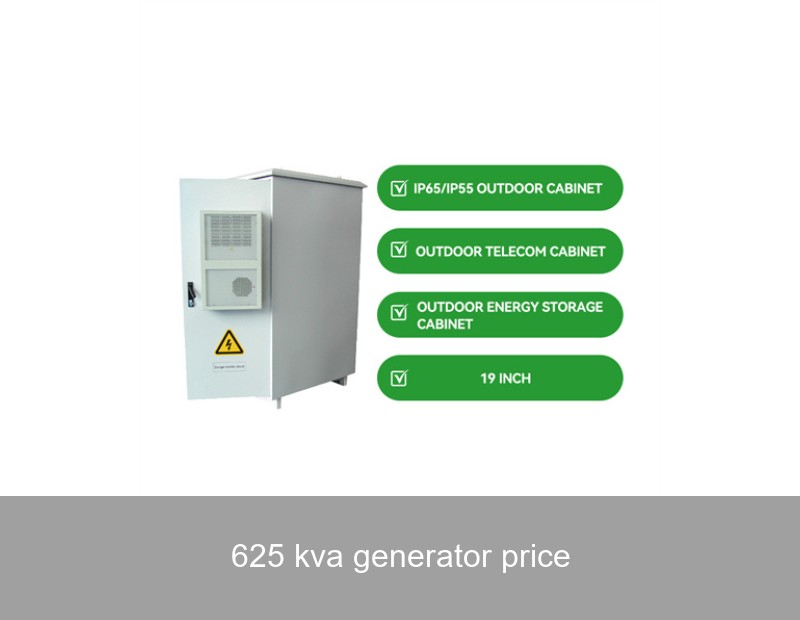
When a power outage strikes a business, the immediate reaction is often to search for a reliable backup generator. For many commercial and industrial operations, a 62.5 kVA generator seems like the perfect fit—a robust workhorse capable of keeping essential systems online. But as you start researching the 62.5 kVA generator price, you quickly encounter a complex equation. The upfront cost is just the beginning. What about fuel costs, maintenance, noise, emissions, and the sheer operational complexity? This traditional approach to backup power is being fundamentally challenged by a new wave of intelligent energy solutions that offer not just backup, but true energy independence and cost predictability.
Table of Contents
- The True Cost of a 62.5 kVA Generator
- The Data Reality: TCO of Traditional vs. Modern Systems
- Case Study: A European Logistics Center's Transition
- The Modern Alternative: Battery Energy Storage Systems (BESS)
- Highjoule's Integrated Power Resilience Solutions
- Making Your Decision: Key Questions to Ask
The True Cost of a 62.5 kVA Generator
Let's be clear: a 62.5 kVA diesel generator has a clear sticker price, typically ranging from $20,000 to $40,000 USD or €18,000 to €35,000 EUR, depending on the brand, specifications, and installation complexity. However, this figure is merely the entry ticket. The real financial commitment unfolds over years:
- Fuel Costs: A generator at 50-75% load can consume 4-6 gallons (15-23 liters) of diesel per hour. With volatile fuel prices, this becomes a significant, unpredictable operating expense.
- Maintenance Regimen: Regular oil changes, filter replacements, coolant servicing, and periodic major overhauls are mandatory to ensure reliability, adding thousands annually.
- Environmental & Regulatory Costs: Noise pollution can lead to permit restrictions. Emissions, particularly in regions with strict carbon policies, may incur additional taxes or compliance costs.
- Operational Inertia: Generators require a brief but critical transfer time (seconds) to start and stabilize, which can disrupt sensitive digital infrastructure.
So, when you ask about the 62.5 kVA generator price, you're really asking: "What is the total cost of ownership for reliable backup power over the next 10-15 years?" This reframing of the question opens the door to more innovative and ultimately economical solutions.
The Data Reality: TCO of Traditional vs. Modern Systems
To move from phenomenon to data, let's consider a comparative model. The U.S. Department of Energy's Lawrence Berkeley National Laboratory has published studies highlighting the economic value of energy storage for backup power and grid services (source). While their focus is broad, the principles apply directly to our comparison.
| Cost Factor | 62.5 kVA Diesel Generator (Est. 10-year TCO) | Equivalent Battery Storage System (BESS) (Est. 10-year TCO) |
|---|---|---|
| Capital/Installation Cost | $30,000 | $45,000 - $60,000 |
| Fuel Cost (200 hrs/yr @ $4/gal) | $48,000+ | $0 (Grid Charging) / Minimal (Solar) |
| Maintenance Cost | $8,000 - $12,000 | $2,000 - $4,000 |
| Potential Revenue/Value Stacking | Minimal to None | Demand Charge Reduction, Grid Services, Solar Self-Consumption |
| Estimated Total Cost of Ownership | $86,000 - $90,000+ | $47,000 - $64,000 (Net Cost) |
The data reveals a critical insight: the higher upfront investment in a Battery Energy Storage System (BESS) is often offset by near-zero marginal operating costs and the ability to generate value every single day, not just during outages. This transforms a capital expense (CapEx) into a strategic asset.

Image: A modern battery energy storage system (BESS) offers a clean, quiet, and value-generating alternative to traditional generators.
Case Study: A European Logistics Center's Transition
Let's ground this data in a real-world example. A mid-sized logistics and cold storage facility in Bavaria, Germany, faced a dual challenge: ensuring uninterrupted power for its refrigeration units and managing soaring peak demand charges from the grid. Their initial plan was to install a 62.5 kVA diesel generator, with a quoted price of €32,000.
After a comprehensive energy audit, they partnered with Highjoule to implement a different solution: a 100 kWh Highjoule Cobalt-Ion Battery System integrated with their existing rooftop PV panels. Here are the outcomes after 24 months:
- Backup Power: The system provides 8+ hours of critical backup for refrigeration and IT systems, with seamless sub-20ms switchover.
- Financial Performance: By intelligently discharging the battery during peak grid periods (a strategy called peak shaving), the facility reduced its monthly demand charges by an average of 40%. Combined with increased solar self-consumption, this generated an annual savings of €11,200.
- Sustainability Impact: The solution eliminated the need for 2,000 liters of diesel annually, cutting CO2 emissions by over 5 metric tons per year and achieving compliance with local clean air regulations.
- Total Cost: The net project cost, after factoring in annual savings and available regional incentives for storage, is projected to reach breakeven in under 5 years. The generator's TCO, in contrast, would have been a continuous net expense.
This case demonstrates that the question isn't just "What is the 62.5 kVA generator price?" but "What solution delivers the lowest cost of resilience and the highest operational value?"
The Modern Alternative: Battery Energy Storage Systems (BESS)
Battery storage is the cornerstone of modern power resilience. Unlike a generator that sits idle 99% of the time, a BESS is a dynamic asset. It can be programmed to perform multiple revenue-generating or cost-saving functions daily:
- Peak Shaving: Automatically discharges to cap your power draw from the grid during expensive peak rate windows.
- Solar Self-Consumption Optimization: Stores excess solar energy produced during the day for use at night, maximizing your renewable investment.
- Grid Services (in some markets): Can provide frequency regulation or other ancillary services to the utility, creating a new income stream.
- Silent, Instantaneous Backup: Provides transition-free backup power for critical loads, with zero emissions and minimal maintenance.
Highjoule's Integrated Power Resilience Solutions
At Highjoule, we don't just sell batteries; we deliver intelligent energy ecosystems. For businesses considering a 62.5 kVA generator, we offer a more sophisticated and financially sound path. Our HPS (Highjoule PowerStack) Series for commercial and industrial applications is designed as a direct, superior alternative.
Our systems feature industry-leading lithium iron phosphate (LFP) or advanced cobalt-ion battery chemistry, renowned for safety, longevity (typically 6,000+ cycles), and stable performance. The true intelligence lies in the Highjoule Energy Operating System (EOS), an AI-driven platform that continuously analyzes your energy consumption, tariff rates, weather forecasts, and grid signals. It autonomously optimizes the system's operation to achieve your specific goals: minimizing costs, maximizing renewable use, or ensuring ultimate backup readiness.
For facilities that require an ultra-high guarantee of uptime, we offer hybrid solutions that pair a smaller, optimally sized BESS with a standby generator. In this configuration, the battery handles 95% of short-duration outages and daily peak shaving, while the generator is reserved only for extended emergencies. This dramatically reduces fuel use, maintenance, and emissions while extending the generator's lifespan, ultimately providing a more resilient and cost-effective solution than a large standalone generator ever could.

Image: Intelligent energy management software, like Highjoule's EOS, is key to unlocking the full value of a storage system.
Making Your Decision: Key Questions to Ask
Before you commit to a capital expenditure based on the initial 62.5 kVA generator price, we urge you to have a conversation with your team that goes beyond the quote. Ask these strategic questions:
- What are the specific loads we need to back up, and for how long? (This often reveals a smaller critical load than assumed.)
- What is the total cost of fuel, maintenance, and potential carbon taxes over the system's lifetime?
- Does our facility have time-of-use electricity rates or high demand charges that could be mitigated?
- Do we have, or plan to install, solar PV or other distributed generation?
- What are our corporate sustainability goals, and how does a diesel generator align with them?
The energy landscape is shifting from passive consumption to active, intelligent management. The choice is no longer simply between having backup power or not. It's between a single-purpose, cost-center asset and a multi-functional, value-generating investment in your operational resilience and financial efficiency.
Is your organization ready to calculate the true cost of resilience and explore how an intelligent energy storage system can turn a necessary expense into a strategic advantage?
 Inquiry
 Online Chat