


Finding Good Solar Panels in Poland: Your Guide to Sustainable Energy Independence
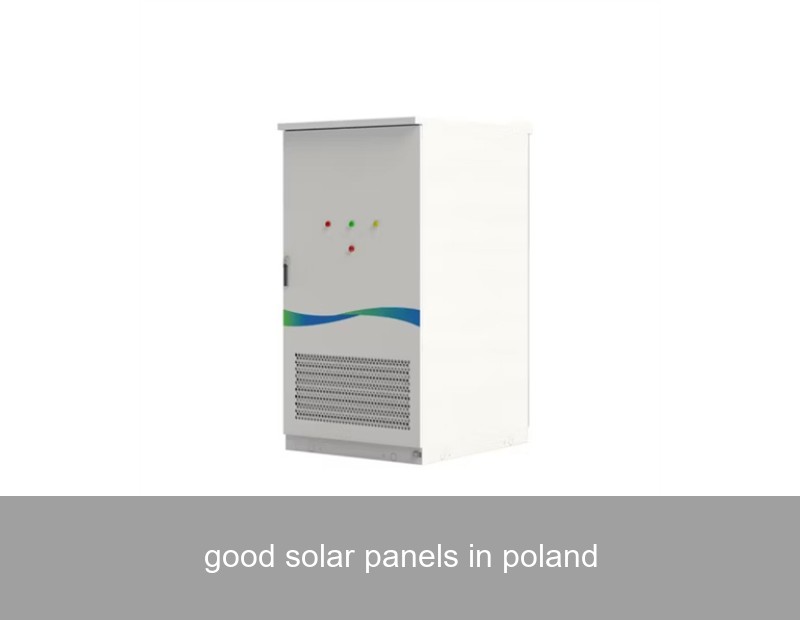
Poland's energy landscape is undergoing a remarkable transformation. As the nation seeks to diversify its energy mix and reduce its carbon footprint, solar power has emerged as a shining beacon of progress. But with so many options on the market, how do you identify truly good solar panels in Poland? It's not just about the panels themselves; it's about the entire system's performance, durability, and the intelligence behind it. This guide will walk you through the key considerations, backed by data and real-world examples, to help you make an informed decision for your home or business.
Table of Contents
The Poland Solar Boom: More Than Just Sun
You might wonder, "Is Poland really that sunny?" While it's true that Poland doesn't have the solar irradiance of Spain or Italy, its solar success story is driven by policy, economics, and technological advancement. The phenomenon is clear: Poles are embracing photovoltaics (PV) at an unprecedented rate. The data tells a compelling story. According to the Polish Institute for Renewable Energy (IEO), the total installed PV capacity skyrocketed from just over 1 GW in 2020 to more than 17 GW by the end of 2024, with prosumers (households and businesses that both produce and consume energy) leading the charge [source: IEO].
This boom is fueled by several factors: rising electricity prices, supportive net-metering schemes (though evolving), and a strong desire for energy security. The initial focus was simply on installation. Now, the conversation is maturing. The savvy Polish energy consumer is no longer just asking, "How many panels can I fit on my roof?" They are asking, "How can I maximize my self-consumption and protect myself from price volatility?" This is where the definition of good solar panels in Poland expands to include the entire energy ecosystem.
What Makes a "Good" Solar Panel in the Polish Context?
So, what should you look for? A quality solar panel is defined by its performance under real-world conditions, not just laboratory test results.
- Efficiency & Low-Light Performance: Given Poland's climate with cloudy days and lower winter sun, panels with high efficiency and excellent low-light response are crucial. Monocrystalline panels, particularly those using PERC or half-cut cell technology, typically perform better in these conditions than older polycrystalline models.
- Durability & Warranty: Polish winters with snow load and temperature swings demand robust panels. Look for a strong mechanical load rating (e.g., 5400Pa) and a solid product warranty (often 12-15 years). The performance warranty, which guarantees a certain power output after 25 years (often 85-92%), is equally important.
- Temperature Coefficient: Panels lose efficiency as they get hot. A lower temperature coefficient (e.g., -0.3%/°C vs. -0.4%/°C) means the panel will perform better on those rare but precious hot Polish summer days.
However, the panel is only one component. A truly good solar installation hinges on the quality of the inverter, the mounting system, and most importantly, the system design and installation workmanship. A poorly installed top-tier panel will underperform a mid-tier panel installed with expert precision.
The Inverter: The Brain of Your System
Think of the inverter as the command center. It converts the DC electricity from your panels into usable AC electricity for your home. For the Polish market, where roof orientations can be suboptimal, microinverters or DC power optimizers (often found in systems like Highjoule's H-Series Home Energy Hub) are highly recommended. They maximize harvest from each individual panel, especially if part of your roof is shaded in the afternoon, a common scenario in urban settings.

Image: A modern solar installation with critical components like the inverter. Source: Unsplash (Representative Image)
Beyond the Panel: The Critical Role of Energy Storage
Here's the pivotal insight: the ultimate value of your solar panels is realized when you can use the energy you produce. Without storage, excess solar energy generated in the middle of the day is sent to the grid, often for a modest feed-in tariff, and you buy back expensive power in the evening. This is the fundamental limitation of a solar-only system.
Integrating a battery energy storage system (BESS) transforms your setup. It allows you to store your daytime surplus and use it when you need it most, dramatically increasing your self-consumption rate—sometimes from 30-40% to 70-80% or more. This is not just about economics; it's about resilience. During a grid outage, a solar-plus-storage system can keep your essential loads running, a feature becoming increasingly valuable.
Case Study: A Warsaw Manufacturing Facility's Success
Let's look at a real example. A mid-sized metal fabrication plant on the outskirts of Warsaw was facing steep and unpredictable energy costs, which directly impacted their operational margins. Their goal was to reduce grid dependence and stabilize costs.
- Challenge: High daytime energy consumption with a significant evening load for security and partial night shifts. Existing solar feed-in tariffs were decreasing. Solution: A turnkey system featuring 245 kWp of high-efficiency bifacial solar panels, coupled with a 120 kWh Highjoule IntelliBESS C&I battery system and advanced energy management software. Results (18 months post-installation):
- Grid electricity consumption reduced by 68%.
- Self-consumption of solar energy increased from an estimated 41% to 89%.
- The system provides seamless backup power for critical CNC machines and IT infrastructure, preventing costly production stoppages.
- Projected payback period: 5.2 years, factoring in available green energy grants.
This case underscores that for commercial and industrial applications in Poland, good solar panels are just the starting point. The real value is unlocked by integrating smart storage and software that aligns energy usage with production and market signals.
| Metric | Before Installation | After Installation |
|---|---|---|
| Monthly Grid Energy Use | ~52 MWh | ~16.6 MWh |
| Solar Self-Consumption Rate | N/A (No System) | 89% |
| Energy Cost Stability | Low (Fully exposed to market prices) | High (Majority from self-generated source) |
Highjoule's Integrated Solutions for the Polish Market
At Highjoule, we understand that providing good solar panels in Poland means providing a holistic, intelligent energy solution. Since 2005, we have evolved from a component supplier to a global provider of advanced, software-driven storage systems that make solar installations truly future-proof.
For the Polish residential market, our H-Series Home Energy Hub is a perfect fit. It combines a hybrid inverter, a scalable lithium-iron-phosphate (LiFePO4) battery (known for its safety and long cycle life), and an AI-powered energy manager. The system learns your household's consumption patterns, automatically optimizes when to charge from solar or the grid (taking advantage of potential time-of-use tariffs), and when to discharge, ensuring you get the most out of every kilowatt-hour your panels produce.
For businesses and larger-scale applications, our IntelliBESS C&I and Microgrid solutions offer robust, containerized or modular storage. These systems do more than just store energy; they can provide services like peak shaving (reducing demand charges, a significant cost for Polish businesses) and even participate in future grid-balancing mechanisms. Our systems are designed for the specific climatic and grid conditions of Central and Eastern Europe, ensuring reliability year-round.

Image: A technician performing maintenance on a commercial-scale battery storage system. Source: Unsplash (Representative Image)
The Future Outlook for Polish Solar
The Polish solar market is entering its next phase. As grid integration becomes a focus, the role of smart, grid-responsive storage will become paramount. The European Union's ambitious REPowerEU plan further accelerates the need for decentralized, resilient energy systems. The future belongs not just to solar producers, but to smart energy managers.
Choosing good solar panels in Poland today is, therefore, a decision about your energy setup for the next 25 years. It's an investment in a system that should be adaptable, intelligent, and capable of evolving with market and technological changes.
So, as you consider your move to solar, we leave you with this question: Is your goal simply to install solar panels, or is it to achieve genuine energy independence and long-term cost control for your home or business in Poland?
 Inquiry
 Online Chat