


Solar Panels, Inverter, and Batteries: The Complete Trio for Energy Independence
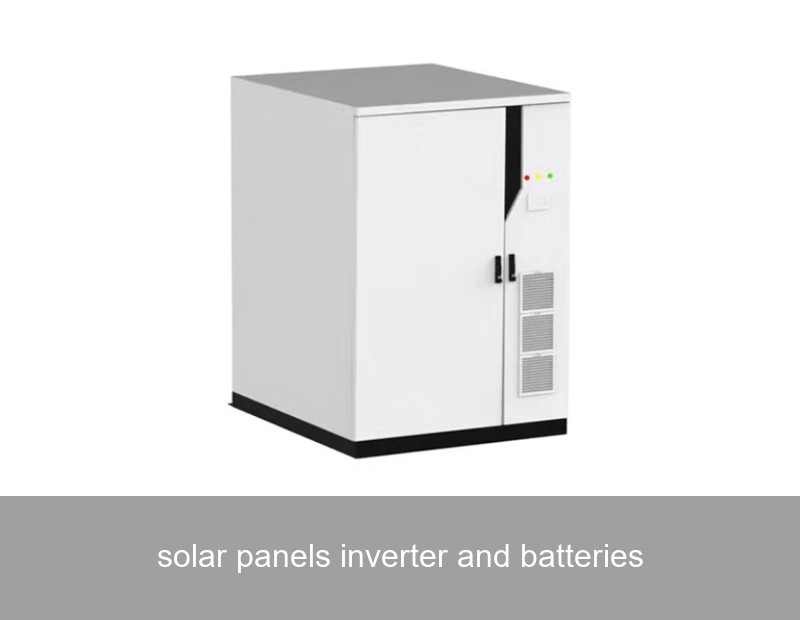
You've seen the sleek solar panels on rooftops, promising clean energy and lower bills. But if you think that's the whole story, you might be missing the most crucial chapters. The true magic—and the path to genuine energy independence—happens when you perfectly integrate solar panels, inverter, and batteries. It's a system where each component relies on the others, and a weak link can mean lost savings and unreliability. Let's demystify this essential trio and explore how getting it right transforms sunlight into a steadfast power source for your home or business.
Table of Contents
- The Phenomenon: More Than Just Panels on a Roof
- The Three Pillars: Solar Panels, Inverter, and Batteries Explained
- The Data: Why Integration is Everything
- Case Study: A California Winery's Resilience Story
- The Highjoule Approach: Intelligent Integration for Maximum Return
- Looking Ahead: What's Next for Your Energy System?
The Phenomenon: More Than Just Panels on a Roof
Across Europe and the U.S., a quiet revolution is underway. Homes and businesses are moving from being passive energy consumers to active "prosumers"—producing and consuming their own power. The initial driver was often just the solar panels themselves. However, many early adopters hit a common snag: their systems produced abundant power during the sunny day, but they remained vulnerable in the evening, during blackouts, or in regions with less favorable net metering policies. This gap between production and practical, round-the-clock usage highlighted the critical need for the complete system: solar panels, inverter, and batteries working in seamless harmony.
The Three Pillars: Solar Panels, Inverter, and Batteries Explained
Think of your solar energy system like a human body. Each part has a specialized, vital function.
Solar Panels: The Sun Catchers
The panels (or modules) are the "muscles." Made of photovoltaic (PV) cells, they physically capture photons from sunlight and generate direct current (DC) electricity. Their efficiency determines how much raw power potential is available from your roof space. While crucial, DC power is incompatible with your home's appliances—which is where the next component comes in.

Image: Solar panels are the foundation of the system. (Photo by Unsplash)
The Inverter: The Brain and Translator
This is the "brain" and central nervous system. The inverter performs two non-negotiable jobs. First, it converts the DC electricity from the panels into the alternating current (AC) that powers everything in your home or business. Second, modern solar inverters are intelligent energy managers. They optimize the panel output, monitor system performance, and, in hybrid systems, decide when to send power to the home, to the grid, or to charge the batteries. A poor-quality inverter can cripple the performance of even the best panels.
Batteries: The Freedom Module
Batteries are the "energy memory." They store the excess AC electricity (converted by the inverter) produced during the day for use at night, during peak demand times when grid rates are high, or during a power outage. Without a battery, any excess solar energy you don't use immediately is typically sent back to the grid, often for minimal credit. With a battery, you increase your self-consumption dramatically, unlocking resilience and true energy arbitrage.
The Data: Why Integration is Everything
The synergy between these components is where the financial and practical returns explode. According to the U.S. Department of Energy, adding storage can increase the value of solar by allowing homeowners to avoid purchasing electricity during expensive peak periods. Let's look at a simple table comparing system types:
| System Type | Key Components | Daytime Power | Nighttime/Outage Power | Grid Independence |
|---|---|---|---|---|
| Solar-Only | Panels + Basic Inverter | High | None (without grid) | Low |
| Hybrid Solar + Storage | Panels + Hybrid Inverter + Batteries | High | High (from storage) | High |
The data is clear: integrating a high-quality battery with a compatible hybrid inverter can boost a household's consumption of its own solar power from 30-50% to over 80%. This directly translates to lower energy bills and a stronger return on investment.
Case Study: A California Winery's Resilience Story
Consider the real-world example of a mid-sized winery in Sonoma County, California—a region prone to seasonal wildfires and Public Safety Power Shutoffs (PSPS). Their operations, especially refrigeration and fermentation control, are critically dependent on uninterrupted power.
Challenge: Frequent multi-day grid outages threatened product loss and operational shutdown.
Solution: The winery installed a 250 kW solar array, paired with a centralized high-power hybrid inverter system and a 500 kWh containerized battery energy storage system (BESS).
Results:
- 100% Critical Load Coverage: During a 3-day PSPS event, the system powered all essential refrigeration and facility loads without interruption.
- Financial Savings: By avoiding peak demand charges from the grid and maximizing solar self-use, the winery reduced its annual energy costs by over 40%.
- Sustainability Win: The system provides an estimated 95% of the facility's electricity from clean solar, enhancing its brand story.
The Highjoule Approach: Intelligent Integration for Maximum Return
This is where Highjoule's expertise becomes pivotal. Since 2005, we've understood that the value lies not just in individual components, but in their flawless communication and control. Our solutions are designed from the ground up for integration.
For residential and small commercial clients, our H-Series Home Energy Hub exemplifies this philosophy. It combines a high-efficiency hybrid inverter with integrated battery management and an intuitive energy monitoring platform in one sleek unit. It intelligently decides, in real-time, the most economical and efficient path for every watt of solar energy you produce—whether to power your home, charge your EV, store in the battery, or sell back to the grid.

Image: Integrated systems like Highjoule's H-Series manage energy seamlessly. (Photo by Unsplash)
For larger industrial and microgrid applications, our MegaJoule BESS platform offers scalable, containerized storage. Paired with our advanced energy management software, it can integrate with massive solar arrays, perform peak shaving, provide backup power, and even offer grid services. We don't just sell hardware; we provide a complete, intelligent power solution tailored to your load profile, climate, and financial goals.
Looking Ahead: What's Next for Your Energy System?
The journey to energy independence is clearer than ever. The trio of solar panels, inverter, and batteries is the proven foundation. But technology continues to evolve. With the rise of electric vehicles as mobile batteries, and AI-driven energy prediction software, the future home or business energy system will be an even more adaptive and intelligent ecosystem.
So, as you contemplate your next step, ask yourself this: Is your current or planned solar setup just a collection of parts, or is it a fully integrated, intelligent system designed for resilience and maximum return? What would it mean for your home or business to have power that not only saves you money but also stands firm when the grid around you doesn't?
 Inquiry
 Online Chat