


Green Power Solar Panels: Your Complete Guide to a Sustainable Energy Future
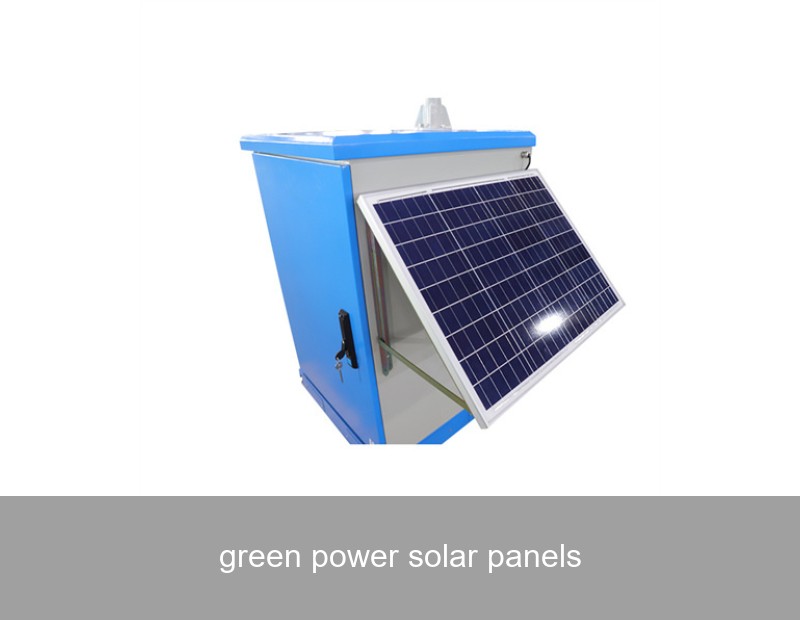
You've likely seen them gleaming on rooftops in your neighborhood, or perhaps you're considering them for your own home or business. Green power solar panels are more than just a trend; they represent a fundamental shift in how we generate and consume electricity. But here's a question many overlook: what happens when the sun goes down? The true power of a solar system isn't just in capturing sunlight—it's in intelligently managing that energy for 24/7 reliability. This is where the conversation about green power truly gets interesting.
Table of Contents
The Phenomenon: More Than Just Panels on a Roof
The surge in green power solar panel adoption isn't accidental. Homeowners are seeking energy independence and stable costs, while businesses are driven by ESG goals and long-term operational savings. However, the initial excitement of generating your own electricity can be dampened by a simple reality: solar production peaks in the middle of the day, while energy consumption often peaks in the early morning and evening. This creates a mismatch. Without a solution, you end up exporting excess power to the grid at low rates only to import it back at night at higher prices—a cycle that limits your savings and sustainability impact.
This phenomenon highlights that a solar array is just one part of a complete energy system. To unlock its full potential, you need to think about integration, management, and most critically, storage.
The Data: Efficiency, Payback, and Grid Independence
Let's talk numbers, because they tell a compelling story. Modern green power solar panels are marvels of efficiency, with premium models now converting over 22% of sunlight into usable electricity. According to the National Renewable Energy Laboratory (NREL), the levelized cost of solar energy has fallen by nearly 90% over the last decade. But the financial equation changes dramatically when you add storage.
Consider this typical data for a home in California or Germany:
| System Type | Self-Consumption Rate | Grid Reliance Reduction | Estimated Payback Period |
|---|---|---|---|
| Solar Panels Only | 30-40% | ~40% | 8-12 years |
| Solar Panels + Basic Battery | 50-70% | ~70% | 10-14 years |
| Solar + Intelligent ESS* | 80%+ | Up to 95% | 7-10 years** |
*ESS: Energy Storage System. **Shorter payback is achieved through advanced software optimizing for time-of-use rates and grid services.
The data shows that an intelligent storage system isn't an added cost—it's a performance multiplier that accelerates your return on investment and maximizes your autonomy.
Case Study: A German Mittelstand Manufacturing Plant
Let's look at a real-world example. A mid-sized automotive parts supplier near Stuttgart, Germany, faced rising energy costs and volatile electricity prices. They installed a 500 kW rooftop solar array, which covered their daytime base load but left them exposed to high evening rates for running night shifts and charging their facility's electric vehicle fleet.
Their solution was integrating a Highjoule HI-Stack C&I battery storage system (1.2 MWh capacity) with their existing panels. The results after one year were transformative:
- Self-Consumption of Solar Power Increased from 38% to 89%.
- Annual Electricity Bill Reduced by €68,000, despite increased production.
- Grid Peak Demand Charges were slashed by 75% through intelligent load-shifting.
- CO2 Footprint for electricity was reduced by an additional 142 tonnes annually.
The plant manager noted, "The solar panels are our source, but the Highjoule system is our strategist. It decides when to store, when to consume, and when to provide backup, ensuring every kilowatt-hour is used at its maximum value." This case perfectly illustrates the synergy between generation and smart storage.
The Key Insight: Storage is the Brain of Your Solar System
So, what's the core insight from all this? Think of your green power solar panels as a highly productive factory. They produce excellent raw material (electricity) during daylight hours. A basic battery is like a warehouse—it stores the excess. But an intelligent, software-driven energy storage system (ESS) is the entire logistics, management, and distribution center. It doesn't just store; it learns, predicts, and optimizes.
It considers weather forecasts, your consumption patterns, real-time electricity tariffs, and even grid stability needs. It automatically chooses the most economical and efficient moment to dispatch energy—whether to power your home, charge your EV, or provide backup during an outage. This intelligence is what transforms a simple solar installation into a resilient, money-saving, and truly green power asset.

Highjoule's Intelligent Energy Ecosystem
This is where Highjoule's nearly two decades of expertise come into play. We don't just supply batteries; we provide integrated energy intelligence. For homeowners, our Residential Harmony Series is designed to seamlessly pair with your new or existing green power solar panels. Its adaptive learning software manages your home's energy flow, prioritizing solar self-consumption and ensuring critical loads remain on during grid outages, all controllable via a simple mobile app.
For businesses and industrial applications, our Commercial & Industrial (C&I) HI-Stack systems are the cornerstone of energy resilience. They offer scalable capacity from 100 kWh to multi-megawatt hours and feature advanced grid-interactive functions. These systems can participate in demand response programs, creating an additional revenue stream while supporting the wider community grid.
Our flagship Microgrid Controller represents the pinnacle of this approach. It allows a campus, community, or industrial site to integrate solar, wind, storage, and backup generators into a single, autonomous energy network. This provides ultimate independence from grid volatility, a critical advantage for operations where power reliability is non-negotiable.
Making the Choice for Your Green Power Future
Choosing green power solar panels is a fantastic first step. But to truly future-proof your investment, the next question is critical: How will you harness and control that power to meet your specific needs for reliability, savings, and sustainability?
The landscape of energy is shifting from a one-way street (grid to consumer) to a dynamic, interactive network. Your home or business can be an active node in this network, not just a passive consumer. The technology to do this—reliably, safely, and profitably—exists today.
What specific energy challenge—be it unpredictable bills, resilience concerns, or sustainability targets—is motivating you to explore the full potential of green power solar panels for your property?
 Inquiry
 Online Chat