


Unlocking Greater Potential: The Rise of the 450W Bifacial Solar Panel
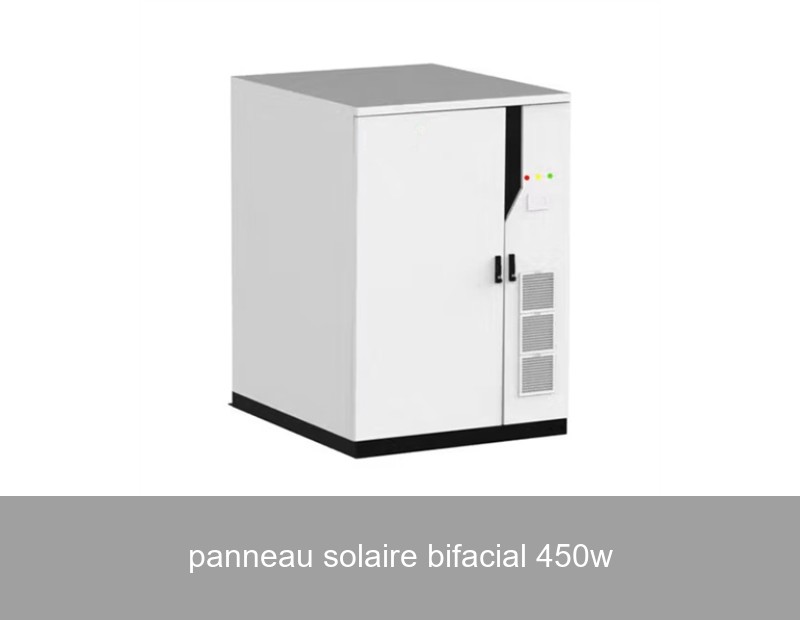
If you're looking into solar energy in 2024, you've likely encountered a game-changing term: the bifacial solar panel. And not just any bifacial panel, but the high-efficiency 450W bifacial solar panel. This isn't a minor upgrade; it represents a fundamental shift in how we capture sunlight. But here's the catch many discover: to truly harness its 30%+ potential energy boost, you need a system designed for its unique characteristics. The panel is only as good as the ecosystem that supports it.
What Exactly is a 450W Bifacial Solar Panel?
Let's break it down. A traditional solar panel has a single, light-absorbing face. A bifacial solar panel, as the name suggests, captures light on both sides. The front side absorbs direct sunlight, while the rear side captures albedo light—sunlight reflected off the ground, roof, or any other surface below the installation.
The "450W" denotes its power rating in watts under Standard Test Conditions (STC). This high wattage is a result of advanced cell technology (like PERC or half-cut N-type cells) and a larger, more efficient format. Combine bifaciality with high wattage, and you get a module that promises significantly higher energy yield per square meter compared to monofacial counterparts.

Image Source: Unsplash - Illustrative view of bifacial panel design.
The Data: Why the 450W Bifacial Combination is a Powerhouse
The theoretical promise is backed by hard numbers. According to field studies and manufacturer datasheets, the energy gain from the rear side of a bifacial panel is substantial and depends on the installation environment.
| Installation Surface / Albedo | Typical Bifacial Gain (Rear Side Contribution) | Effective Total Output Potential* |
|---|---|---|
| Grass / Gravel (Albedo ~20-25%) | 5% - 12% | Up to ~504W |
| White Membrane / Concrete (Albedo ~45-60%) | 15% - 25% | Up to ~562W |
| High-Reflectivity Ground (Albedo >70%) | 25% - 30%+ | Up to ~585W+ |
*Based on a 450W nominal panel. Source: Aggregated from field data and reports like those from the National Renewable Energy Laboratory (NREL).
This means on a reflective surface, a single 450W bifacial panel can consistently perform like a 500W+ panel. Over a 1 MW system, this gain translates to hundreds of thousands of additional kilowatt-hours over the system's lifetime.
The Hidden Challenge: It's Not Just About the Panel
Here's where many project developers and homeowners face a reality check. Simply swapping monofacial for bifacial panels on an existing racking system and using a standard inverter often leaves much of that potential 30% gain on the table. Why?
- Suboptimal Racking: Traditional racking can shade the rear side. Systems need elevated, specialized mounting to maximize rear-side light capture.
- Inverter Mismatch: If a panel can output 585W in ideal conditions, but your inverter's maximum power point tracking (MPPT) range isn't optimized for it, you clip that excess energy. It's wasted.
- Energy Storage Mismatch: The increased, often variable, output profile demands an energy storage system (ESS) with high-cycle life, rapid response, and smart software to manage the surplus effectively for later use.
Think of it like putting a high-performance Formula 1 engine in a regular car chassis. You won't get the F1 performance without the corresponding suspension, tires, and electronics.
Case Study: A Logistics Warehouse in Leipzig, Germany
Let's look at a real-world application. A large logistics company in Leipzig aimed to achieve 80% energy self-sufficiency for its 10,000 sqm warehouse. Their initial plan used standard 400W monofacial panels.
The Shift: After a consultative redesign, they opted for a 450W bifacial panel array installed on a high-albedo white roofing membrane. However, the critical change was integrating a Highjoule C&I Energy Storage System with our proprietary Adaptive Power Management (APM) software.
The Data-Driven Outcome (First Year):
- Panel-Level Yield: The bifacial array outperformed its nominal rating by an average of 22%, peaking on sunny winter days with snow reflection.
- System-Level Efficiency: The Highjoule ESS, with its wide MPPT voltage range, captured over 99% of this variable output without clipping.
- Financial Impact: The system generated 1,850 MWh annually, exceeding projections by 18%. The smart storage allowed them to shift 450 MWh to peak tariff periods, boosting their ROI and reducing grid dependence to just 15%.
This case underscores that the true value of advanced panels is unlocked only by an equally advanced balance of system (BoS).
System Synergy: The Highjoule Approach to Bifacial Success
At Highjoule, we view the panneau solaire bifacial 450w not as a standalone product, but as the brilliant core of an integrated energy ecosystem. Our role is to provide the technological backbone that lets it shine.
For commercial and industrial applications like the Leipzig warehouse, our H-Series C&I ESS is engineered for this exact purpose. Its multi-MPPT string inverters are pre-configured to handle the extended power bands of bifacial arrays, while its modular lithium-iron-phosphate (LFP) battery banks offer the cycle life needed for daily, deep cycling of surplus bifacial energy.

Image Source: Unsplash - Example of a commercial solar and storage installation.
For residential and smaller commercial sites, our EverHome Integrated Home Energy System provides a seamless solution. It combines a high-efficiency hybrid inverter, LFP storage, and our EnergyOS platform. EnergyOS intelligently predicts generation from bifacial panels (factoring in weather and albedo) and optimizes consumption, storage, and grid export in real-time, ensuring you benefit from every extra watt your panels produce.
Our expertise lies in designing this synergy—where panel, power conversion, storage, and software work as one intelligent unit.
Looking Ahead: The Future of Bifacial Technology and System Integration
The trajectory is clear. As noted by the IEA PVPS Task 13, bifacial technology is set to dominate the utility-scale market and grow rapidly in commercial segments. The next frontier isn't just higher panel efficiency, but smarter, more granular system control.
We are already developing next-generation optimizers and micro-inverters that can manage the front and rear-side output of individual bifacial panels, mitigating shading issues and extracting absolute maximum power. Furthermore, our R&D in AI-driven energy prediction uses local albedo data to forecast yields with unprecedented accuracy, allowing for even more sophisticated energy trading and grid services.
The 450W bifacial solar panel is a symbol of this evolution—a more powerful, dual-sided energy harvester. But its story is incomplete without the narrative of intelligent storage and software.
Ready to See the Full Picture?
If you're planning a project with high-efficiency bifacial panels, what steps are you taking to ensure your balance of system isn't the bottleneck that caps your return on investment? We invite you to connect with Highjoule's technical team for a complimentary system synergy assessment. Let's calculate the real potential of your next solar installation together.
 Inquiry
 Online Chat