


Unlocking Energy Independence: The Ultimate Guide to SPS Hybrid Solar Battery Systems
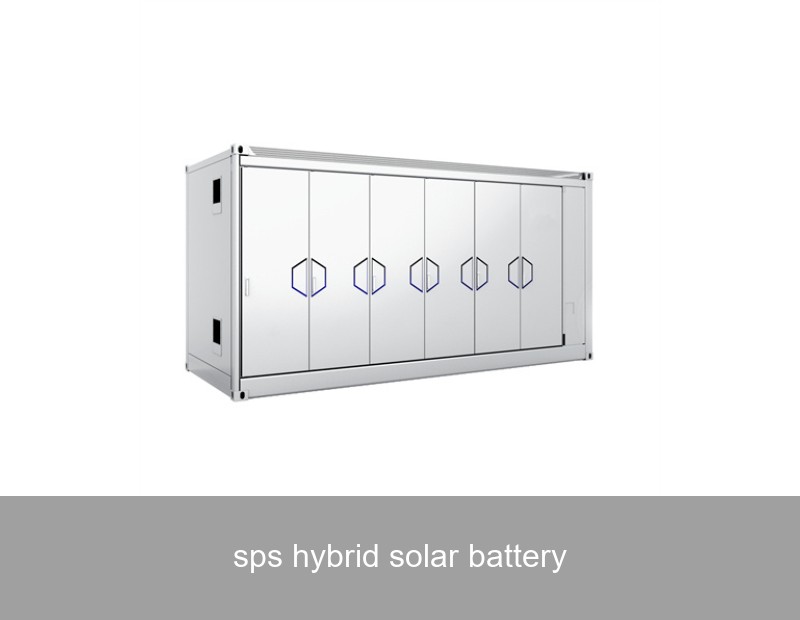
Imagine a world where your home or business is powered by the sun, day and night, with a reliable backup that kicks in seamlessly during an outage. This isn't a distant dream; it's the reality made possible by SPS hybrid solar battery systems. As energy prices soar and grid instability becomes a growing concern across Europe and the US, more people are asking: how can we truly take control of our power? The answer lies in intelligent systems that combine solar generation with sophisticated battery storage, creating a personal energy ecosystem. Let's explore how this technology works and why it's becoming a cornerstone of modern energy strategy.
Table of Contents
- What Exactly is an SPS Hybrid Solar Battery System?
- The Problem: Intermittent Sun and Unreliable Grids
- How a Hybrid System Works: Your Intelligent Energy Manager
- Real-World Impact: A Case Study from California
- The Highjoule Solution: Engineered for Performance and Durability
- Making the Right Choice: Key Considerations for Your System
- What Does the Future Hold for Solar and Storage?
What Exactly is an SPS Hybrid Solar Battery System?
The term SPS hybrid solar battery refers to a Solar, Storage, and Power Management System that is hybrid by nature. Unlike a simple solar panel setup that only works when the sun shines, or a standard battery that only stores grid power, a hybrid system integrates three key components: photovoltaic (PV) panels, a bank of high-capacity batteries, and a smart inverter that manages energy flow between solar production, battery storage, the building's loads, and the main grid. This synergy creates a resilient and efficient power source.
The Problem: Intermittent Sun and Unreliable Grids
Traditional solar power has a well-known limitation: it stops generating at night and during poor weather. This creates a mismatch—you often produce excess energy in the midday sun you can't immediately use, and you have zero production when you need it in the evening. Conversely, many regions face increasing grid strain, leading to more frequent and prolonged power outages. The U.S. Energy Information Administration reports that the average U.S. customer experienced just over 7 hours of power interruptions in 2021. This phenomenon isn't isolated to the US; Europe faces similar challenges due to aging infrastructure and extreme weather events.
The Data Behind the Demand
The market response is clear. The global market for solar storage hybrids is exploding. For instance, in Germany, a leader in renewable adoption, combined solar and storage systems are now installed in over 50% of new residential solar projects. Homeowners and businesses aren't just seeking savings; they're seeking security and autonomy from volatile energy markets.
How a Hybrid System Works: Your Intelligent Energy Manager
Think of your SPS hybrid solar battery system as an intelligent energy conductor. Here’s its typical daily cycle:
- Daytime (Sunny): Solar panels generate DC electricity. The smart inverter converts it to AC to power your home or business. Any surplus energy, instead of being sent to the grid for a low feed-in tariff, is diverted to charge the battery system.
- Evening/Night: As solar production falls, your system seamlessly draws power from the charged batteries, minimizing or eliminating your need to purchase expensive electricity from the grid.
- Grid Outage: This is where hybrid systems shine. Upon detecting a grid failure, the system automatically isolates your property (forming a "microgrid") and continues to power critical loads from the battery and any available solar. The transition is instant, often unnoticeable.
- Optimization: Advanced systems can be programmed to charge batteries from the grid during ultra-low-cost, off-peak periods if solar charging isn't sufficient, then discharge during peak rate hours for maximum economic benefit—a process known as arbitrage.

Image: A modern home energy setup integrating rooftop solar with wall-mounted battery storage. Systems like Highjoule's are designed for seamless aesthetic and functional integration.
Real-World Impact: A Case Study from California
Let's look at a concrete example. A medium-sized winery in Napa Valley, California, faced two major issues: crippling peak demand charges from their utility and the constant threat of preemptive power shutoffs (PSPS events) during wildfire season. In 2022, they installed a 250 kW solar array coupled with a 500 kWh SPS hybrid solar battery system.
| Metric | Before System | After 12 Months with Hybrid System |
|---|---|---|
| Monthly Energy Bill | ~$8,500 | ~$1,200 (85% reduction) |
| Peak Demand Charges | Often exceeded $3,000/month | Reduced by over 90% |
| Grid Outage Coverage | Full operational shutdown | Critical operations (cooling, fermentation tanks) powered for 18+ hours |
| Carbon Footprint | ~62 metric tons CO2/year | ~12 metric tons CO2/year |
The system paid for itself in under 5 years through savings alone, not counting the value of avoided production losses during outages. This case exemplifies the triple win of financial savings, resilience, and sustainability.
The Highjoule Solution: Engineered for Performance and Durability
At Highjoule, with nearly two decades of experience since 2005, we've refined the SPS hybrid solar battery concept into a robust, user-centric solution. Our systems are built on three core pillars:
- Intelligent Energy Management: Our proprietary HarmonyOS™ controller acts as the brain of the system. It uses predictive algorithms based on weather forecasts and consumption patterns to optimize every kilowatt-hour, deciding in real-time whether to store, use, or (when beneficial) sell energy.
- Unmatched Safety and Longevity: We utilize lithium iron phosphate (LFP) battery chemistry across our product line. As noted by research from scientific journals, LFP batteries offer superior thermal and chemical stability, significantly longer cycle life (often exceeding 6000 cycles), and are inherently safer than other lithium-ion variants. Our battery enclosures are IP65 rated for dust and water resistance, suitable for diverse installations.
- Scalable Architecture: Whether for a large residential home, a commercial facility, or an industrial microgrid, Highjoule systems are modular. You can start with a base configuration and easily expand battery capacity as your needs grow, protecting your investment long-term.
Our flagship product, the Highjoule H-Series Hybrid Hub, integrates a high-efficiency multi-mode inverter, grid-forming capabilities, and up to 40 kWh of storage in a single, compact unit. It's designed for the demands of both the European and North American markets, complying with strict grid codes like VDE-AR-N 4105 in Germany and UL 9540 in the USA.

Image: A modern battery storage unit similar in design philosophy to Highjoule's H-Series, emphasizing clean integration and user-friendly monitoring.
Making the Right Choice: Key Considerations for Your System
Choosing the right SPS hybrid solar battery system is crucial. Here are the questions you should ask any provider:
- What is my primary goal? (Maximizing self-consumption, backup power, demand charge reduction?) This dictates system sizing.
- What is the battery's cycle life and degradation profile? A 10-year warranty with 70% capacity retention is a good benchmark.
- How intelligent is the software? Can it adapt to time-of-use rates and future grid service programs?
- Is the system truly integrated? A single-vendor solution for batteries, inverter, and software (like Highjoule provides) often ensures better compatibility and smoother support.
Installation and Beyond
Professional installation by certified technicians is non-negotiable for safety and performance. Highjoule partners with a network of trusted, certified installers across our target regions to ensure your system is commissioned correctly. Furthermore, our cloud-based monitoring platform gives you and your installer real-time insights into system health and performance from any device.
What Does the Future Hold for Solar and Storage?
The trajectory is clear: the future of energy is decentralized, digital, and resilient. As virtual power plants (VPPs) become more prevalent, individual SPS hybrid solar battery systems like those from Highjoule will be able to aggregate and provide valuable grid stabilization services, creating potential new revenue streams for owners. The technology is moving from a specialty product to a mainstream home and business appliance.
With this evolution in mind, we leave you with a question: If your next power outage happened tomorrow, or your next electricity bill doubled, what would your plan be? Is it time to explore how a personalized energy ecosystem could change your equation for security, savings, and sustainability?
 Inquiry
 Online Chat