


Grid Connected Photovoltaics: Powering Your Home and Supporting the Grid
Imagine your rooftop solar panels doing more than just slashing your electricity bill. What if they could also act as a tiny power plant for your neighborhood, helping to stabilize the local grid during a heatwave? This isn't future tech—it's the reality of modern grid connected photovoltaics. For homeowners and businesses across Europe and the US, connecting solar energy to the public grid has moved from a niche alternative to a mainstream power strategy. But as adoption soars, a new challenge emerges: how do we integrate this variable energy source reliably? The answer lies not just in the panels, but in the intelligence behind them.
Table of Contents
The Dual Role of Your Solar Array
Traditionally, a grid connected photovoltaic system had a simple job: generate DC power, convert it to AC via an inverter, and feed any excess into the utility wires. Your meter would spin backwards, and you'd get a credit. This one-way street model is evolving rapidly. Today, your PV system can play a dual role: prosumer (producer + consumer).
This shift is driven by two factors. First, grid operators are managing unprecedented volatility from renewable sources. Second, technology now allows for two-way communication and control. Your system can respond to grid needs, reducing output during times of low demand or even providing backup power during localized outages if designed with islanding capability. This transforms your home from a passive consumer into an active grid participant.

Image Source: Unsplash - A modern home with grid-connected solar panels.
The Grid Balancing Act: More Than Just Sunshine
Let's talk numbers. The European Union saw solar PV generation increase by a staggering 24% in 2022 year-on-year. In the US, the Solar Energy Industries Association reports that solar now powers over 5% of the nation's electricity. This phenomenal growth creates a "duck curve" phenomenon—a deep dip in net grid demand during sunny afternoons, followed by a steep ramp-up as the sun sets and people return home.
This curve stresses conventional power plants, requiring them to cycle up and down rapidly, which is inefficient and costly. The grid wasn't built for this bidirectional, variable flow. The challenge, then, is to make grid connected photovoltaics predictable and dispatchable. How? Through advanced energy management and storage.
Case Study: When the Texas Grid Needed a Partner
Consider a real-world scenario from Texas, USA. In the summer of 2023, the Electric Reliability Council of Texas (ERCOT) grid faced consecutive days of record demand due to extreme heat. While solar power peaked during the day, the critical period was 6-9 PM, when solar generation faded but air conditioning load remained sky-high.
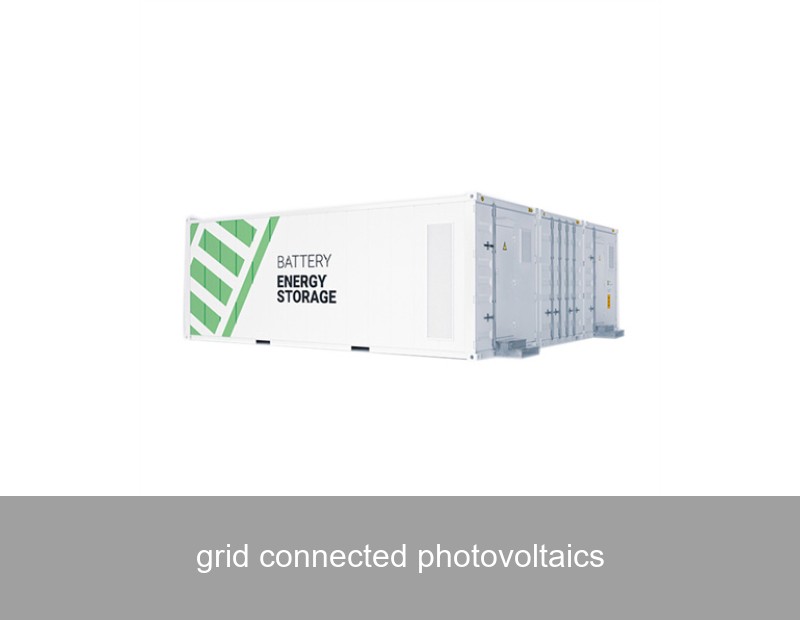
A commercial business park in Austin, equipped with a 500 kW rooftop PV system, was able to seamlessly navigate this period. Their secret? They had integrated a 250 kWh battery energy storage system (BESS) with intelligent controls. Here's what happened:
- 2 PM - 5 PM: The PV system generated more power than the buildings consumed. Instead of sending all excess to the grid (potentially exacerbating the midday glut), the smart system diverted power to charge the on-site batteries.
- 6 PM - 9 PM: As solar output dropped, the system stopped exporting and began discharging the stored energy to power the business park's critical loads. This reduced their draw from the strained grid by over 80% during the peak window.
The result? The business avoided demand charges, contributed to grid stability during a critical period, and ensured its own operational continuity. This is the promise of intelligent grid connected photovoltaics realized.
Beyond the Inverter: The Brain of a Modern PV System
The cornerstone of this capability is the Energy Management System (EMS). Think of the inverter as the muscle—it does the physical work of conversion. The EMS is the brain. It makes millisecond-by-millisecond decisions based on:
| Input | Decision Action |
|---|---|
| Real-time electricity pricing | Store energy when cheap, use or sell when expensive. |
| Grid frequency signals | Inject power to support frequency if it dips. |
| Local consumption forecasts | Pre-charge batteries ahead of expected high usage. |
| Weather predictions | Adjust charging strategy based on tomorrow's solar forecast. |
Without this intelligence, a PV system operates in a vacuum. With it, the system becomes a valuable grid asset.
Highjoule's Integrated Solutions for Grid Harmony
This is where Highjoule's expertise becomes critical. Since 2005, we've moved beyond providing just components to delivering fully integrated, smart energy systems. Our approach ensures that your grid connected photovoltaics installation is part of the solution, not a new challenge for the grid.
Our HPS-ONE (Hybrid Power System - Optimized Networked Energy) platform is designed specifically for this era. It combines high-efficiency PV inverters, scalable lithium-ion battery storage, and our proprietary GridSync™ EMS into a single, seamless solution. For a homeowner, this might mean automatically powering your home during a brief outage without you even noticing. For a factory, it means participating in grid services programs for additional revenue.
Consider our commercial offering: the Highjoule C.I.S. (Commercial Integrated Storage) series. These modular units can be retrofitted to existing solar installations or designed into new projects. A bakery in Germany using our C.I.S. system can run its ovens in the morning using battery power stored from the previous afternoon's solar surplus, buying grid electricity at the most optimal time and reducing its overall energy costs by up to 40%.

Image Source: Unsplash - Monitoring and control of a modern battery storage system.
Future-Proofing Your Energy Investment
The energy landscape is changing faster than ever. Regulations like the EU's Clean Energy for All Europeans package are mandating smarter, more flexible systems. In the US, the Federal Energy Regulatory Commission (FERC) Order 2222 is opening wholesale markets to distributed energy resources like your solar-plus-storage system.
Investing in a "dumb" PV system today could mean missing out on these future revenue streams and grid-support opportunities. When you choose a system with native intelligence and storage readiness, you're not just buying panels—you're buying an adaptable energy asset.
What Does This Mean for You?
If you're considering solar, or have an existing system, ask your installer not just about the panel wattage, but about the system's brain. Can it communicate with the grid? Can it integrate storage easily? Does it comply with the latest grid codes in your region (like VDE-AR-N 4105 in Germany or UL 1741 SA in the US)?
Highjoule systems are designed with these protocols at their core. Our GridSync™ EMS is constantly updated via secure cloud connectivity to meet evolving market rules, ensuring your investment remains compliant and valuable for decades.
The conversation around grid connected photovoltaics has shifted from "how much can I generate?" to "how wisely can I use and share this power?" The technology to be a proactive grid citizen is here. Is your home or business ready to play its part in building a more resilient and sustainable energy network? What's the first question you'll ask your energy provider about intelligent solar integration?
 Inquiry
 Online Chat