


Unlocking Energy Independence: The Power and Potential of a 1000-Watt Grid-Tie Battery
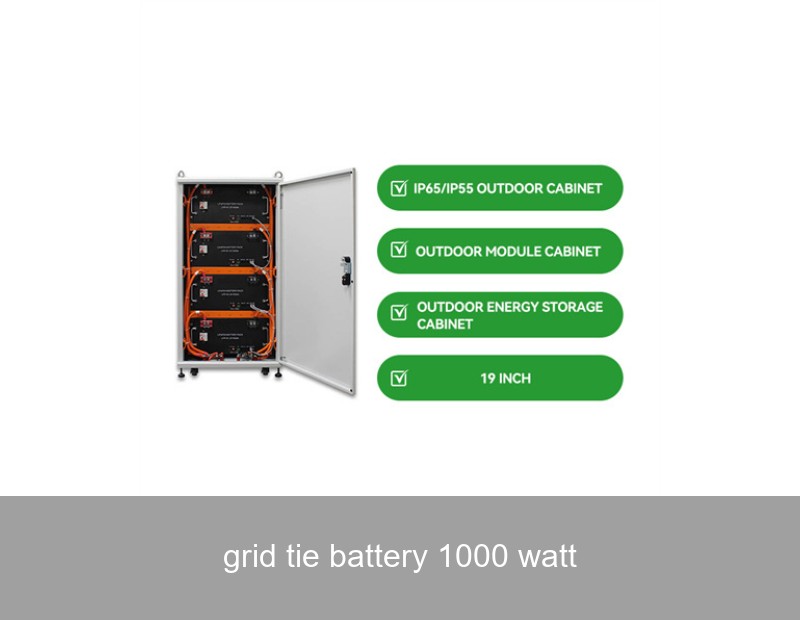
Have you ever watched your electricity meter spin backwards? For a growing number of homeowners and businesses across Europe and the U.S., this isn't a technical glitch—it's a strategic choice. As energy prices fluctuate and the desire for sustainability grows, the concept of a grid-tie battery 1000 watt system is moving from niche to mainstream. But what exactly does this mean for your energy bill and your carbon footprint? In essence, a 1000-watt (1kW) grid-tied battery system allows you to store excess solar energy or cheap off-peak grid power, then use or sell it back to the grid, giving you unprecedented control. This article will demystify this technology, explore its real-world impact, and show how companies like Highjoule are making intelligent energy management a practical reality for everyone.
Table of Contents
What Exactly is a 1000-Watt Grid-Tie Battery System?
Let's break it down. "Grid-tie" means the system is connected to the public electricity network. "Battery" is your personal energy storage. "1000-watt" (or 1 kilowatt) refers to the power rating—the maximum rate at which the battery can discharge electricity at any given moment. It's like the size of a pipe: a 1kW pipe can deliver enough power to run several essential loads simultaneously, such as your refrigerator, lights, Wi-Fi, and a television.
Importantly, this is separate from its energy capacity (measured in kilowatt-hours, kWh), which tells you how long it can supply that power. A typical 1kW system might have a 2-5 kWh capacity, meaning it could run that 1kW load for 2 to 5 hours. The beauty of a grid-tied system is its duality: when your solar panels produce more than you need, the excess charges your battery instead of being sold for a low feed-in tariff. Later, during peak evening rates when the sun is down, you can use that stored energy, avoiding expensive grid electricity.
The Common Misconception: "1kW Isn't Enough"
Many hear "1000 watts" and think it's only for emergencies. The strategic value, however, lies in targeted energy arbitrage and load shifting. Your home's peak demand might be 10kW when everything is on, but your critical baseload—the constant, essential consumption—often sits comfortably under 1kW. By intelligently managing this baseload with a battery, you can achieve significant savings without the cost of a massive, whole-house system.
Why the 1kW Scale is a Smart Starting Point: Data and Drivers
The surge in interest for mid-sized systems isn't accidental. It's a direct response to clear market phenomena and hard data.
Phenomenon: Soaring electricity prices and increased grid instability. In Europe, the EU's average household electricity price has risen sharply over the past decade, with recent geopolitical events causing unprecedented volatility. In the U.S., regions like California and Texas face both high costs and reliability concerns.
Data: The levelized cost of lithium-ion battery storage has fallen by over 90% since 2010, according to BloombergNEF. This makes a 1-2kW storage system a financially viable proposition for a much wider audience. Furthermore, studies show that shifting just 30-40% of a household's daily load away from peak grid times can reduce an electricity bill by 20-30% in areas with time-of-use rates.
Insight: The 1kW grid-tie battery represents the "sweet spot" for early adopters and pragmatic energy users. It's not about complete off-grid independence; it's about economic resilience and intelligent participation in the energy market. It allows users to build a foundational understanding of their consumption, start saving immediately, and easily scale up storage capacity later if needed.
A Real-World Case: The Berlin Bakery's Recipe for Savings
Let's move from theory to a tangible example. "Brotzeit," a family-owned artisan bakery in Berlin, Germany, faced a classic small business dilemma: high operational costs, particularly energy. Their electric ovens, proofers, and refrigeration created a consistent baseload demand, with a sharp peak in the early morning.
Their Challenge: Reduce energy costs without a massive upfront investment or disrupting daily operations.
The Solution: A tailored system centered around a scalable grid-tie battery bank with a 1kW continuous inverter output and 4.8kWh of storage capacity, integrated with their existing rooftop solar.
| Metric | Before System | After System (6 Months) |
|---|---|---|
| Grid Consumption During Peak Hours | ~15 kWh/day | ~5 kWh/day |
| Monthly Energy Cost | €850 (avg.) | €620 (avg.) |
| Self-Consumption of Solar | 35% | Over 80% |
The bakery programmed the system to use stored battery power during the high-cost morning peak (6-9 AM) to cover the ovens' initial warm-up and essential lighting. Their solar panels, which previously exported excess midday power at a low rate, now charged the battery for the next morning's peak. The result was a 27% reduction in their monthly energy bill and a payback period estimated at under 5 years. This case perfectly illustrates the targeted, high-impact use of a strategically sized grid-tie battery system.

Image Source: Unsplash (Representative image of modern battery modules)
Key Components of a Robust 1kW Grid-Tie System
Understanding the parts helps you make an informed decision. A reliable system is more than just a battery.
- The Battery: The heart. Lithium Iron Phosphate (LFP) is now the preferred chemistry for home storage due to its safety, long lifespan (6,000+ cycles), and stability. A 1kW output battery with ~3-5kWh capacity is typical.
- The Hybrid Inverter: The brain. This critical device manages energy flow in three directions: from solar panels, to/from the battery, and to/from the grid. It converts DC to AC and ensures everything works in harmony.
- Energy Management System (EMS): The strategy. Smart software allows you to set preferences—like "always keep the battery 20% charged for outages" or "discharge during peak rate periods from 4 PM to 9 PM."
- Safety & Grid Compliance Equipment: Mandatory. This includes isolation switches and, crucially, a grid protection unit that automatically disconnects the system during a grid outage (unless you have a backup power option) to protect utility workers.
How Highjoule's Expertise Powers Smarter Energy Choices
At Highjoule, we've been at the forefront of the energy storage revolution since 2005. We understand that a successful installation isn't just about hardware; it's about delivering a seamless, intelligent, and sustainable power solution tailored to specific needs.
For homeowners and small businesses considering a grid-tie battery 1000 watt system, our ResiFlow Smart Series offers a perfect entry point. This modular system is built around our high-cycle LFP battery packs and an integrated hybrid inverter. Its standout feature is the Highjoule EnergyOS platform, which uses AI-driven learning to optimize your energy usage patterns automatically, maximizing savings without requiring constant manual input.
For larger commercial or industrial applications, our Commander C&I Series provides scalable, containerized solutions that can start with a 1kW per phase strategy and expand as needed. All our systems are designed with a focus on safety, longevity, and seamless integration with both new and existing solar PV installations.

Image Source: Unsplash (Representative image of a solar-powered home)
Beyond the Box: Highjoule's Full-Service Approach
We differentiate ourselves through end-to-end service: from initial site assessment and financial modeling to professional installation, grid compliance certification, and remote monitoring. Our teams in Europe and North America are trained not just as installers, but as energy consultants, helping you navigate local incentives like the U.S. Residential Clean Energy Credit or various European Union grants.
The Future is Modular and Interactive
The trajectory is clear. The International Energy Agency (IEA) highlights that decentralized storage will be a cornerstone of future resilient grids. We're moving towards systems where thousands of distributed 1kW, 5kW, and 10kW batteries, like those from Highjoule, can aggregate to form "virtual power plants," providing stability services to the grid and creating new revenue streams for their owners.
This future turns passive consumers into active "prosumers." Your 1000-watt grid-tie battery becomes a node in a smarter, cleaner, and more democratic energy network.
Ready to Take Control of Your Energy Flow?
The journey to energy resilience often starts with a single, strategic step. Whether your primary goal is to cut your electricity bill, increase your use of solar power, or simply gain more control over your energy future, a well-designed grid-tie battery system is a powerful tool. What would you power first with your own stored, clean energy—your home office, your kitchen, or your most essential business equipment?
 Inquiry
 Online Chat