


From Blueprint to Brilliance: The Essential Guide to a Successful Project on Solar Power Plant
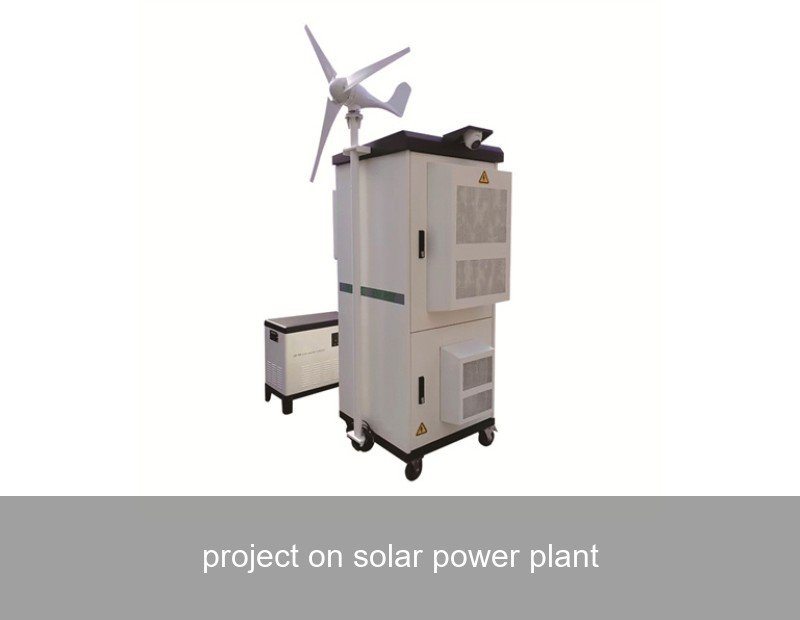
So, you're embarking on a project on solar power plant. The vision is clear: harnessing the sun's boundless energy to generate clean, sustainable power. But the path from a promising blueprint to a fully operational, profitable asset is paved with complex decisions. For developers and asset managers in Europe and the US, the modern solar project is no longer just about panels and inverters; it's an integrated energy system where intelligent storage is the key to unlocking true value and grid independence. This guide breaks down the critical phases of a solar power plant project, highlighting how strategic choices, especially in storage, determine long-term success.
Table of Contents
- The New Reality: Intermittency is the Challenge, Storage is the Answer
- Phases of a Successful Solar Power Plant Project
- Case Study: The Spanish Solar-Plus-Storage Success Story
- The Storage Imperative: Why Your Solar Plant Needs a Brain
- How Highjoule Elevates Every Phase of Your Solar Project
- Is Your Solar Project Designed for the Future Energy Market?

Image Source: Unsplash - A modern utility-scale solar plant. The true potential lies in integrating smart storage.
The New Reality: Intermittency is the Challenge, Storage is the Answer
The phenomenon is well-known: solar generation follows the sun. This creates a duck curve—a steep ramp-up in demand as the sun sets but solar production falls. In California, the California Independent System Operator (CAISO) has documented this dramatic net load drop, highlighting the urgent need for flexible resources. The raw data is compelling. A solar-only plant might achieve a 20-25% capacity factor, meaning it produces at full capacity only a quarter of the time. This intermittency leads to:
- Grid Congestion & Curtailment: Excess midday power is wasted because the grid cannot absorb it.
- Missed Revenue Opportunities: Power prices are often highest in the evening when your plant is offline.
- Grid Stability Challenges: Providing frequency regulation and voltage support becomes difficult without a buffer.
The insight is clear. The most successful modern project on solar power plant is, inherently, a solar-plus-storage project. Storage transforms a variable generator into a dispatchable, grid-friendly asset.
Phases of a Successful Solar Power Plant Project
Phase 1: Feasibility & Design - The Foundational Blueprint
This phase answers the "if" and "how." It involves detailed site analysis, energy yield modeling, and financial projections. The critical shift today is modeling the plant with integrated battery storage from the outset. Key questions include: What is the optimal storage capacity (MWh) to power rating (MW) ratio? Should the system be AC- or DC-coupled? The design must consider future market participation, not just simple energy export.
Phase 2: Procurement & Construction - Beyond the Panels
Procurement for a solar-storage hybrid is nuanced. It's not just buying a battery; it's selecting an integrated energy management system. The Battery Energy Storage System (BESS) must have proven cycle life, safety certifications (like UL 9540 in the US), and advanced software for control. Construction requires specialized expertise in high-voltage DC and AC systems, and precise commissioning protocols to ensure the storage and solar components communicate flawlessly.
Phase 3: Commissioning & Grid Integration - Proving Performance
This is where the system comes to life. Performance testing validates that the plant meets its Power Purchase Agreement (PPA) guarantees. For storage, this involves testing response times, round-trip efficiency, and the all-important grid compliance functions. The plant must pass rigorous interconnection studies and demonstrate it can support the grid as required by local transmission operators (like ENTSO-E in Europe).
Phase 4: Long-Term Operation - The Revenue Optimization Engine
Operation is where the ROI is maximized. A smart storage system doesn't just store energy; it makes autonomous decisions on when to charge, when to discharge, and which grid services to provide based on real-time market signals. It can stack revenue streams: selling solar energy, providing frequency response, arbitraging time-of-use prices, and reducing curtailment.
| Project Phase | Solar-Only Focus | Solar-Plus-Storage Focus (The Highjoule Approach) |
|---|---|---|
| Design | Maximize LCOE (Levelized Cost of Energy) | Maximize LCOE & Value Stacking Potential |
| Revenue | Primarily energy sales, subject to curtailment | Multi-stream: Energy, Capacity, Ancillary Services, Arbitrage |
| Grid Relationship | Passive generator, can be a grid burden | Active grid asset, provides stability and support |
| Future-Proofing | Low; vulnerable to market and grid rule changes | High; adaptable software can update to new market signals |
Case Study: The Spanish Solar-Plus-Storage Success Story
Let's look at a real-world example. In 2022, a 50MW solar plant in Extremadura, Spain, faced a common problem: significant midday curtailment due to grid congestion. The asset owner decided to retrofit a 20MW/40MWh battery storage system. The goals were to reduce wasted energy and participate in the Iberian electricity market's balancing services.
The Results, One Year Post-Integration:
- Curtailment Recovery: Captured and utilized 98% of previously curtailed solar energy.
- Additional Revenue: Generated over €1.2 million annually from secondary frequency regulation services alone.
- Increased Capacity Factor: The effective plant capacity factor increased from 24% to over 31%.
This case, documented in part by the International Renewable Energy Agency (IRENA) in reports on hybrid systems, demonstrates the transformative financial and operational impact of adding intelligent storage. It turned a constrained asset into a profitable, grid-supportive one.

Image Source: Unsplash - A battery storage system installation. The intelligence behind the hardware is what creates value.
The Storage Imperative: Why Your Solar Plant Needs a Brain
Think of storage as the brain of your solar plant. The hardware (battery cells, inverters) is the muscle, but the software-based energy management system (EMS) is the intelligence. A sophisticated EMS, like the one at the core of every Highjoule system, continuously analyzes weather forecasts, grid demand, and real-time electricity prices. It then makes millisecond decisions to optimize the flow of energy, ensuring every kilowatt-hour is used or sold at its maximum value. Without this "brain," a battery is just a passive container.
How Highjoule Elevates Every Phase of Your Solar Project
At Highjoule, we've been pioneering advanced energy storage solutions since 2005. We understand that a project on solar power plant is a long-term investment, and our role is to be your partner in maximizing its lifetime value. Our integrated approach provides:
- For Design & Feasibility: Our technical team provides free, detailed modeling using your specific site data to size the optimal storage solution, showing clear ROI projections from multiple revenue streams.
- For Procurement & Construction: We supply fully integrated, containerized BESS solutions like our H-Joule Cube, which come pre-assembled and tested for faster, safer deployment. Our systems are modular, allowing for easy future expansion.
- For Operation & Revenue: The Highjoule Apex EMS is the differentiator. This AI-driven platform automatically dispatches your storage to participate in the most lucrative markets (e.g., FFR in the UK, FRR in Germany, wholesale arbitrage in the ERCOT or CAISO markets), all while prioritizing the health and longevity of the battery asset.
We don't just sell hardware; we deliver a guaranteed performance outcome. For commercial, industrial, and utility-scale solar projects, partnering with an experienced provider like Highjoule mitigates risk and future-proofs your investment.
Is Your Solar Project Designed for the Future Energy Market?
The energy landscape is shifting from kilowatt-hours to kilowatt-values. As you move forward with your project on solar power plant, ask yourself this crucial question: Is my design merely compliant with today's grid, or is it strategically architected to adapt and profit from the market dynamics of tomorrow? The difference lies in the intelligence you build into it from day one.
What specific grid service market in your region presents the highest immediate value for a solar-storage hybrid, and how are you modeling that in your financial projections?
 Inquiry
 Online Chat