


Home Solar Power Generator: Your Complete Guide to Energy Independence
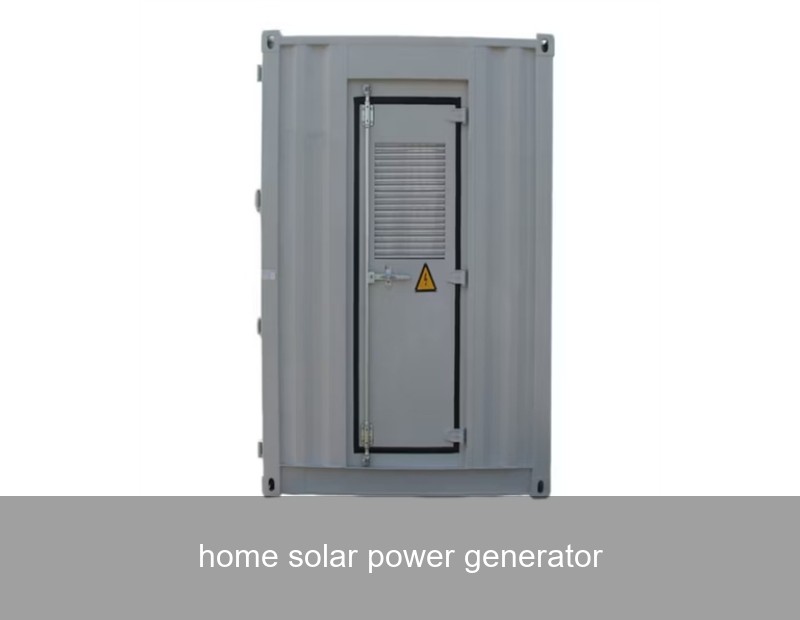
Have you ever watched your electricity bill climb month after month, or felt a pang of worry during a storm-induced blackout? You're not alone. Across Europe and the US, homeowners are increasingly turning to a powerful solution: the home solar power generator. This isn't just about panels on the roof anymore. It's about a sophisticated, intelligent system that captures, stores, and manages clean energy, transforming how you power your life. Let's explore how this technology works and why it's becoming the cornerstone of modern, resilient homes.
Table of Contents
- The Phenomenon: Why Home Solar is Booming
- Beyond Panels: The Heart of a Modern Solar Generator
- Data Don't Lie: The Financial & Grid Impact
- Case Study: A Berlin Family's Journey to All-Day Solar
- Choosing Your System: Key Considerations
- How Highjoule Powers Smarter Homes
- The Future of Your Home Energy
The Phenomenon: Why Home Solar is Booming
The shift is undeniable. From sunny California to sometimes-grey Germany, rooftops are changing. This surge is driven by a powerful combination: the persistent rise in traditional energy costs, growing climate awareness, and significant advancements in technology that make solar more efficient and affordable than ever. But perhaps the most crucial catalyst has been the evolution of the system itself. Today's solution is an integrated home solar power generator—a combination of solar panels, a battery storage system, and intelligent energy management software.
It addresses the fundamental limitation of early solar: what happens when the sun isn't shining? By storing excess energy, you're no longer just offsetting daytime use; you're powering your home around the clock, turning sunlight into a reliable 24/7 energy source.
Beyond Panels: The Heart of a Modern Solar Generator
Think of a contemporary home solar system as a self-sufficient energy ecosystem. Each component plays a vital role:
- Solar Panels (The Harvesters): High-efficiency photovoltaic cells convert sunlight into direct current (DC) electricity.
- Inverter (The Translator): This crucial device converts the DC electricity from your panels into the alternating current (AC) that your home appliances use. Modern hybrid inverters can also manage battery charging and discharging.
- Battery Storage System (The Bank): This is the game-changer. Instead of sending unused solar energy back to the grid for a minimal feed-in tariff, you store it for your own use at night or during peak hours. Lithium-ion phosphate (LFP) batteries are now the standard for safety, longevity, and performance.
- Energy Management System (The Brain): Intelligent software learns your consumption patterns, weather forecasts, and utility rate schedules to optimize when to store energy, when to use it, and when to draw from the grid, maximizing your savings and autonomy.
Data Don't Lie: The Financial & Grid Impact
The numbers make a compelling case. According to the U.S. Department of Energy, the cost of solar PV panels has dropped by over 60% in the last decade. In Europe, despite reduced direct subsidies, demand remains strong due to high retail electricity prices and a desire for energy security, as noted in reports from the International Energy Agency.
Let's look at a typical financial snapshot for a homeowner:
| Scenario | Without Solar + Storage | With Solar + Storage |
|---|---|---|
| Monthly Electricity Bill | $180 - $250 | $20 - $40 (mostly grid fees) |
| Impact of Power Outage | Full disruption | Seamless backup for essential loads |
| Carbon Footprint | High (grid-dependent) | Reduced by 70-90% annually |
| Payback Period | N/A | 6-10 years (system dependent) |
Case Study: A Berlin Family's Journey to All-Day Solar
Meet the Schmidt family in Berlin, Germany. In 2022, frustrated by rising energy costs and inspired to act sustainably, they installed a 8.2 kWp solar array. Initially, their self-consumption rate was only about 30%—they used a fraction of the solar they produced during the day, exporting the rest. Their solution? Integrating a robust battery storage system six months later.
- System Specs: 8.2 kWp solar panels + 13.5 kWh lithium-ion battery + smart energy manager.
- Results: Their self-consumption rate jumped to 85%. They now cover nearly all their electricity needs year-round, from running appliances to charging their electric vehicle overnight.
- Financial Outcome: Their annual electricity cost dropped from over €2,200 to approximately €350 (covering basic grid charges). They are protected from future price hikes and enjoy peace of mind during grid instability.
"The battery wasn't an extra cost; it was the key to actually using *our* sun," says Mr. Schmidt. "Now, our home solar system truly feels like our own power plant."

Choosing Your System: Key Considerations
Selecting the right home solar power generator isn't one-size-fits-all. Here are the critical factors to discuss with your provider:
- Energy Audit: Analyze your past year's electricity bills to understand your consumption patterns and peak usage.
- Roof Viability: Orientation, shading, and structural integrity are key for panel placement.
- Battery Capacity: Size your storage based on your nightly energy needs and desired backup duration. More isn't always better—intelligent management is crucial.
- System Intelligence: Ensure your system includes software that can adapt and optimize based on real-time data.
- Quality & Warranty: Opt for tier-1 components and long-term warranties (often 10+ years on panels, 10+ years on batteries).
How Highjoule Powers Smarter Homes
This is where our expertise at Highjoule comes into play. Since 2005, we've evolved from a component supplier to a global provider of integrated, intelligent energy storage solutions. We understand that a home solar power generator is more than hardware—it's the centerpiece of a home's energy resilience.
For homeowners in Europe and the US, Highjoule offers the ResiCore Energy System, a seamlessly integrated solution designed for simplicity and performance. The ResiCore system pairs high-efficiency LFP battery modules with our proprietary Adaptive Energy OS. This software doesn't just monitor; it proactively manages your energy flow. It can, for example, prioritize charging your battery with solar when a cloudy afternoon is forecasted, or reduce non-essential load during a grid peak event if you're on a time-of-use tariff.
Our systems are designed for safety and longevity, with comprehensive monitoring via a user-friendly app. We partner with certified local installers to ensure your system is perfectly tailored to your home's architecture and your family's energy goals, providing a single point of contact for support.

The Future of Your Home Energy
The journey toward energy independence is accelerating. With electric vehicles becoming commonplace, the concept of a "home solar power generator" is expanding to become a holistic "home energy hub," managing solar, storage, EV charging, and even heat pumps. The technology is ready, the economics are sound, and the environmental imperative is clear.
The real question isn't whether solar and storage are worth it, but what you're waiting for. What would you power first if you knew your energy was clean, reliable, and truly your own?
 Inquiry
 Online Chat