


How Much Can a 215 kWh Battery Really Do for Your Home or Business?
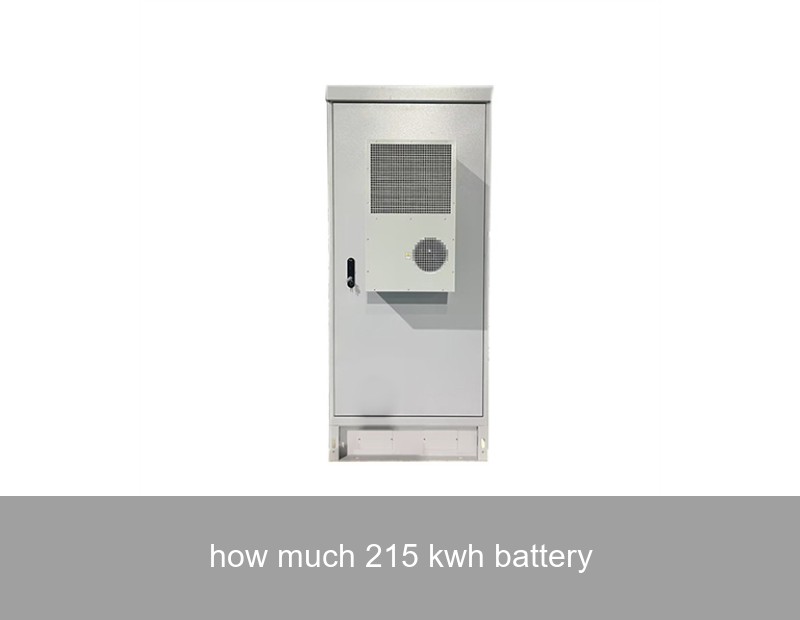
You're researching energy storage, and you've landed on a specific size: a 215 kWh battery. It's a substantial figure, but what does it truly mean for your electricity bill, energy independence, or operational resilience? As a product technology expert at Highjoule, I spend my days demystifying these numbers for clients across Europe and the US. The question isn't just "how much is a 215 kWh battery?" but rather, "how much value can a 215 kWh battery system deliver?" Let's break down the capacity, translate it into real-world power, and explore how smart system design, like Highjoule's, maximizes every kilowatt-hour stored.
What Can 215 kWh Actually Power? Real-World Scenarios
Think of a kilowatt-hour (kWh) as the unit of energy your appliances consume over time. A 215 kWh battery holds enough energy to supply 215 kilowatts of power for one hour, or more practically, smaller amounts over a longer period. Here’s a tangible breakdown:
- A Typical American Home: The average U.S. household uses about 30 kWh per day. A 215 kWh battery could, in theory, power that home for 7-10 days during a grid outage, assuming careful management of major loads.
- A Medium-Sized Business: For a small office, retail store, or workshop with a daily consumption of 50-70 kWh, this battery provides 3-4 days of essential backup, covering lights, POS systems, servers, and critical machinery.
- Peak Shaving for Commercial Sites: Many utilities charge significant "demand charges" based on your highest 15-minute power draw. A 215 kWh battery can be strategically discharged during these peak periods, slashing those charges by delivering power instead of pulling it from the grid.
It's crucial to understand that usable capacity is often less than the nameplate rating. System design, depth of discharge (DoD), and inverter efficiency play huge roles. That's where a provider like Highjoule adds immense value—we engineer systems to optimize the usable energy you get from your investment.
Putting It in Perspective: A Comparative Table
| Application | Average Daily Energy Use | How Long 215 kWh Could Provide Backup* |
|---|---|---|
| Residential (Energy-Efficient) | 20 kWh | Up to 10 days |
| Residential (Large, with AC) | 50 kWh | 4-5 days |
| Small Commercial (Office/Cafe) | 65 kWh | 3-4 days |
| Critical Loads Only (e.g., refrigeration, servers) | 10 kWh | Over 2 weeks |
*Assumes 90% inverter efficiency and 90% Depth of Discharge. Actual results vary based on system design and load management.
Key Factors Influencing Your 215 kWh Battery Investment
So, you're considering this scale of storage. The final "how much" question encompasses cost, value, and configuration. Here are the primary levers:
- System Configuration & Integration: Is this a standalone battery system, or is it paired with solar PV? A 215 kWh battery integrated with a large solar array transforms from a backup asset to a 24/7 energy management tool. Highjoule's IntelliGrid energy management platform excels here, autonomously deciding when to store solar energy, power your loads, or sell back to the grid for maximum ROI.
- Technology & Longevity: Lithium iron phosphate (LFP) chemistry, which we use in many of our Highjoule H-Series commercial units, offers a longer cycle life and enhanced safety compared to some older chemistries. This impacts the levelized cost of storage over the system's 15+ year lifespan.
- Installation & Grid Services: Complexity of electrical work, permitting (which varies greatly between, say, Germany and Texas), and potential participation in grid service programs like Frequency Regulation can all affect the overall economics.

Image: Professional installation and system design are critical for large-scale battery performance. Source: Unsplash
Case Study: Real Data from a California Winery
Let's move from theory to practice. A client of ours, a premium winery in Sonoma County, California, faced two problems: unreliable grid power during wildfire prevention shutoffs and crippling demand charges during their energy-intensive fermentation and cooling cycles.
The Solution: Highjoule deployed a integrated solar-plus-storage system featuring a 215 kWh battery bank from our H-Series, coupled with a 150 kW solar canopy. Our IntelliGrid platform was programmed for dual objectives: maximize self-consumption of solar and aggressively target peak load shaving.
The Data-Driven Results (First 12 Months):
- Demand Charge Reduction: Reduced peak grid demand by 40%, saving over $1,800 monthly on that portion of the utility bill.
- Backup Power: Provided seamless backup power during two planned PSPS (Public Safety Power Shutoff) events, totaling 34 hours, preserving thousands of gallons of fermenting wine.
- Solar Self-Consumption: Increased on-site consumption of solar generation from 35% to over 80%, drastically reducing net energy costs.
For this business, the "how much" of the 215 kWh battery translated into annual savings exceeding $25,000 and priceless production security. You can read more about how businesses use storage for resilience on the U.S. Department of Energy's page on battery storage.
Highjoule's Smart Solutions for 215 kWh and Beyond
At Highjoule, we don't just sell battery modules; we deliver intelligent, tailored energy ecosystems. A 215 kWh need is rarely met with a single, monolithic unit. Our approach often involves scalable, modular systems like our H-Series Commercial Stack.
- Modular Design: Start with what you need and scale up. Our modular units can be configured to meet your exact 215 kWh requirement, with the flexibility to expand later.
- Advanced Thermal Management: Consistent performance and longevity hinge on precise temperature control. Our proprietary cooling systems ensure the battery operates at peak efficiency in both Scandinavian winters and Arizona summers.
- Grid-Forming Inverter Technology: For microgrid or critical backup applications, our systems can "black start" and form a stable grid independently, keeping your operations online even if the main grid is down for extended periods. Learn about the technical principles from a trusted source like NREL's research on grid-forming inverters.

Image: Modular battery storage systems allow for flexible, scalable capacity. Source: Unsplash
Is a 215 kWh Battery Right for You? Key Questions to Ask
- What are your primary goals? (Backup power, bill savings, sustainability, all three?)
- Do you have, or plan to install, solar PV? This dramatically improves the economics.
- What is your facility's peak power demand (in kW), not just energy use (kWh)? This determines the inverter power rating needed alongside the battery capacity.
Making the Right Choice for Your Energy Needs
The journey to understanding "how much 215 kWh" is really a journey of defining your own energy priorities. The capacity is a powerful tool, but its true value is unlocked through intelligent software, robust engineering, and a deep understanding of your load profile. At Highjoule, with nearly two decades of experience from Munich to Minneapolis, we've seen that the most successful projects are partnerships where we listen first, then design.
What specific energy challenge—be it a volatile utility bill, a critical process that cannot tolerate downtime, or a sustainability target—is prompting you to consider a battery of this scale today?
 Inquiry
 Online Chat