


How Much Power Can You Really Get from an Astronergy 600W Solar Panel?
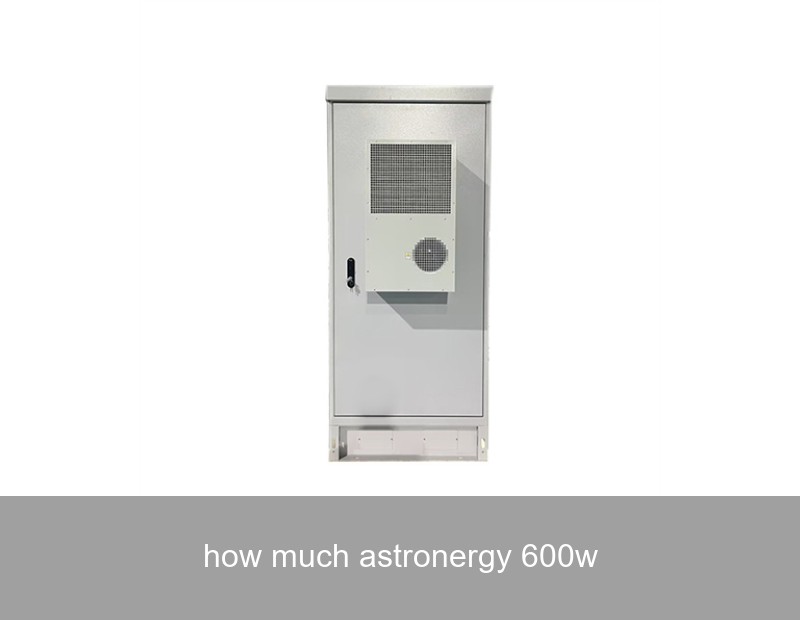
"How much Astronergy 600W?" It's the first question that comes to mind when evaluating these high-power solar modules. The simple answer is: under ideal laboratory conditions, a single Astronergy 600W panel can produce 600 watts of direct current (DC) power. But as a seasoned professional in renewable energy systems, I need to tell you that the real question is more nuanced. What you truly want to know is: how much usable electricity will it generate for my home or business throughout the year? The journey from that nameplate rating to the kilowatt-hours on your utility bill is influenced by a fascinating interplay of geography, technology, and system design.
At Highjoule, with nearly two decades of experience powering homes and businesses across Europe and the U.S., we see this daily. Clients are excited by the high wattage of modern panels like the Astronergy 600W, but the true value of a solar investment is unlocked only when paired with intelligent energy management and storage. Let's demystify the factors that determine your actual yield.
Real-World Power Output: It's Not Just About the Nameplate
Think of the 600W rating as the panel's peak potential—like a car's top speed. You'll rarely drive at that speed due to road conditions, traffic, and safety. Similarly, your solar panel's output is governed by several key factors:
- Sunlight Intensity & Angle (Irradiance): A panel in Southern Spain will outperform the same panel in Scotland due to more intense and direct sunlight. The angle of your roof and seasonal sun path are critical.
- Temperature: Solar panels are ironically less efficient when very hot. Their performance is rated at a "Standard Test Condition" (STC) temperature of 25°C (77°F). On a scorching 35°C (95°F) day, a panel's output can drop by 10-15%.
- Soiling and Shading: Even a small amount of shade from a chimney or tree branch, or a layer of dust and pollen, can disproportionately reduce the output of a panel, especially in series-string configurations.
- System Losses: Energy is lost as it travels through wiring, inverters, and other components. Modern systems aim to keep these losses below 10-15%.
According to the National Renewable Energy Laboratory (NREL), a well-designed system in a favorable location typically operates at about 75-85% of its "nameplate capacity" when averaged over a year. This is often called the "performance ratio."

Image Source: Unsplash - A solar technician monitoring panel output, a key step in understanding real-world yield.
Calculating Your Potential Energy Yield
Let's put this into a practical formula. A simplified way to estimate the daily energy production of a single Astronergy 600W panel is:
Daily kWh ≈ Panel Rating (kW) × Peak Sun Hours × Performance Ratio
| Location | Average Daily Peak Sun Hours* | Estimated Daily Output per 600W Panel | Estimated Annual Output |
|---|---|---|---|
| Los Angeles, USA | 5.5 | ~2.5 kWh | ~912 kWh |
| Munich, Germany | 3.8 | ~1.7 kWh | ~620 kWh |
| Phoenix, USA | 6.2 | ~2.8 kWh | ~1022 kWh |
*Peak Sun Hours data is illustrative, based on annual averages from sources like Global Solar Atlas. Performance Ratio assumed at 0.78 for calculation.
This table clearly shows why "how much" depends so heavily on where you are. A system in Phoenix will generate nearly 65% more energy annually than the same system in Munich.
Case Study: Maximizing Output on a German Dairy Farm
Let's look at a real-world example from Bavaria, Germany. A dairy farm with substantial daytime energy consumption installed a 30kW solar array using 50 Astronergy 600W panels. Their goal wasn't just to generate power, but to maximize self-consumption and reduce reliance on the volatile grid.
- System Size: 30 kWp (50 x Astronergy 600W panels)
- Location: Bavarian countryside, moderate irradiance.
- Initial Challenge: High noon-time production often exceeded on-site consumption, leading to feed-in to the grid at low tariffs, while they still had to buy expensive power in the early morning and evening for milking and cooling.
This is where the story gets interesting. The farm partnered with Highjoule to integrate a Highjoule HI Series Commercial Battery Storage System. The 50 kWh battery bank stores excess solar production from the middle of the day. Now, the farm uses its self-generated solar power to run evening operations, effectively increasing the utilization of every kilowatt-hour its Astronergy panels produce.
The Result? Their annual energy bill was reduced by an additional 68% post-storage installation, bringing total energy cost savings to over 85%. The Astronergy panels provided the raw power, but the Highjoule intelligent storage system was the key to unlocking its full financial value.
The Highjoule Synergy: Why Your Choice of Battery Matters
As the case study shows, asking "how much Astronergy 600W?" is only the first step. The modern energy equation is: Generation + Storage + Intelligence = True Energy Independence.
Highjoule's advanced battery energy storage systems (BESS) are engineered to complement high-output solar arrays perfectly. Our systems, like the HI Series for commercial use and the HOMESafe Series for residential applications, feature:
- High Round-Trip Efficiency (RTE): Over 96% RTE means you lose very little of your precious solar energy when storing and using it later.
- Advanced Battery Management Systems (BMS): This ensures safety, longevity, and optimal performance of the lithium-ion cells, whether in freezing Scandinavian winters or hot Texan summers.
- Grid Services & Peak Shaving: For businesses, our systems can be configured to reduce demand charges by discharging the battery during periods of peak grid demand, a major cost saver.
- Seamless Integration: Our systems are designed to work with a wide range of inverters and solar panel brands, including high-wattage modules like the Astronergy 600W.

Image Source: Unsplash - A modern home battery storage unit, similar to Highjoule's HOMESafe Series, enabling energy independence.
Optimizing Your Investment: From Panels to Complete System
So, how do you ensure you get the most out of your solar investment? Follow this logic ladder:
- Start with an Accurate Site Assessment: Use satellite data and professional tools to predict your specific solar yield, not just generic tables.
- Design for Your Consumption Pattern: Do you use power mostly during the day (good for solar alone) or in the evening (requires storage)? Analyze your utility bills.
- Size Your Storage Correctly: A battery that's too small won't cover your needs; one that's too large hurts your return on investment. Highjoule's design team specializes in this critical balance.
- Plan for Intelligence: Ensure your system has smart energy management that can learn your habits, respond to time-of-use rates, and even provide backup power during outages.
Ultimately, the answer to "how much Astronergy 600W" transforms. It's no longer just about watts from a panel. It becomes: "How much predictable, low-cost, clean energy can I have on demand, day and night?" That's the metric that truly powers modern life.
What does your current energy consumption profile look like, and how much of that load would you like to shift to your own reliable, solar-generated power?
 Inquiry
 Online Chat