


Residential Solar Generators: Your Complete Guide to Clean, Independent Home Power
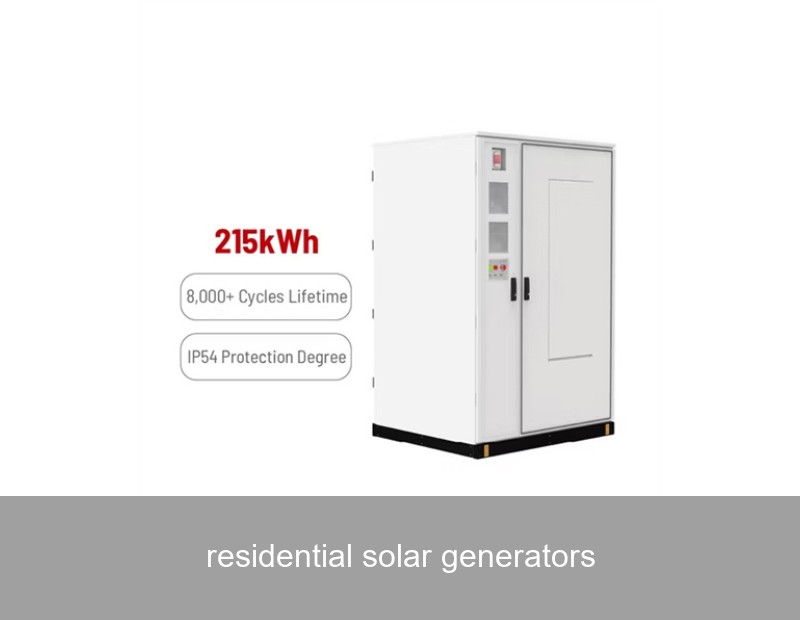
Imagine a powerful storm knocks out the grid in your neighborhood. While others are left in the dark, your home's lights stay on, your refrigerator hums, and your Wi-Fi remains connected. This isn't magic; it's the modern reality enabled by residential solar generators. More than just emergency backup, these integrated systems are revolutionizing how homeowners in Europe and the US generate, store, and consume energy. They transform your property into a personal power plant, offering independence from volatile utility rates and contributing to a sustainable future. As a leader in advanced energy storage since 2005, Highjoule is at the forefront of this shift, providing intelligent storage solutions that maximize the value of every solar panel installed on your roof.
Table of Contents
What Exactly Are Residential Solar Generators?
Let's clear up a common misconception. A residential solar generator isn't a single, gas-guzzling appliance you wheel onto your patio. It's a sophisticated, integrated system comprising solar panels, a battery storage unit, power electronics (inverters), and intelligent energy management software. Think of it as your home's personal energy ecosystem: the solar panels are the "fuel source," capturing free energy from the sun. The battery is the "fuel tank," storing that energy for when you need it most—at night, during outages, or during peak rate periods. The brain of the operation is the inverter and software, which efficiently manage the flow of electricity, prioritizing solar self-consumption and ensuring seamless backup power. Companies like Highjoule specialize in the core of this system: the advanced battery storage and smart energy management platform that turns a simple solar array into a resilient and cost-effective power generator.
Image: A modern home equipped with a complete solar generator system. Source: Unsplash
Key Components of a Solar Generator System
To understand the value, it helps to know what you're investing in. A high-performance system rests on three pillars:
- Solar Photovoltaic (PV) Panels: These are your energy harvesters. Technological advances have dramatically increased their efficiency and lowered costs, making them more accessible than ever.
- Battery Energy Storage System (BESS): This is the heart of the "generator" functionality. Modern systems like Highjoule's H-PowerCube series use lithium iron phosphate (LiFePO4) chemistry, renowned for its safety, longevity (often over 6,000 cycles), and stable performance. Capacity typically ranges from 5 kWh to over 20 kWh for whole-home backup.
- Hybrid Inverter & Energy Management System (EMS): This is the brain. A hybrid inverter can manage power from both solar panels and the grid, charging the battery or powering your home. Highjoule's Smart EMS adds a layer of intelligence, learning your consumption patterns, integrating with time-of-use utility rates, and allowing you to control your system remotely via an app.
| System Size | Battery Capacity | Ideal For | Key Benefit |
|---|---|---|---|
| Basic Backup | 5 - 10 kWh | Powering essential circuits (lights, fridge, modem) during outages for 8-24 hours. | Essential resilience at an entry-level price. |
| Self-Consumption | 10 - 15 kWh | Maximizing use of solar energy day and night, significantly reducing grid imports. | Lower electricity bills and reduced carbon footprint. |
| Whole-Home Independence | 15+ kWh | Larger homes, electric vehicle charging, or areas with frequent/long outages. | Near-total energy independence and security. |
Why Homeowners Are Making the Switch: Key Benefits
The shift towards residential solar generators is driven by tangible, real-world advantages that go beyond environmental goodwill.
1. Uninterrupted Power Supply (Energy Resilience)
With climate change increasing the frequency of extreme weather events, grid outages are a growing concern on both sides of the Atlantic. A solar generator with storage automatically kicks in within milliseconds of a grid failure, keeping your critical loads running. No more spoiled food, dark halls, or lost connectivity.
2. Dramatic Reduction in Electricity Bills
This is where the economics get exciting. Solar panels often produce more energy than you can use at noon. Without storage, this excess is sold back to the grid at a low feed-in tariff. With a battery, you store that excess and use it in the evening when grid rates are high. This practice, called "peak shaving," can slash your bill by 70% or more. Highjoule's systems are designed specifically to optimize this arbitrage, maximizing your financial return.
3. Energy Independence and Price Stability
Utility rates are notoriously unpredictable. By generating and storing your own power, you insulate yourself from future rate hikes. You lock in a predictable, low cost of electricity for the 20+ year lifespan of your system.
4. Supporting a Greener Grid
By consuming your own solar energy and reducing peak demand on the grid, you actively decrease reliance on fossil-fuel peaker plants. This contributes to lower community-wide emissions and a more stable, renewable-based electricity network.
A Real-World Case Study: The Johnson Family, California, USA
Let's look at hard data. The Johnson family in Sacramento installed a 8 kW solar array with a Highjoule H-PowerCube 13.5 kWh battery system in early 2022. Their goals were to avoid Public Safety Power Shutoffs (PSPS) and escape soaring tiered electricity rates.
- Pre-Installation (2021): Average monthly bill: $220. Experienced 4 outages totaling 50 hours.
- Post-Installation (2023): Average monthly bill: $35 (the basic service fee). Outages experienced: 3 events, but home power loss: 0 hours.
In one notable PSPS event in October 2023, the grid was down for 36 hours. The Johnson's system powered their entire home (including AC, as temperatures were mild) for the full duration, switching back to grid seamlessly when power returned. Their calculated annual savings are over $2,200, giving the system a compelling payback period. "It's not just about savings," says Mrs. Johnson. "The peace of mind is priceless. We're now the safe house on the block where neighbors can charge their phones during an outage."

Image: Smart energy monitoring allows homeowners to track production, consumption, and savings in real-time. Source: Unsplash
Choosing the Right System for Your Home
Selecting a residential solar generator is a significant decision. Here’s a logical framework to guide you:
- Audit Your Energy Goals: Is your primary driver backup power, bill savings, or environmental impact? Analyze your past year's utility bills to understand your consumption pattern and peak usage.
- Assess Your Site: A solar installer will evaluate your roof's orientation, shading, and local climate. South-facing roofs with minimal shade are ideal in the Northern Hemisphere.
- Prioritize Quality & Integration: Not all components are created equal. The battery and inverter must communicate flawlessly. Highjoule's approach of providing an integrated storage and management solution ensures optimal performance, safety, and a single point of warranty and support.
- Understand Incentives: In the US, the federal Investment Tax Credit (ITC) now applies to standalone storage as well, covering 30% of the installed cost. Many European countries, like Germany and Italy, offer attractive subsidies or low-interest loans for solar-plus-storage systems. These can dramatically improve your return on investment.
- Plan for the Future: Consider future needs like adding an electric vehicle. Choosing a scalable system, like Highjoule's modular H-PowerCube, allows you to easily add more battery capacity later.
The Future of Home Energy: Beyond the Generator
The residential solar generator is evolving into a home's central energy hub. We're moving towards virtual power plants (VPPs), where thousands of home batteries are aggregated to act as a single, large power plant that supports the grid during times of high demand. Homeowners can earn revenue by allowing their utility to use a small portion of their stored energy for grid stabilization. Highjoule is actively involved in several pilot VPP programs in Europe and North America, demonstrating how proactive homeowners can become active participants in the energy market. Furthermore, bidirectional charging will soon allow your EV to power your home (vehicle-to-home or V2H), creating an even more resilient and flexible energy asset.
For those interested in the technical standards and safety protocols behind modern energy storage systems, the UL safety standards and reports from the International Energy Agency provide excellent, authoritative resources.
Ready to Take Control of Your Home's Energy?
The journey to energy independence starts with a question: What would reliable, clean, and affordable power mean for your family's comfort, security, and finances? We invite you to explore how Highjoule's tailored solutions can transform your roof and your utility bill into a source of power and peace of mind. What's the first appliance you'd want to keep running when the grid goes down?
 Inquiry
 Online Chat