


How Much LongVolt Energy Can You Really Expect from Your Storage System?
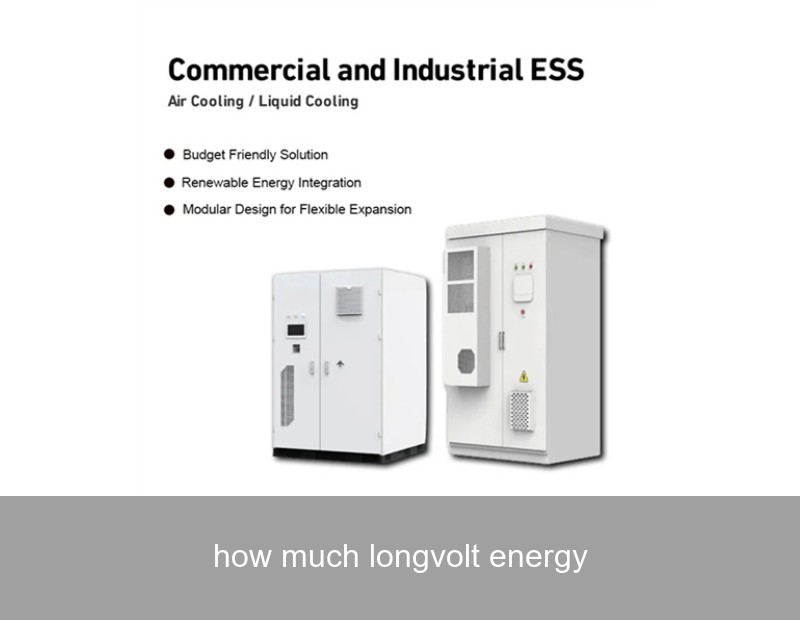
If you're considering a battery energy storage system (BESS) for your home or business, you've likely been bombarded with specs: kilowatt-hours (kWh), power ratings, and efficiency percentages. But savvy energy managers are starting to ask a more profound, long-term question: "How much LongVolt energy will this system deliver over its entire life?" This isn't just about the capacity on day one; it's about the total, reliable energy throughput you'll get for your investment. Let's demystify this crucial concept and explore what determines the true lifespan value of your storage solution.
Introduction: The Longevity Question in Energy Storage
Imagine buying a car based solely on the size of its fuel tank, without any regard for how many miles the engine will last. That's akin to choosing a battery system only on its initial capacity. LongVolt energy is a holistic concept that encapsulates the total amount of energy (in kilowatt-hours or megawatt-hours) a storage system can reliably store and discharge throughout its operational lifetime. It's the ultimate measure of return on investment and sustainability. As grid demands evolve and electricity prices fluctuate, the system that delivers more LongVolt energy ultimately provides greater resilience and cost savings.
What Exactly is LongVolt Energy? Defining the Metric
At its core, LongVolt energy is a function of two primary factors: the system's usable capacity and its lifespan measured in full cycle equivalents.
- Usable Capacity (kWh): The net energy you can actually use after accounting for depth of discharge (DoD) limits and system losses.
- Cycle Life: The number of complete charge-discharge cycles a battery can undergo before its capacity degrades to a specified percentage (often 80%) of its original capacity.
The Simple Math: LongVolt Energy ≈ Usable Capacity (kWh) x Cycle Life. For example, a 10 kWh system cycled once daily with a 15-year/5,500-cycle lifespan offers roughly 55,000 kWh of LongVolt energy. But this is a simplification—real-world performance is shaped by a myriad of technical and environmental factors.

Credit: Image from Unsplash by Jeremy Waterhouse. Professional monitoring is key to maximizing LongVolt energy.
The Key Factors Determining Your System's Lifespan
Not all cycles are created equal. Several critical elements directly impact how much LongVolt energy your battery will yield:
| Factor | Impact on LongVolt Energy | Ideal Management |
|---|---|---|
| Depth of Discharge (DoD) | Regularly discharging to 100% drastically shortens cycle life compared to partial cycles (e.g., 80% DoD). | Use adaptive DoD settings based on usage patterns. |
| Charge/Discharge Rate (C-rate) | Consistently high-power surges generate more heat and stress, accelerating degradation. | Size the system correctly to avoid consistently high C-rates. |
| Operating Temperature | High temperatures are the arch-nemesis of battery longevity. According to a study in the Journal of Power Sources, operating at 35°C vs. 25°C can halve cycle life. | Active thermal management systems are non-negotiable. |
| Chemistry & Design | Lithium Iron Phosphate (LFP) chemistry, for instance, inherently offers longer cycle life and better thermal stability than some other lithium-ion variants. | Choose chemistry aligned with longevity goals, not just upfront cost. |
A Real-World Case: The German Logistics Center
Let's ground this in reality. A major logistics company in North Rhine-Westphalia, Germany, faced rising demand charges and sought to increase the self-consumption of its rooftop solar PV. They installed a 245 kWh / 250 kW commercial battery storage system in 2020. The initial goal was peak shaving and energy arbitrage.
The Data-Driven Insight: By 2024, advanced system analytics revealed that by slightly moderating the discharge power during peak shaving events (reducing the C-rate), the battery's temperature rise was reduced by ~40%. Projections based on this operational tweak show a potential 18% increase in the system's expected cycle life. This translates directly to thousands of additional kilowatt-hours of LongVolt energy over the system's life, enhancing the ROI significantly. This case underscores that intelligent operation is as important as hardware selection.
Highjoule's Approach to Maximizing LongVolt Energy
At Highjoule, we engineer our H-Series commercial and industrial storage solutions with LongVolt energy as a core design principle. We understand that our clients need a durable asset, not just a short-term fix.
- LFP Battery Architecture: Our systems utilize premium Lithium Iron Phosphate cells, chosen for their superior cycle life, safety profile, and stability, forming the physical foundation for long-term performance.
- Predictive Thermal Management: Our proprietary cooling systems don't just react to heat; they anticipate thermal loads based on usage patterns, maintaining the optimal temperature window to minimize degradation.
- Conservative & Adaptive Cycling Algorithms: Our built-in energy management system (EMS) automatically optimizes charge/discharge profiles to avoid stress-inducing deep cycles and high C-rates when possible, effectively "babying" the battery to extend its service life.
This integrated hardware-software philosophy ensures that the Highjoule H-Series doesn't just meet its rated cycle life on a datasheet but consistently strives to exceed it in the field, delivering maximum LongVolt energy.

Credit: Image from Unsplash by Andreas Gücklhorn. Residential storage requires smart design for long-term value.
Beyond the Battery: The Role of Intelligent Software
The battery cabinet is only half the story. The "brain" of the system dictates its long-term health. Highjoule's JouleMind AI platform transforms a static battery into a self-optimizing asset. It continuously analyzes grid conditions, tariff structures, weather forecasts, and the battery's own health metrics. For a residential customer with our EchoHome system, this might mean deciding to draw a little more from the grid on a cloudy day to prevent a deep discharge of the battery, thereby preserving its cycle life for more critical times. This software-defined longevity is a game-changer in realizing the full LongVolt energy potential.
Future-Proofing Your Investment
The energy landscape is dynamic. A system installed today must adapt to new tariffs, changing consumption patterns, and even future vehicle-to-grid (V2G) opportunities. A system designed for high LongVolt energy is inherently more adaptable. Its extended lifespan means it can provide value across multiple phases of your energy journey, whether that's managing new electric vehicle charging loads or participating in advanced grid-balancing programs like the UK's Dynamic Containment or similar US ancillary service markets.
So, when evaluating proposals, move beyond the simple price-per-kWh-installed. Ask your provider: "How will you guarantee and maximize the total LongVolt energy over the lifetime of my project?" The answer will separate the commodity suppliers from the true long-term partners. What specific operational challenge could a high-LongVolt-energy system solve for your facility in the next decade?
 Inquiry
 Online Chat