


Lithium Battery Winter Storage: Your Essential Guide to Protecting Your Investment
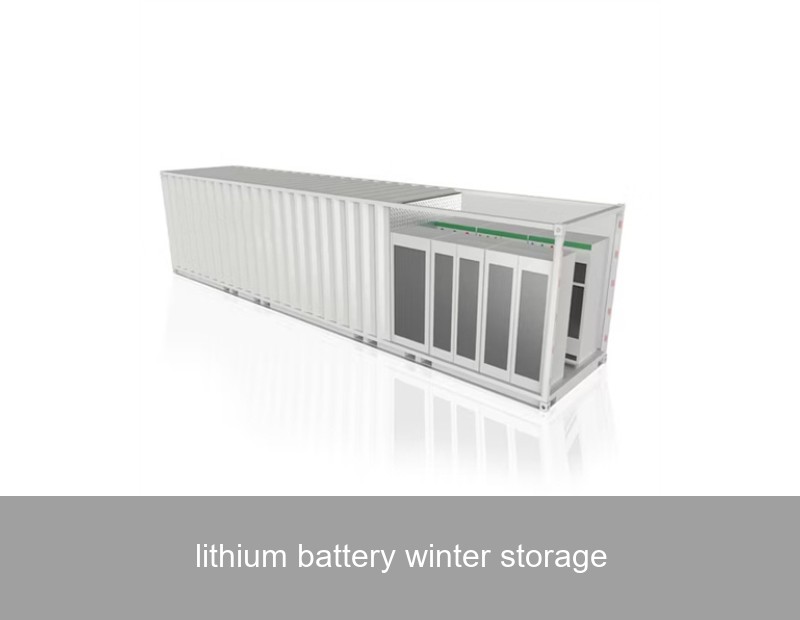
As the crisp autumn air gives way to the deep chill of winter, a critical question arises for anyone relying on battery power: how do I store my lithium batteries safely and effectively in cold weather? Whether you're a homeowner with a solar-plus-storage system, a business with backup power units, or an enthusiast with seasonal equipment, understanding lithium battery winter storage is non-negotiable. Improper care can lead to irreversible capacity loss, safety risks, and a hefty, unexpected replacement bill. This guide will walk you through the science, the best practices, and the smart technology that ensures your energy storage system emerges from hibernation in peak condition.
Table of Contents
- The Cold Reality: Why Winter is a Challenge for Lithium Batteries
- Key Factors in Cold Weather Battery Performance
- Proactive Steps for Safe Winter Storage
- The Highjoule Advantage: Built-In Resilience for All Seasons
- Case Study: A Norwegian Microgrid's Winter Success
- Beyond Storage: Optimizing Winter Operation
The Cold Reality: Why Winter is a Challenge for Lithium Batteries
Let's start with a simple phenomenon we've all experienced: your smartphone dies shockingly fast on a freezing ski day. This isn't just a perception; it's electrochemistry in action. Lithium-ion batteries, the powerhouse behind modern energy storage, are acutely sensitive to temperature. Inside the battery, lithium ions move between the anode and cathode through an electrolyte. Cold temperatures slow down this chemical movement, increasing internal resistance. The result? Reduced available capacity (you can't access all the energy you stored) and a drop in power output (your system struggles to deliver high bursts of energy). In extreme cases, attempting to charge a lithium battery below freezing (0°C / 32°F) without proper safeguards can cause permanent damage through lithium plating, a process that degrades the cell and can create safety hazards.

Image Source: Unsplash - Visual representation of cold's impact on materials.
Key Factors in Cold Weather Battery Performance
To master winter storage, you need to understand three key variables:
- Temperature: The single most critical factor. The ideal storage temperature for most Li-ion batteries is between 10°C and 25°C (50°F to 77°F).
- State of Charge (SOC): Storing a battery at full charge (100% SOC) or completely empty (0% SOC) for extended periods stresses the chemistry. A partial charge is ideal.
- Duration: A week of cold is different from four months. Long-term storage protocols are more stringent.
Consider this data: A study published in the Journal of Energy Storage indicates that storing certain Li-ion cells at -20°C (-4°F) for 8 months can result in a permanent capacity loss of up to 5-10%, even when done at an optimal SOC. This is the kind of gradual degradation that shortens your system's lifespan.
Proactive Steps for Safe Winter Storage
If you're preparing a battery system for seasonal storage (like for a summer cabin or a landscaping business), follow this logical ladder:
- Consult Your Manual: Always start with the manufacturer's guidelines. They know their product's specific tolerances.
- Clean and Inspect: Ensure terminals are clean, dry, and free from corrosion. Look for any casing damage.
- Charge to the "Sweet Spot": For most batteries, this is a 40-60% State of Charge. This level minimizes stress on the electrodes during inactivity.
- Disconnect and Isolate: If possible, disconnect the battery from the device or system to prevent parasitic loads.
- Choose the Right Environment: Store in a dry, insulated space like a basement or conditioned garage. Avoid unheated sheds where temperatures can plummet far below ambient.
- Monitor Periodically: If storage is long-term, check the SOC every 2-3 months. A smart battery management system (BMS) that allows remote monitoring is a huge advantage here.
The Highjoule Advantage: Built-In Resilience for All Seasons
While manual steps are crucial for standalone batteries, modern integrated energy storage systems are designed to handle environmental challenges. This is where Highjoule's expertise comes into play. We don't just sell batteries; we deliver intelligent, resilient power solutions. Our commercial and residential EverSafe™ and GridSynergy™ battery storage systems are engineered with harsh climates in mind.
Our systems feature:
- Active Thermal Management: This isn't just a simple heater. It's an intelligent, self-regulating climate control system within the battery enclosure. It maintains optimal cell temperature during operation and, crucially, can keep the battery within a safe storage temperature band during extended idle periods in cold conditions.
- Advanced Battery Management Systems (BMS): The brain of the operation. Our BMS continuously monitors cell voltage, temperature, and health. It automatically prevents charging when temperatures are sub-zero unless the internal environment is first conditioned, eliminating the risk of lithium plating.
- Remote Monitoring & Diagnostics: Via the Highjoule Energy Portal, you can check your system's status, including temperature and SOC, from anywhere. This means you can verify your system's winter readiness or health without physically being on-site—a game-changer for second homes or remote commercial installations.
In essence, with a Highjoule system, many of the winter storage concerns are managed proactively by the system's own intelligence, providing peace of mind and protecting your capital investment.

Image Source: Unsplash - Example of a residential energy storage installation in winter.
Case Study: A Norwegian Microgrid's Winter Success
Let's look at a real-world application in one of the most demanding climates. A remote fishing community in Northern Norway, operating as an isolated microgrid, needed to integrate more renewable energy but faced extreme winter conditions with temperatures regularly below -15°C (5°F) and limited sunlight.
| Challenge | Solution | Result (Data after 2 Winters) |
|---|---|---|
| Diesel generator dependency, high cost & emissions. | Installation of a Highjoule GridSynergy 500kW/1200kWh battery storage system with advanced thermal management, coupled with existing wind. | Diesel fuel use reduced by 68%. |
| Wind energy curtailment in winter due to grid instability. | The battery provides instantaneous frequency regulation and soaks up excess wind generation. | Renewable utilization increased by 40% during winter months. |
| Fear of battery failure in extreme cold. | The system's self-heating and insulated enclosure maintained optimal temperature. Remote monitoring allowed off-site management. | Battery availability remained above 99%, with zero cold-related degradation incidents. |
This case, documented in a report by the International Energy Agency on storage innovation, demonstrates that with the right technology, lithium battery winter storage transitions from a vulnerability to a non-issue, even in Arctic conditions.
Beyond Storage: Optimizing Winter Operation
For systems that need to operate year-round, like home backup or full-time commercial storage, the goal shifts from passive storage to optimized winter performance. Here, your system's intelligence is key. A well-configured system will:
- Pre-heat the battery using grid or solar power before a scheduled discharge event (like a peak shaving window).
- Aggregate energy during short winter days to ensure backup power is available for long, cold nights.
- Integrate with other heat sources (like a generator in a hybrid system) to ensure overall system resilience.
Highjoule's software suite is designed for this level of strategic energy management, making your storage asset work harder and smarter throughout the seasonal challenges.
Final Thought: Is Your System Winter-Ready?
As we've explored, lithium battery winter storage is a blend of fundamental chemistry, disciplined practice, and, most effectively, smart engineering. The consequences of neglect are both financial and operational. So, as the temperature drops, ask yourself this: Is my current storage solution a seasonal worry, or a year-round asset? If you're leaning towards the former, perhaps it's time to explore a system designed for resilience. What would a winter without power anxiety enable for your home or business?
 Inquiry
 Online Chat