


How Much Renewable Energy Can WPD Europe GmbH Integrate? The Grid Stability Challenge
Imagine you're the grid operator for a region like Germany's windy North or Spain's sunny South. Your daily challenge isn't a lack of power, but an overabundance of it—when the wind blows fiercely or the sun beats down, thousands of megawatts from wind farms and solar parks flood the grid. This is the reality for major renewable energy asset managers and operators like WPD Europe GmbH. The pivotal question they face is no longer just "how to generate more," but "how much of this variable power can we reliably and profitably integrate without compromising grid stability?" The answer, increasingly, hinges on a single, transformative technology: advanced energy storage.
Table of Contents
- The Multi-Billion Euro Problem: Curtailment and Grid Congestion
- Beyond Generation: Measuring True Grid Integration Capacity
- The Storage Solution: From Megawatts to Manageable Megawatt-Hours
- Case Study: A North German Wind Portfolio's Transformation
- How Highjoule Enables Greater Renewable Integration
The Multi-Billion Euro Problem: Curtailment and Grid Congestion
Let's talk numbers. In 2023 alone, Germany curtailed approximately 10.2 terawatt-hours (TWh) of wind and solar energy—enough to power over 3 million homes for a year. This "throwing away" of clean electricity, often necessitated by grid bottlenecks, represents a direct financial loss for developers and operators. For a company managing gigawatts of assets like WPD Europe GmbH, these figures translate into significant revenue at risk. The phenomenon is twofold:
- Physical Grid Constraints: The existing transmission lines, often built for centralized fossil-fuel plants, cannot transport all the renewable power generated in optimal regions.
- System Balance Requirements: Grid frequency must remain stable at 50 Hz (or 60 Hz in the US). A sudden drop in wind or a surge in demand requires instantaneous backup to prevent blackouts.
This creates a paradox: ambitious renewable targets are being met in generation, but the grid's ability to absorb and utilize this power is lagging. The question for asset managers becomes: How can we turn this grid constraint into a business opportunity?
Beyond Generation: Measuring True Grid Integration Capacity
So, "how much" can WPD Europe GmbH or similar players integrate? It's a shifting metric. Traditionally, integration capacity was a static grid code number. Today, it's a dynamic value that can be actively enhanced. Key measurable factors include:
| Factor | Impact on Integration Capacity | Traditional Limitation |
|---|---|---|
| Peak Generation vs. Grid Peak | Wind often peaks at night when demand is low. This mismatch reduces usable capacity. | High curtailment rates. |
| Ramp Rates | How fast generation can drop (e.g., passing clouds on a solar farm). The grid needs fast-responding resources to compensate. | Reliance on fossil-fuel spinning reserve. |
| Local Congestion | Specific grid nodes can be overloaded even if the overall system has capacity. | Localized curtailment, reduced asset ROI. |
Enhancing each of these factors is where modern technology steps in. By addressing them, the effective integration capacity of a renewable portfolio can be increased by 20%, 30%, or even more, unlocking stranded revenue.

Image Source: Unsplash. Wind farms, like those managed by major operators, face significant curtailment challenges during peak generation periods.
The Storage Solution: From Megawatts to Manageable Megawatt-Hours
This is the core of the modern answer. Battery Energy Storage Systems (BESS) act as a shock absorber and a time-shifting tool for the grid. Think of it not just as a "battery," but as a high-speed grid asset that can perform multiple revenue-generating and grid-supportive functions simultaneously:
- Arbitrage: Store cheap, excess renewable energy and sell it during high-price periods.
- Frequency Regulation (FCR, aFRR): Provide millisecond-response services to stabilize grid frequency, a highly valued market in Europe and the US.
- Capacity Firming: Smooth the output of a wind or solar farm, making it more predictable and reliable for the grid operator.
- Congestion Relief: Charge from a congested local grid, relieving pressure and allowing more renewable generation to flow.
According to a IRENA report, global renewable capacity grew by a record 295 GW in 2022, with solar and wind leading. The International Energy Agency (IEA) notes that grid-scale storage is critical to integrating these volumes, with global capacity expected to multiply over 15-fold by 2030.
Case Study: A North German Wind Portfolio's Transformation
Let's look at a real-world scenario in a core WPD Europe GmbH market. A developer in Schleswig-Holstein, Germany, operated a 150 MW wind portfolio facing annual curtailment rates of ~8%. This meant nearly 12 MW of capacity was regularly going to waste, with direct financial losses and a harder time securing financing for new projects.
The Solution: They partnered with Highjoule to deploy a 35 MW / 70 MWh containerized battery storage system co-located near a key grid connection point. The Highjoule system was chosen for its advanced AI-powered energy management system (EMS) that dynamically optimizes for multiple value streams.
The Data-Driven Outcome (after 18 months):
- Curtailment Reduction: Portfolio curtailment dropped to under 2%, freeing up ~9 MW of capacity.
- Revenue Stacking: The BESS generated income from:
- Day-ahead market arbitrage (primary).
- Provision of automatic Frequency Restoration Reserve (aFRR).
- Participation in the German "Redispatch 2.0" mechanism to relieve local congestion.
- ROI: The project achieved its projected return on investment in under 5 years, with a clear path for long-term profitability beyond its initial PPA period.
This case illustrates that the "how much" question was fundamentally altered. The integrable capacity wasn't fixed; it was expanded through strategic storage, turning a grid constraint into a new profit center.

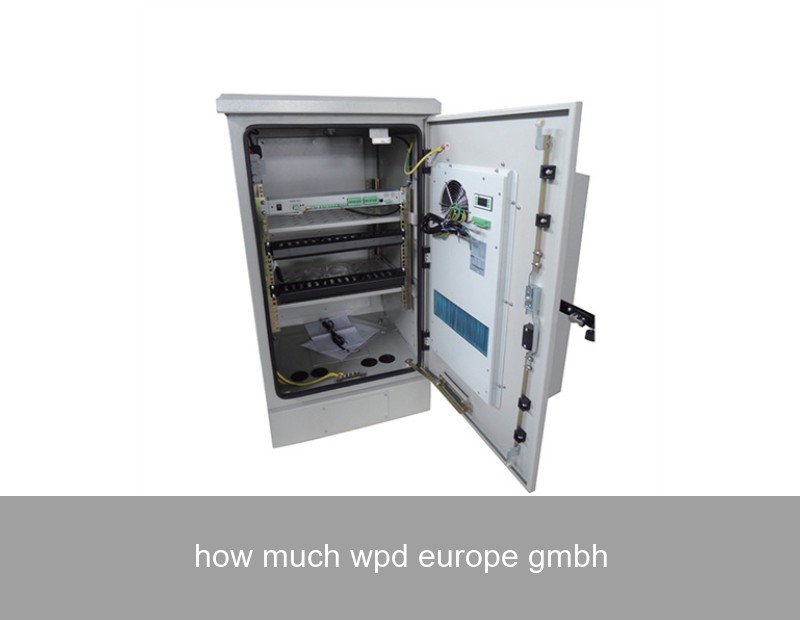
Image Source: Unsplash. Modern containerized BESS units, like those from Highjoule, provide scalable and flexible solutions for grid integration.
How Highjoule Enables Greater Renewable Integration
At Highjoule, we've spent nearly two decades refining storage technology specifically for these high-stakes grid challenges. For renewable energy leaders managing portfolios at the scale of WPD Europe GmbH, our solutions provide the critical link between generation potential and grid reality.
Our HPS (Highjoule PowerStack) series for utility and commercial-scale applications is engineered for maximum durability and cycle life, crucial for daily arbitrage operations. More importantly, our proprietary Neuron Grid AI platform is the brain of the operation. It doesn't just manage charge and discharge; it continuously analyzes dozens of data points—from real-time market prices and grid frequency to weather forecasts and asset performance—to make split-second decisions that maximize financial return and grid support.
We don't just sell hardware; we provide a full-scope partnership, from initial feasibility studies and financial modeling to system design, grid compliance support (like EU and UL certifications), installation, and long-term performance monitoring. Our goal is to ensure that for every megawatt of wind or solar you manage, you can integrate and monetize the maximum possible amount.
The Future Grid: A Call for Proactive Partnership
The energy landscape is shifting from a "build and connect" model to an "integrate and optimize" imperative. The next wave of competitive advantage for renewable asset managers won't come solely from securing the next project site, but from maximizing the intelligence and flexibility of their existing and future portfolios.
So, the conversation we invite you to have with your team is no longer "How much can the grid take from us?" but rather: "What is the true, optimized value of our generation assets when paired with intelligent storage, and what strategic partnerships do we need to unlock it?"
What is the first grid constraint you would solve if you could time-shift 100 MWh of your generated energy tomorrow?
 Inquiry
 Online Chat