


Finding the Right HVS Systems Supplier: Your Guide to High-Voltage Stationary Energy Storage
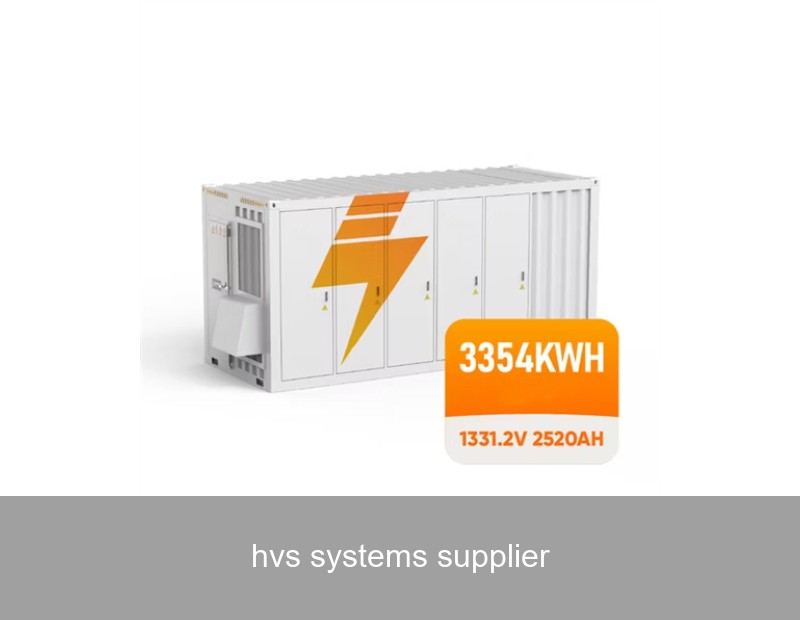
If you're managing a commercial facility, industrial plant, or a renewable energy project, you've likely heard the buzz around High-Voltage Stationary (HVS) battery energy storage systems. But with so many options, choosing a reliable HVS systems supplier is more than just a procurement decision—it's a strategic move for energy resilience and cost control. This article cuts through the complexity, explaining what HVS is, why it matters, and how to select a partner that delivers safety, performance, and long-term value for markets like Europe and the US.
Table of Contents
- What is a High-Voltage Stationary (HVS) Battery System?
- Why HVS Systems Are Reshaping Commercial & Industrial Energy
- Key Criteria for Choosing Your HVS Systems Supplier
- The Highjoule Approach: Integrated Intelligence in HVS
- The Future of HVS and Grid Services
What is a High-Voltage Stationary (HVS) Battery System?
Let's break down the jargon. A High-Voltage Stationary system is a large-scale battery storage solution where the battery racks themselves operate at a direct current (DC) voltage typically above 800V, often reaching 1000V, 1200V, or even 1500V. Why push the voltage so high? Think of it like plumbing: to move a large amount of water (energy) efficiently, you can either use a wider pipe (higher current) or increase the pressure (higher voltage). Increasing voltage is often the smarter engineering choice for large systems.
The key benefits of this "high-pressure" approach are immediate:
- Higher Efficiency: Reduced electrical losses during charging and discharging, meaning more of your stored renewable energy makes it to your equipment.
- Lower Balance-of-System Costs: With higher voltage, the current for the same power level is lower. This allows for thinner, less expensive cables, fewer parallel connections, and reduced costs for switchgear and installation labor.
- Enhanced Power Density: More energy can be packed into a smaller footprint, a critical factor when warehouse or plant floor space is at a premium.

However, designing a safe and reliable system at these voltages requires profound expertise. This is where the pedigree of your HVS systems supplier becomes non-negotiable.
Why HVS Systems Are Reshaping Commercial & Industrial Energy
The global drive towards decarbonization isn't just a trend; it's a fundamental shift in how we produce and consume energy. For businesses, this translates into two major challenges: volatile energy prices and the need to integrate intermittent renewables like solar PV. This is the phenomenon we see daily.
Let's look at the data. According to the International Energy Agency (IEA), electricity demand from data centers, AI, and clean technology manufacturing is set to surge dramatically, increasing grid strain and price volatility. Simultaneously, the U.S. Department of Energy's Solar Futures Study highlights that achieving high solar penetration is dependent on widespread energy storage deployment.
This is where HVS systems step in as the critical enabling technology. They act as a massive energy buffer, allowing a manufacturing plant to:
- Shift Solar Energy: Store excess solar power generated at noon to power the evening production shift.
- Demand Charge Management: Cap peak power draws from the grid, slashing a major portion of utility bills.
- Provide Backup Power: Ensure critical processes continue during grid outages, preventing costly downtime.
Without a robust storage solution, much of the economic and environmental value of your solar investment is simply lost.
Key Criteria for Choosing Your HVS Systems Supplier
Not all suppliers are created equal. Selecting a partner for a high-voltage, capital-intensive asset requires a due diligence checklist that goes beyond the price per kWh.
| Criterion | Why It Matters | Questions to Ask |
|---|---|---|
| Core Battery & BMS Expertise | The battery management system (BMS) is the brain, especially at high voltage. It must ensure perfect cell balancing, thermal stability, and safety. | Do you design your own BMS? What safety certifications (UL, IEC) does your HVS pack hold? |
| System Integration & Power Conversion | The inverter (PCS) must be perfectly matched to the HVS battery's characteristics for seamless, efficient operation. | Do you offer an integrated system with a single warranty and control interface? |
| Software & Grid Services Readiness | Hardware stores energy; software monetizes it. The system must be capable of participating in grid service markets for additional revenue. | What energy management system (EMS) do you provide? Can it aggregate for frequency regulation or virtual power plant (VPP) programs? |
| Local Service & Support | When you need support, you need it locally. A global supplier must have a strong regional presence. | Do you have certified technicians and spare parts inventory within my region (EU/US)? |
The Highjoule Approach: Integrated Intelligence in HVS
This is precisely where Highjoule, as a global HVS systems supplier with nearly two decades of experience, has focused its innovation. We don't just assemble components; we engineer integrated solutions where the hardware and software are designed to work in perfect harmony.
Our flagship HVS-1500 platform operates at 1500V DC, representing the cutting edge in efficiency and density for commercial and industrial applications. But the real magic lies in the Highjoule Neuron™ EMS. This AI-driven platform doesn't just monitor your system; it autonomously optimizes its operation every second of the day, deciding whether to store energy, power your facility, or sell it back to the grid based on real-time electricity prices, weather forecasts, and your operational schedule.

For our clients, this means we deliver a true outcome-as-a-service: guaranteed uptime, guaranteed savings on your energy bill, and a clear path to participating in demand response programs. Our role as your HVS systems supplier is to be a long-term partner in your energy transition, not just a vendor.
Case Study: HVS in Action - A European Manufacturing Plant
Let's move from theory to tangible results. In 2023, Highjoule partnered with a major automotive components manufacturer in Bavaria, Germany. The challenge: a 5 MW rooftop solar array was routinely curtailed during weekends and low-production periods, wasting clean energy, while the plant faced steep demand charges and sought backup power resilience.
The Solution: We deployed a 2.5 MW / 5 MWh HVS-1500 system integrated with the existing solar inverters and the plant's energy management system.
The Data-Driven Results (First 12 Months):
- Solar Self-Consumption Increased: From 68% to over 92%, drastically reducing grid consumption.
- Demand Charges Reduced: Peak grid draw was shaved by an average of 40%, resulting in annual savings of €185,000 on this portion of the bill alone.
- Revenue Generation: The Highjoule Neuron™ EMS automatically participates in the German primary control reserve market, generating an additional €45,000 in annual revenue for the plant.
- ROI: The project is on track for a full return on investment in under 6 years.
This case exemplifies the multi-faceted value a sophisticated HVS system delivers when paired with intelligent software.
The Future of HVS and Grid Services
The evolution of HVS technology is inextricably linked to the evolution of the grid itself. We are moving towards a decentralized, digitalized, and interactive grid model. Future HVS systems will be less like standalone batteries and more like intelligent grid nodes.
We're already seeing this in California's CAISO market and across Europe, where aggregated distributed storage resources form Virtual Power Plants (VPPs) to balance the grid. The next-generation HVS systems supplier must provide the hardware and the aggregation platform. Highjoule is actively developing these capabilities, allowing clusters of our systems across a region to provide grid stability services while prioritizing each host site's own economic needs.

This raises a compelling question for any business leader: As energy transitions from a simple commodity to a strategic asset that can be optimized, traded, and leveraged for resilience, is your organization positioned with the right technology partner to navigate this new landscape?
What is the first energy challenge you would tackle if you had a flexible, high-power asset on your site that could both save you money and generate revenue?
 Inquiry
 Online Chat