


I Want to Know About Solar Energy: A Beginner's Guide to Powering Your World
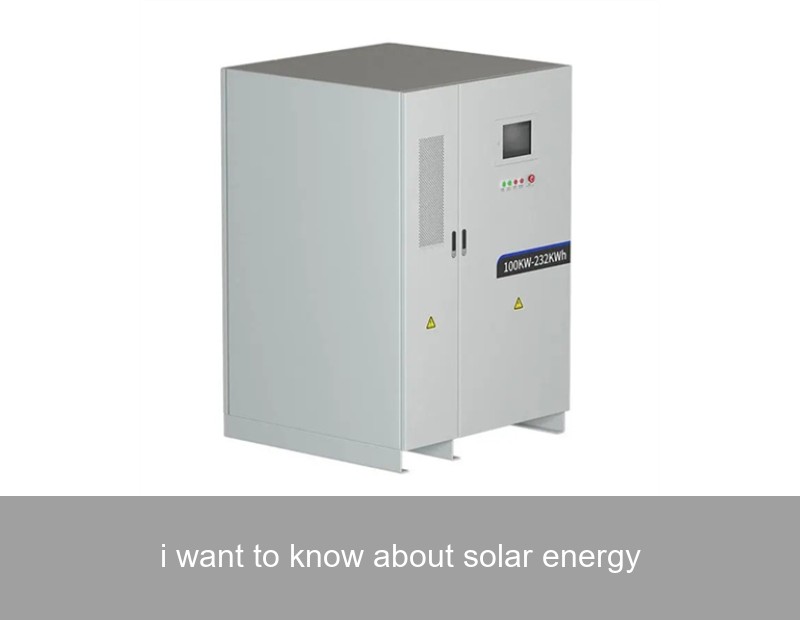
So, you've typed "I want to know about solar energy." That simple search is your first step into a fascinating world where sunlight powers our homes, businesses, and even entire communities. It's a journey from a fundamental scientific phenomenon to the cutting-edge technology on your rooftop. This guide is designed for the curious homeowner, the sustainability-minded business owner, or anyone in the US and Europe looking to demystify solar power. We'll move from the basic "how it works" to the practical realities of today's systems, including the crucial role of storage, and explore how companies like Highjoule are shaping a smarter energy future.
Table of Contents
The Basics: From Sunlight to Socket
Let's start with the core principle: the photovoltaic (PV) effect. Discovered in 1839, it's the process where certain materials generate an electric current when exposed to light. Modern solar panels are made up of many silicon-based cells that use this effect. When sunlight hits these cells, it energizes electrons, causing them to flow and create direct current (DC) electricity.
But your home appliances use alternating current (AC). That's where the inverter comes in—it's the brain of a solar system, converting that DC power into usable AC power. Any excess electricity you generate can often be fed back into the grid (in a process called net metering) or, more strategically, stored for later use. This is the simple genius of solar: a silent, clean conversion happening right above you.

Image source: Unsplash (photographer: American Public Power Association)
The Numbers: Why Solar Makes Economic Sense
Beyond the environmental benefit, the financial argument for solar is stronger than ever. The cost of solar panels has plummeted by over 80% in the last decade (IRENA). In sun-rich parts of the United States and across Southern Europe, a well-sized residential system can pay for itself in 6-10 years through slashed electricity bills. For businesses, it acts as a hedge against volatile energy prices, transforming a variable operational cost into a fixed, predictable investment.
Government incentives further accelerate adoption. In the US, the federal Investment Tax Credit (ITC) allows for a significant deduction on your tax bill. Similarly, many European countries offer attractive feed-in tariffs or tax rebates. The equation is clear: lower technology costs + strong incentives + rising grid electricity prices = a compelling return on investment.
Key Components of a Modern Solar System
| Component | Function | Why It Matters |
|---|---|---|
| Solar Panels (Modules) | Convert sunlight into DC electricity. | Efficiency ratings determine how much power you generate per square meter. |
| Inverter(s) | Convert DC electricity to usable AC electricity. | Modern "smart" inverters enable grid support functions and system monitoring. |
| Mounting System & Racking | Securely attaches panels to roof or ground. | Critical for durability, weather resistance, and maximizing sun exposure. |
| Battery Energy Storage System (BESS) | Stores excess solar energy for use at night or during outages. | Unlocks true energy independence and resilience, maximizing self-consumption. |
| Energy Management System (EMS) | Intelligently controls energy flow between solar, battery, grid, and home. | The "conductor" that optimizes for cost, efficiency, and reliability. |
Beyond the Panels: The Critical Role of Energy Storage
Here's the thing about solar: the sun doesn't shine 24/7, but your energy needs don't stop at sunset. This mismatch is the single biggest challenge for a solar-only system. This is where energy storage, specifically advanced Battery Energy Storage Systems (BESS), becomes the game-changer.
Think of storage as your personal energy reservoir. Instead of sending excess midday solar power back to the grid at a low rate, you store it. Then, you draw from that reserve in the evening when grid prices are high or during a power outage. This "load shifting" is the key to maximizing your solar investment and achieving true energy autonomy.
This is precisely where Highjoule's expertise comes into play. Founded in 2005, Highjoule is a global leader in providing intelligent, integrated storage solutions. For homeowners, their Residential ESS seamlessly pairs with new or existing solar arrays. Their systems are known for robust lithium-iron-phosphate (LFP) battery chemistry—safe, long-lasting, and efficient. For businesses and industrial applications, Highjoule's Commercial & Industrial (C&I) and Microgrid solutions offer scalable, containerized storage that can manage demand charges, provide backup power, and integrate with large-scale solar installations.
Case Study: A German Bakery's Recipe for Energy Independence
Let's make this real with a story from Bavaria, Germany. Bäckerei Schmidt (a mid-sized family bakery) faced a common problem: high energy costs from running industrial ovens and refrigeration, compounded by volatile energy prices. They installed a 100 kW rooftop solar array, which helped during the day, but their highest energy needs were in the early morning (baking) and evening (cleaning), when the sun was down.
Their solution was integrating a Highjoule C&I battery storage system with a capacity of 250 kWh. Here's the impact, measured over one year:
- Self-Consumption of Solar Power Increased from 35% to over 85%: Almost all the solar energy they produced was used on-site.
- Grid Electricity Costs Reduced by 68%: They drastically reduced peak-time drawing from the grid.
- Backup Power Assurance: Critical refrigeration is now protected during grid outages, preventing spoilage.
- ROI Period: Projected to be under 7 years, thanks to Germany's high electricity prices and the system's efficiency.
This case illustrates the transformative power of coupling solar with smart storage. It's not just about generating energy; it's about controlling when and how you use it.

Image source: Unsplash (photographer: ELEVATE)
The Future is Bright: Integrated Smart Systems
The next frontier is the fully integrated, smart energy ecosystem. Imagine a system where your solar panels, battery, electric vehicle charger, and even your major appliances are all communicating. Using weather forecasts and real-time electricity pricing data, the system automatically decides the most cost-effective and efficient way to power your life.
Highjoule is at the forefront of this trend with its AI-driven energy management platforms. For microgrid applications—whether a remote community, a university campus, or an industrial park—Highjoule's systems can orchestrate multiple energy sources (solar, wind, generators) with storage to create a stable, independent grid. This level of intelligence turns a passive power source into an active energy asset, contributing to grid stability and enabling a higher penetration of renewables (NREL).
Common Questions Answered Briefly
- "What about cloudy days?" Modern panels work in diffuse light. Storage ensures you have power from previous sunny days.
- "Is maintenance difficult?" Systems are largely hands-off. Periodic checks and keeping panels clear of debris are typically all that's needed.
- "Will it power my home during a blackout?" Only if you have a battery storage system configured for backup. Standard grid-tied solar without storage shuts off for safety during outages.
Your Solar Journey: What's Your First Question?
Your curiosity about solar energy has brought you to a pivotal moment in energy history. The technology is proven, the economics are sound, and the ability to take control of your power supply is real. The journey from "I want to know about solar energy" to "I generate and manage my own clean energy" is more accessible than you might think.
As you consider your next step, ask yourself: What is my primary goal—reducing my monthly bill, achieving energy security, or minimizing my carbon footprint? The answer will guide whether you look at solar alone or a solar-plus-storage solution from a provider like Highjoule that can deliver on all three. What specific concern about your home or business's energy needs would you like to address first?
 Inquiry
 Online Chat