


How Much Solar Panel Do You Need for a 585 kWh Monthly Energy Bill?
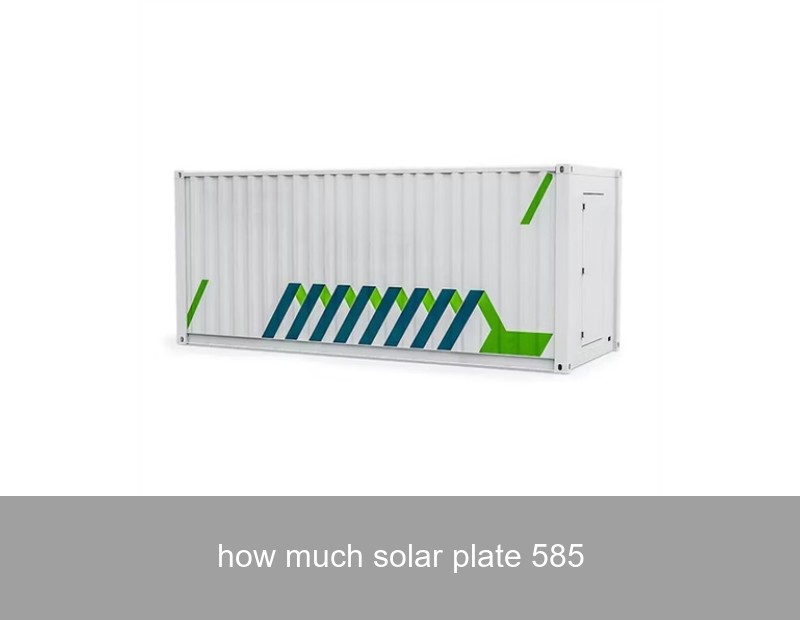
If you're looking at your energy bill and seeing a monthly consumption of around 585 kilowatt-hours (kWh), a very common figure for many households, you're likely asking a critical question: how much solar panel capacity do I need to cover this? It's a smart query, moving beyond just "going green" to achieving genuine energy independence and predictable costs. The answer isn't a single number of panels, but a fascinating journey through your energy profile, local climate, and the technology you choose. As a global leader in advanced energy storage since 2005, Highjoule helps customers worldwide navigate this precise calculation, ensuring their solar investment delivers maximum return and reliability.
Table of Contents
The Phenomenon: The 585 kWh Benchmark
Why focus on 585 kWh? This consumption level is a significant sweet spot. In the U.S., the Energy Information Administration (EIA) reports the average residential customer uses about 899 kWh per month. In many European countries, like Germany or France, efficient homes and smaller average sizes often bring that figure down to a range of 2,500 - 3,500 kWh per year, which breaks down to roughly 200-300 kWh monthly. A 585 kWh monthly bill often represents a moderately sized, all-electric or suburban family home in a temperate climate—a massive and growing market segment actively seeking solar solutions.
The driving force here isn't just cost savings, though that's paramount. It's about predictability. With volatile energy markets, locking in a stable "fuel" cost from the sun provides long-term financial security. This is where the technical question ("how many panels?") meets a strategic energy management decision.
Image Source: Unsplash - A typical home that might target a 585 kWh monthly energy offset with solar.
The Data: From kWh to Kilowatts-Peak
Let's do the math. The core formula is: Required Solar System Size (kW) = Monthly Energy Use (kWh) / (Peak Sun Hours per Day × 30 Days).
"Peak sun hours" is the key variable. It's not just daylight hours, but the equivalent number of hours per day when sunlight intensity averages 1,000 watts per square meter. This varies dramatically by location:
- Southern California, USA: ~5.5 peak sun hours
- Florida, USA: ~4.5 peak sun hours
- Southern Germany: ~3 peak sun hours
- UK (South): ~2.5 peak sun hours
For our 585 kWh goal:
| Location | Peak Sun Hours | System Size Needed (kW) | Approx. 400W Panels |
|---|---|---|---|
| California | 5.5 | ~3.55 kW | 9 panels |
| Germany | 3.0 | ~6.5 kW | 16-17 panels |
See the dramatic difference? A German home needs nearly twice the panel capacity as a Californian home for the same output. This is why generic online calculators can be misleading. Furthermore, these calculations assume perfect conditions. Real-world factors like roof angle, shading, panel efficiency degradation, and seasonal variations mean experts often add a 10-20% buffer. This is where partnering with a knowledgeable provider pays off.
The Case Study: A German Family's Journey to Energy Independence
Let's look at a real-world example from Bavaria, Germany. The Müller family had a consistent annual consumption of 7,000 kWh (about 583 kWh/month). Their goal: cover 80% of their consumption with solar and achieve maximum self-consumption.
- Challenge: Limited south-facing roof space and lower peak sun hours (~3.1 daily average).
- Initial Plan: A 7 kWp solar array was installed, theoretically sufficient on paper.
- The Reality: They were exporting over 50% of their midday production to the grid (for low feed-in tariffs) and still drawing expensive power in the evenings. Their daytime self-consumption was only about 30%.
- The Solution: They integrated a Highjoule H2 10 kWh lithium-ion battery storage system. This allowed them to store excess noon production for use at night.
- The Result: Their self-consumption rate skyrocketed to over 85%. Their annual grid electricity purchase dropped from 7,000 kWh to under 1,000 kWh. The combination of their 7 kWp solar array and intelligent Highjoule storage turned their home into a personal power plant, effectively managing their "585 kWh monthly" need across the entire day and night, not just during sunny hours.

Image Source: Unsplash - Professional installation of a home battery system like the Highjoule H2 series.
The Insight: Why Storage is the Game-Changer
The Müller family's case reveals the central insight: In the modern energy landscape, the question is not just "how much solar panel," but "how much solar panel paired with storage?" Solar panels generate when the sun shines, but our energy needs peak in the morning and evening. Without storage, you remain tethered to the grid, often selling power cheaply and buying it back expensively.
A battery storage system like those from Highjoule transforms your solar array from a partial solution into a comprehensive one. It allows you to:
- Maximize Self-Consumption: Use your own solar energy 24/7, dramatically reducing bills.
- Provide Backup Power: Keep essential loads running during grid outages—a growing concern.
- Enhance Grid Stability: Advanced systems can support the local grid, a key feature for future-proof homes.
For a 585 kWh monthly load, the optimal system is rarely just panels. It's an integrated, intelligent system designed to match generation with consumption patterns.
The Highjoule Solution: Intelligent Systems for Real-World Needs
This is where Highjoule's expertise, honed since 2005, becomes crucial. We don't just sell batteries; we provide intelligent energy management systems. For a homeowner targeting that 585 kWh benchmark, we would analyze not just the annual total, but the hourly load profile.
Our Residential Energy Hub product line, featuring scalable battery capacities from 5 kWh to 20+ kWh, is built for this precise task. Its AI-driven software learns your consumption habits and optimizes when to store solar energy, when to use it, and when to interact with the grid. For larger needs, such as small commercial operations or microgrids that might have a "585 kWh per month" load per building, our Commercial & Industrial (C&I) storage solutions offer utility-grade performance and scalability.
By integrating Highjoule storage, the required solar panel capacity can sometimes even be optimized, as every kWh produced is utilized at its highest value, not wasted. We ensure the entire ecosystem—panels, inverter, storage, and management software—works in seamless harmony.
Your Next Step: From Calculation to Reality
So, how much solar panel for a 585 kWh monthly bill? As we've seen, the answer could range from a ~4 kW system in sun-drenched areas to a ~7 kW system in cloudier regions, but the true answer is a system sized in conjunction with storage to meet your specific 24/7 profile.
The journey starts with precise data. Do you have a year's worth of your utility bills? Have you considered how your electricity use might change with an electric vehicle or heat pump? These are the conversations Highjoule's technical experts have daily with homeowners and businesses across Europe and North America.
What unique energy consumption pattern does your home or business have that a standard solar calculator might completely miss? We invite you to explore this question, because the path to true energy independence is built on that personalized understanding.
 Inquiry
 Online Chat