


The Critical Importance of Uninterruptible Power Supply in a Modern, Electrified World
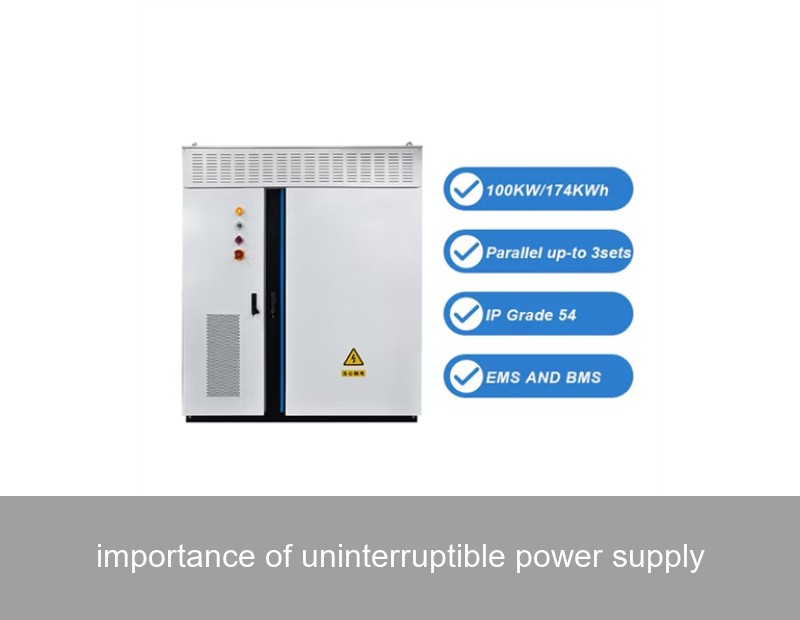
Imagine a hospital during a critical surgery, a data center processing millions of transactions, or your own home office during a pivotal client presentation. Now, imagine the lights flicker and go out. This sudden loss of power isn't just an inconvenience; it can mean financial ruin, data catastrophe, or even risk to life. This is where understanding the importance of uninterruptible power supply (UPS) systems transitions from a technical consideration to a business and societal imperative. In an era of increasing grid instability, extreme weather events, and our fundamental reliance on digital infrastructure, a reliable UPS is no longer a luxury—it's the essential guardian of continuity, data integrity, and safety.
Table of Contents
- The Silent Threat: More Than Just an Outage
- Data Don't Lie: The Staggering Cost of Downtime
- Case Study: A European Manufacturing Plant's Wake-Up Call
- Beyond the Battery: Modern UPS as an Intelligent Energy Hub
- Choosing Your Guardian: Key Considerations for a UPS Solution
- Future-Proofing with Solar and Storage Integration
The Silent Threat: More Than Just an Outage
When most people think of power problems, they picture a blackout. But the truth is, complete outages are only part of the story. The grid delivers power that is often "dirty," subject to a range of disturbances that can silently damage sensitive equipment. These include:
- Voltage Sags/Dips: Short-term drops in voltage, often caused by heavy equipment starting up nearby, which can cause computers to reboot and motors to stall.
- Surges and Spikes: Sudden, brief increases in voltage, typically from lightning strikes or grid switching, which can fry circuit boards and electronics.
- Harmonic Distortion: "Noise" on the electrical line caused by non-linear loads (like variable-speed drives), which overheats components and reduces system efficiency.
- Frequency Variation: A deviation from the standard 50Hz (EU) or 60Hz (US), critical for timing-sensitive equipment.
A modern uninterruptible power supply does much more than provide backup during an outage. It acts as a vigilant filter, conditioning incoming power to ensure a clean, stable, and consistent output. This continuous protection extends the lifespan of your equipment and prevents the cryptic, intermittent failures that are so costly to diagnose.

Image Source: Unsplash - Representative of critical infrastructure requiring UPS protection.
Data Don't Lie: The Staggering Cost of Downtime
Let's talk numbers. The financial impact of unplanned downtime is quantifiable and severe, making a compelling business case for UPS investment.
| Industry Sector | Average Cost Per Hour of Downtime | Primary Risks Mitigated by UPS |
|---|---|---|
| Data Centers & IT | $5,600 - $9,000+ | Data loss, corrupted databases, hardware damage, service level agreement (SLA) breaches. |
| Manufacturing | $10,000 - $250,000+ | Production halt, spoiled product, damaged machinery, safety system failure. |
| Healthcare | Priceless + Regulatory Fines | Interrupted patient care, loss of critical medical data, failed diagnostic equipment. |
| Financial Services | $6.5 million+ | Failed transactions, market trading losses, compliance violations, customer trust erosion. |
Sources: Ponemon Institute, Gartner. These figures highlight that the cost of a robust UPS system is often a fraction of the cost of a single major outage event.
Case Study: A European Manufacturing Plant's Wake-Up Call
Consider the real-world example of a precision automotive parts manufacturer in Bavaria, Germany. Their highly automated production line was susceptible to micro-dips from the regional grid, causing their robotic welding arms to fault several times a month. Each fault required a 45-minute reset and calibration cycle, costing approximately €4,500 per hour in lost production.
The Problem: Unseen voltage sags, 3-5 events monthly, causing €20,000+ in annual lost productivity and quality control issues.
The Solution: The company partnered with Highjoule to deploy a decentralized UPS strategy. Instead of one large central unit, they installed multiple Highjoule HI-T Series UPS systems at key process control points. These online double-conversion UPS units provided seamless power conditioning, completely isolating the sensitive robotics from grid disturbances.
The Result: Within one year, production line faults from power issues dropped to zero. The ROI was achieved in under 14 months solely from productivity gains. Furthermore, the integrated remote monitoring of the Highjoule systems allowed for predictive maintenance, adding another layer of operational resilience.
Beyond the Battery: Modern UPS as an Intelligent Energy Hub
The evolution of the UPS is profound. Today's advanced systems, like those developed by Highjoule, are intelligent energy nodes. The Highjoule Energy Router platform exemplifies this shift. It's not just a battery backup; it's a sophisticated manager that can:
- Seamlessly Bridge to Backup Generators: Providing extended runtime far beyond battery capacity.
- Participate in Demand Response: In certain markets, the UPS can briefly supply power back to the grid or shed load to stabilize the network and generate revenue.
- Provide Peak Shaving: Using stored energy to reduce power draw during expensive peak tariff periods, lowering energy bills.
This transforms the UPS from a cost center (insurance policy) into a potential value-generating asset.
Choosing Your Guardian: Key Considerations for a UPS Solution
Selecting the right UPS requires a strategic assessment. Ask these questions:
- What are you protecting? (Critical load vs. entire facility)
- How much runtime is enough? (Minutes for safe shutdown vs. hours for continuity)
- What power quality issues are prevalent in your area? (Requiring online vs. line-interactive UPS topology)
- What is your growth trajectory? (Scalable, modular systems like Highjoule's modular containerized BESS offer future-proofing)
For commercial and industrial applications, an online double-conversion UPS is often the gold standard. It provides the highest level of isolation from all grid anomalies, making it ideal for the sensitive electronics that run our world.

Image Source: Unsplash - Representative of professional industrial energy system maintenance.
Future-Proofing with Solar and Storage Integration
The ultimate expression of modern power management is the integration of UPS with renewable energy and larger-scale storage. Imagine a system where your critical loads are protected by a UPS, which is in turn backed by a facility-wide Battery Energy Storage System (BESS) charged by solar panels.
This is exactly the integrated vision Highjoule delivers. Their end-to-end energy solutions can design a system where the HI-T Series UPS protects immediate critical loads, while a Highjoule GridStack BESS provides extended backup for the entire site, manages solar self-consumption, and performs grid services. This creates a resilient, sustainable, and cost-effective energy ecosystem.
For a hospital, data center, or factory, this means achieving true energy independence and business continuity, even during prolonged grid outages. It's the logical next step in understanding the full importance of uninterruptible power supply—it's the cornerstone of a robust, modern energy strategy.
Your Power, Your Responsibility
We've moved beyond the era where grid power was universally reliable. The responsibility for clean, continuous power now rests firmly with the end-user. Investing in a sophisticated UPS system is an investment in your operational integrity, your financial bottom line, and your peace of mind. It's not just about keeping the lights on; it's about keeping your business, your data, and your mission alive and thriving.
Has your organization conducted a recent vulnerability assessment to identify which operations are most at risk from the next power disturbance?
 Inquiry
 Online Chat