


Finding the Right 24v Lithium Battery Supplier for Your Energy Storage Needs
If you're looking into solar storage, upgrading an off-grid system, or powering critical equipment, you've likely realized that not all batteries are created equal. The choice of your 24v lithium battery supplier is pivotal. It determines not just the upfront cost, but the safety, longevity, and overall performance of your energy system for years to come. For projects across Europe and the United States, this decision becomes even more crucial as regulations and performance standards tighten. As a leader in advanced energy storage, Highjoule understands that the right supplier is a partner in sustainability, offering more than just a product—they deliver reliability, intelligence, and peace of mind.
Table of Contents
- Why 24V Lithium Batteries Are Dominating Modern Storage
- Beyond the Price Tag: Key Criteria for Choosing a 24v Lithium Battery Supplier
- Case Study: A German Winery's Transition to Resilient Power
- The Highjoule Advantage: Intelligent Storage Solutions
- What's the First Step in Your Energy Resilience Journey?

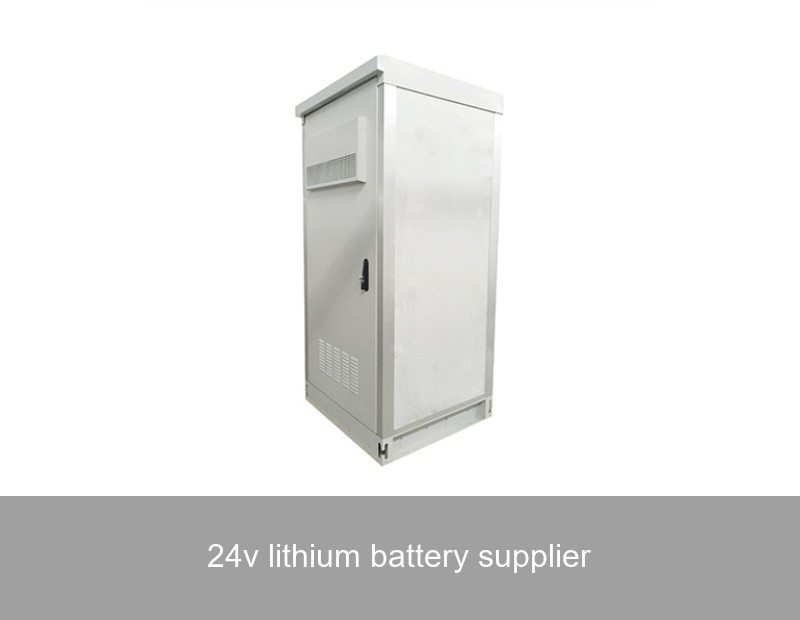
Image: A professional 24V lithium battery system installation, similar to Highjoule's modular designs, offering clean and scalable power.
Why 24V Lithium Batteries Are Dominating Modern Storage
Let's address the elephant in the room first: why 24V? In the world of residential solar, marine applications, medium-sized off-grid systems, and light commercial backup, 24V has emerged as the sweet spot. It strikes a perfect balance between efficiency and practicality. Compared to 12V systems, it halves the current for the same power, meaning thinner, less expensive wiring and lower energy losses. Compared to jumping straight to 48V, it offers broader compatibility with a vast array of existing inverters, charge controllers, and equipment, particularly in the European RV and marine markets and the US residential upgrade sector.
Now, pair this voltage with Lithium Iron Phosphate (LiFePO4) chemistry, and you have a game-changer. The data speaks for itself:
- Cycle Life: A quality LiFePO4 battery can deliver 3,000 to 6,000 cycles to 80% depth of discharge (DoD), compared to 300-500 cycles for a typical lead-acid battery. This translates to decades of daily use.
- Depth of Discharge (DoD): You can safely use 90-100% of the rated capacity without damaging the battery. Lead-acid batteries often must be kept above 50% DoD for longevity.
- Efficiency & Space: They boast round-trip efficiency often above 95%, losing very little energy to heat. They also offer about 1/3 the weight and 1/2 the volume of a lead-acid bank with equivalent usable capacity.
This isn't just incremental improvement; it's a fundamental shift enabling truly effective and sustainable energy independence.
Beyond the Price Tag: Key Criteria for Choosing a 24v Lithium Battery Supplier
Phenomenon: The market is flooded with options. A quick online search reveals dozens of suppliers with seemingly similar specs at wildly different prices. The temptation to go for the lowest cost per ampere-hour (Ah) is strong.
Data & Reality: The true total cost of ownership (TCO) is hidden in the details. A 2023 study by the National Renewable Energy Laboratory (NREL) on long-duration storage highlighted that battery degradation and system integration costs are the primary determinants of lifetime value, not just upfront capital expense.
Here’s what you must evaluate in a 24v lithium battery supplier:
| Criteria | Why It Matters | Red Flag |
|---|---|---|
| Cell Quality & Origin | Grade A cells from reputable manufacturers (e.g., CATL, EVE, BYD) ensure consistency, safety, and cycle life. | Vague or unspecified cell source, use of "Grade B" or recycled cells. |
| Integrated Battery Management System (BMS) | The BMS is the brain. It manages cell balancing, temperature, and voltage to prevent failure. Look for UL/IEC certified BMS. | A basic BMS with no communication protocol (CAN, RS485) or safety certifications. |
| Warranty & Support | A transparent, long-term warranty (e.g., 10 years) reflects confidence. Does the supplier offer local/regional technical support? | A short or pro-rated warranty, or support only via email from a distant timezone. |
| Certifications & Compliance | For EU and US markets, look for CE, UKCA, UL 9540A, UN38.3. These are non-negotiable for safety and insurance. | Missing or self-declared certifications without third-party testing. |
| System Integration Capability | Can the battery seamlessly communicate with major inverter brands (Victron, SMA, Schneider)? Plug-and-play compatibility saves huge installation costs. | The battery is a "dumb" unit requiring complex custom programming. |
Case Study: A German Winery's Transition to Resilient Power
Let's look at a real-world application. Weingut Schmitt, a family-run winery in Rhineland-Palatinate, Germany, faced two challenges: volatile grid prices affecting their cooling systems and a desire to reduce their carbon footprint. Their old lead-acid backup system was failing and required constant maintenance.
Solution & Data: In 2022, they partnered with Highjoule to implement a 24V DC-coupled storage solution centered around our HJ-Stack 24V Series batteries. The system comprised:
- Four Highjoule HJ-Stack 24V/200Ah modules (total usable capacity: 19.2 kWh).
- Integration with their existing solar PV array and a new hybrid inverter.
- Highjoule's cloud-based monitoring platform for real-time oversight.
- Energy Cost Reduction: By shifting solar energy for nighttime cooling and peak shaving, they reduced grid consumption by 68% during summer months.
- Reliability: The system provided seamless backup during two grid outages, keeping critical refrigeration online and preventing spoilage of an estimated €15,000 worth of inventory.
- Maintenance: Scheduled maintenance visits dropped to zero. The winery's manager noted, "We simply check the app to see everything is green. It's a set-and-forget peace of mind we never had before."

Image: Renewable energy systems, like the one deployed at Weingut Schmitt, are crucial for agricultural businesses seeking sustainability and resilience.
The Highjoule Advantage: Intelligent Storage Solutions
So, what does a partnership with a global advanced energy storage provider like Highjoule look like? Founded in 2005, we've moved beyond simply being a 24v lithium battery supplier. We engineer integrated power ecosystems. Our HJ-Stack 24V Series, for instance, embodies this philosophy:
- Modular & Scalable: Start with what you need and add modules as your energy needs grow, without complex reconfiguration.
- Built-In Intelligence: Each module features our proprietary Adaptive BMS with active balancing and self-diagnostic capabilities. It communicates seamlessly with over 30 major inverter brands.
- Safety by Design: Our cells are sourced from tier-1 manufacturers, and every battery pack undergoes rigorous testing. The system is designed to meet and exceed UL 9540A test standards for fire safety.
- Global Support, Local Presence: With warehouses and technical teams in both the EU and North America, we provide prompt local support, warranty service, and system design assistance.
For larger commercial and microgrid applications, our high-voltage battery cabinets offer the same core intelligence at a utility scale. Whether it's a home, a business like the German winery, or a community microgrid, the principle is the same: deliver smart, efficient, and sustainable power that just works.
Future-Proofing Your Investment: Trends in Lithium Technology
The technology isn't standing still. As you evaluate suppliers, consider their roadmap. Are they investing in the next wave? Key trends include:
- Cell-to-Pack (CTP) Designs: This innovation increases energy density by removing intermediate modules, packing more capacity into the same footprint. Highjoule's next-generation designs incorporate this approach.
- Enhanced BMS and AI: Future BMS will not only protect but predict. Using historical data and algorithms, they will forecast battery health and optimize charge/discharge cycles for specific weather patterns and usage habits. The U.S. Department of Energy emphasizes software as a key driver for battery longevity.
- Circular Economy: Leading suppliers are now designing for recyclability from the start. Ask about a supplier's end-of-life take-back program and their partnerships with recycling firms.
What's the First Step in Your Energy Resilience Journey?
Choosing the right 24v lithium battery supplier is the cornerstone of a successful project. It requires looking past the spec sheet to understand the engineering philosophy, safety commitment, and long-term partnership the company offers. The data is clear: intelligent lithium storage delivers unparalleled value and operational freedom.
We've seen it transform a German winery. Could a similar intelligent storage system be the key to unlocking your energy independence, reducing your operational costs, or securing your critical loads? What specific energy challenge is holding your project back from reaching its full potential?
 Inquiry
 Online Chat