


Intelligent Energy Storage Cabinet Battery: The Brain Behind Modern Power Resilience
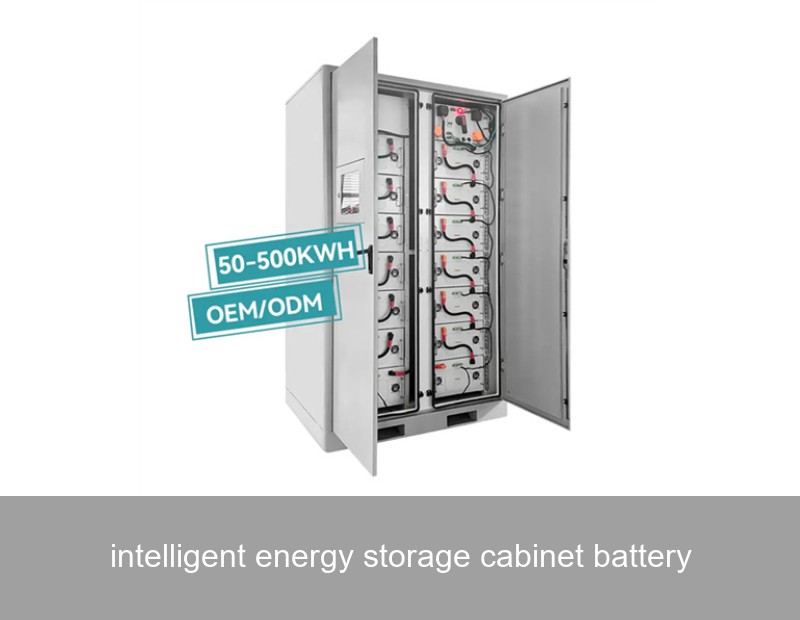
Have you ever wondered how businesses keep the lights on during a grid outage, or how a solar-powered home manages to have electricity long after the sun sets? The answer increasingly lies not just in batteries, but in a sophisticated piece of technology: the intelligent energy storage cabinet battery. More than a simple box of batteries, this system is the central nervous system for managing energy, making critical decisions in milliseconds to optimize power flow, ensure safety, and maximize savings. For facility managers, homeowners, and grid operators across Europe and the U.S., understanding this technology is key to unlocking true energy independence and sustainability.
Table of Contents
- The Phenomenon: From Passive Storage to Active Intelligence
- The Data: Why Intelligence is Non-Negotiable
- Case Study: A German Manufacturing Plant's Transformation
- Inside the Cabinet: Key Components of an Intelligent System
- Highjoule's Approach: Intelligence Engineered for Real-World Demands
- The Future: Smarter Grids and Self-Optimizing Buildings
The Phenomenon: From Passive Storage to Active Intelligence
For years, energy storage was a relatively straightforward concept: charge batteries when energy is cheap or abundant, discharge them when it's expensive or unavailable. However, the modern energy landscape, flooded with variable renewable sources like solar and wind, coupled with volatile electricity prices and increasing grid instability, has exposed the limitations of this passive approach. A basic battery system reacts; an intelligent energy storage cabinet battery anticipates.
Think of it this way: a regular battery is like a water tank with a simple tap. An intelligent system is like a smart water management system for an entire city. It monitors weather forecasts (for solar/wind prediction), real-time electricity prices, the building's consumption patterns, and grid health. It then uses complex algorithms to decide the optimal moment to store, use, or even sell back energy. This shift from a passive component to an active, grid-interactive asset is revolutionizing how we think about power.
The Data: Why Intelligence is Non-Negotiable
The value of intelligence is quantifiable. According to a 2023 report by the National Renewable Energy Laboratory (NREL), adding advanced energy management software to storage systems can increase their economic value by 20-40% by enabling more sophisticated revenue stacking and operational optimization.
Consider these critical functions managed by the cabinet's "brain":
- Peak Shaving: Automatically discharges battery power during periods of highest demand, slashing costly demand charges from utility bills—a major expense for commercial users.
- Time-of-Use (TOU) Optimization: Charges batteries when grid electricity is cheapest (e.g., overnight) and discharges during peak rate periods.
- Frequency Regulation: In markets like the U.S. PJM or European TSOs, intelligent systems can provide grid-stabilizing services by responding to frequency fluctuations in sub-seconds.
- Backup Power Seamlessness: Detects a grid failure and switches to backup power in milliseconds, ensuring critical operations never falter.
Without this layer of intelligence, a battery cabinet is merely a cost center. With it, it becomes a dynamic financial and operational asset.

Credit: A modern energy storage installation requires both robust hardware and sophisticated software. Image from Unsplash.
Case Study: A German Manufacturing Plant's Transformation
Let's look at a real-world application. A mid-sized automotive parts manufacturer in Bavaria, Germany, faced two challenges: rising energy costs eating into margins and a corporate mandate to reduce carbon footprint. Their existing rooftop solar PV system covered only about 30% of their daytime load, and excess solar was being fed back to the grid at a low feed-in tariff.
In 2022, they installed a 500 kWh / 750 kVA intelligent energy storage cabinet battery system. The cabinet, equipped with Highjoule's proprietary Adaptive Grid Intelligence (AGI) software, was integrated with their solar inverters and connected to the local grid's data signals.
| Metric | Before Installation | After 12 Months |
|---|---|---|
| Grid Energy Consumption | 100% Baseline | Reduced by 68% |
| Peak Demand Charge | €42,000 per month (avg.) | €15,000 per month (avg.) |
| Solar Self-Consumption | 30% | Increased to 92% |
| ROI Timeline | N/A | Projected 4.2 years |
The system's intelligence was key. It learned the plant's production schedule, predicted solar generation, and used day-ahead electricity price forecasts to create a daily energy plan. During a period of grid congestion, it even automatically provided a grid-support service, earning an additional revenue stream. This case, documented in a Fraunhofer ISE study on system integration, exemplifies the multi-faceted ROI of intelligent storage.
Inside the Cabinet: Key Components of an Intelligent System
So, what makes a cabinet "intelligent"? It's the seamless integration of hardware and software.
- Advanced Battery Modules: Typically Lithium Iron Phosphate (LFP) for safety and longevity, with integrated monitoring for voltage, temperature, and state of health.
- Smart Power Conversion System (PCS): The bidirectional inverter that manages AC/DC conversion and is capable of rapid grid response.
- Thermal Management System: A climate control system that maintains optimal battery temperature, crucial for performance and lifespan.
- Energy Management System (EMS): The true "brain." This software platform uses AI and machine learning for forecasting, optimization, and control. It's often cloud-connected for remote monitoring and updates.
- Safety & Protection Suite: Comprehensive suite including arc fault detection, fire suppression, and isolation monitoring.
Highjoule's Approach: Intelligence Engineered for Real-World Demands
At Highjoule, with nearly two decades of experience since 2005, we've seen the evolution of storage firsthand. Our H-Series Intelligent Energy Storage Cabinet is built from the ground up for commercial and industrial applications. We don't just assemble components; we engineer the intelligence that binds them together.
Our cabinets feature our JouleMind™ OS, an onboard operating system that performs local, real-time optimization without relying solely on cloud connectivity—a critical feature for reliability. For our customers in Europe and North America, this means the system can execute critical functions like peak shaving and backup switching even if internet connectivity is lost.
Furthermore, Highjoule provides Highjoule Horizon, a centralized monitoring and analytics platform. This gives facility managers a dashboard view of their energy ecosystem: solar production, storage status, consumption, and savings—all from a laptop or mobile device. Our services extend from initial feasibility studies and system design to commissioning, remote lifecycle management, and performance guarantee options.

Credit: Intelligent dashboards, like those in Highjoule Horizon, provide clear insights into energy performance. Image from Unsplash.
The Future: Smarter Grids and Self-Optimizing Buildings
The trajectory is clear: intelligence will become even more deeply embedded. We're moving towards Virtual Power Plants (VPPs), where thousands of distributed intelligent energy storage cabinet batteries, like those from Highjoule, are aggregated to act as a single, large-scale power plant, providing capacity and stability to the grid. Machine learning algorithms will become more predictive, potentially scheduling energy use around production lines or even anticipating equipment failures based on power quality data.
For a business in California participating in demand response programs, or a hospital in Sweden requiring 100% uptime, the intelligence within the storage cabinet transitions from a luxury to the core component of their energy resilience strategy.
An Open Question for Your Consideration
As electricity markets evolve and the push for decarbonization intensifies, how will your organization's approach to energy management need to change to not just cope, but thrive? Is your current infrastructure a passive cost, or is it ready to become an intelligent, value-generating asset?
 Inquiry
 Online Chat