


The 1MW 3-Phase Energy Storage Cabinet: Your Foundation for Grid Resilience and Savings
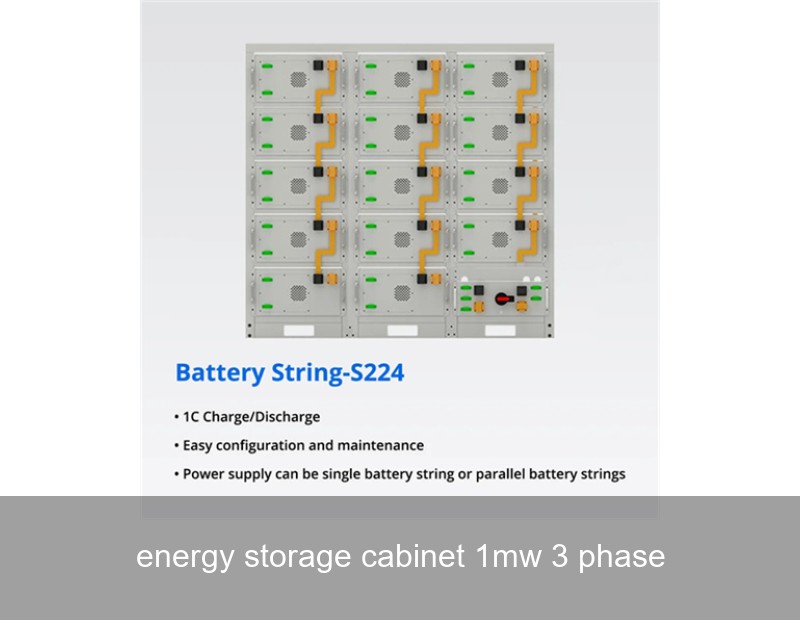
your commercial facility or industrial plant is humming along, and suddenly, the grid power dips or, worse, fails entirely. The production line stops. Critical data is at risk. Revenue is lost by the minute. Now, imagine a different scenario: a seamless transition to backup power, peak demand charges slashed, and even revenue generated by supporting the local grid. This isn't science fiction; it's the practical reality made possible by a modern energy storage cabinet 1MW 3 phase. This single, powerful unit is becoming the cornerstone of intelligent energy management for businesses across Europe and North America. But what exactly is it, and why is it such a pivotal piece of technology in today's volatile energy landscape?
In essence, a 1MW 3-phase energy storage cabinet is a pre-engineered, containerized system designed to store a substantial amount of electrical energy—typically in the range of 1 to 3+ MWh—and deliver it as reliable, three-phase AC power. The "1MW" denotes its power rating, meaning it can discharge one megawatt of electricity at once, enough to power hundreds of homes or a mid-sized factory. The "3-phase" specification is crucial for commercial and industrial (C&I) applications, as it's the standard for running heavy machinery, large HVAC systems, and entire facility electrical loads efficiently. Think of it not just as a big battery, but as a sophisticated, self-contained power plant that sits on your property, ready to act at a millisecond's notice.

Image Source: Unsplash - Representative image of industrial electrical infrastructure
Why a 1MW 3-Phase Solution is a Game-Changer: Beyond Backup Power
The shift towards these systems is driven by a powerful convergence of economic pressure and environmental necessity. Let's break down the "why" using a simple PAS (Problem-Agitate-Solution) framework.
Phenomenon (The Problem): C&I electricity users face a triple threat: skyrocketing and volatile energy prices, punitive demand charges based on short-term peak usage, and increasing grid instability. In the EU and US, demand charges can constitute 30-70% of a commercial electricity bill. Furthermore, grids are straining under the influx of intermittent renewables, leading to more frequent frequency fluctuations and the risk of outages.
Data & Agitation: The financial impact is staggering. A study by the Lawrence Berkeley National Laboratory highlighted that for many C&I customers, a well-utilized storage system can reduce total electricity costs by 10-30%. But the traditional solution—diesel generators—only addresses outages. They're noisy, polluting, require fuel logistics, and sit idle 99% of the time, offering no financial return. You're paying for an insurance policy that doesn't lower your daily bills.
Solution: This is where the intelligent 1MW 3-phase energy storage cabinet shines. It's a multi-tool for energy management. Its core functions include:
- Peak Shaving: The system discharges during your facility's short periods of highest demand, flattening your load profile and drastically cutting demand charges.
- Backup Power & UPS-Secure: Provides instantaneous, clean backup power for critical loads during grid outages, bridging the gap until generators start or indefinitely if paired with solar.
- Energy Arbitrage: Charges when electricity is cheap (e.g., at night) and discharges when it's expensive, capturing the price spread.
- Frequency Regulation: In some markets, systems can be compensated for injecting or absorbing tiny amounts of power to help stabilize the grid frequency.
A Real-World Case Study: The Power Behind a Bavarian Industrial Park
Let's move from theory to practice. A prominent manufacturing park in Bavaria, Germany, faced annual electricity costs exceeding €2.5 million, with nearly 40% attributed to demand charges. Their production schedule created sharp, predictable daily peaks that triggered these high fees. Additionally, they sought to improve their sustainability profile and ensure uninterrupted operation of sensitive CNC machinery.
Their solution was the installation of a turnkey system centered on two 1MW 3-phase energy storage cabinets, provided and integrated by Highjoule. Each cabinet was paired with a 1.2 MWh battery capacity, creating a total system capable of delivering 2MW of power. The results, monitored over 18 months, were compelling:
| Metric | Before Installation | After Installation | Change |
|---|---|---|---|
| Peak Demand from Grid | 3.1 MW | 2.1 MW | -32% |
| Annual Demand Charge Cost | ~€1,000,000 | ~€670,000 | €330,000 saved |
| Grid Energy Consumption | 8.5 GWh/year | 8.1 GWh/year* | Reduced via arbitrage |
| CO2e Footprint | Baseline | Estimated 180-ton reduction/year | Significant decrease |
*System charged during off-peak/low-carbon intensity hours.
The park's facility manager noted, "The Highjoule system acts like an intelligent sponge. It soaks up cheap, green power and releases it precisely when we need it most, protecting our budget and our production line. The 3-phase output was non-negotiable for our equipment, and the cabinet-based design made the installation surprisingly straightforward." This case exemplifies the tangible ROI and operational resilience a 1MW energy storage cabinet delivers.
Inside the Box: Key Components of a Robust 1MW Cabinet
Not all cabinets are created equal. A high-performance system is a symphony of integrated components. As a leader since 2005, Highjoule's HPC-MegaCab 1000 series exemplifies this integration:
- Lithium-Ion Battery Racks (LFP Chemistry): The heart of the system. We prioritize Lithium Iron Phosphate (LFP) chemistry for its superior safety, long cycle life (typically 6,000+ cycles), and thermal stability. Our modules feature integrated battery management systems (BMS) for cell-level monitoring.
- Bi-Directional 3-Phase PCS (Power Conversion System): The brain and brawn. This sophisticated inverter converts DC from the batteries to clean, grid-synchronized 3-phase AC, and vice-versa. Highjoule's proprietary PCS boasts >98.5% efficiency and ultra-fast response times.
- Thermal Management System: Critical for longevity and safety. Our cabinets feature a forced-air or liquid cooling system (depending on configuration) that maintains the battery cells within their ideal temperature range year-round, whether installed in a Texas desert or a Scandinavian winter.
- Integrated Energy Management System (EMS): The maestro. This software platform is where the intelligence lives. It forecasts energy usage and prices, schedules charge/discharge cycles for maximum economic benefit, and can seamlessly interface with onsite solar PV, generators, and building management systems.
- Safety & Grid Interconnection: This includes comprehensive protection relays, circuit breakers, fire suppression systems, and UL/IEC-certified components to ensure safe operation and compliant grid interconnection, a must for any US or European installation.

Image Source: Unsplash - Representative image of technician servicing energy storage components
The Highjoule Advantage: Engineering for Performance & Longevity
With nearly two decades of experience, Highjoule doesn't just supply components; we deliver guaranteed performance. Our approach to the energy storage cabinet 1MW 3 phase market is defined by three pillars:
- Full-System Warranty & Performance Guarantee: We offer industry-leading warranties that cover the entire system—battery, PCS, and software—as a single unit. We can even guarantee a certain level of annual savings or performance, de-risking your investment.
- Adaptive Grid Compliance: Grid codes are complex and vary by region (e.g., FERC in the US, ENTSO-E in Europe). Our systems are pre-configured and certified for major markets, and our EMS receives ongoing updates to adapt to evolving grid service requirements.
- Scalable, Future-Proof Design: Our HPC-MegaCab 1000 is designed for scalability. Need to start at 1MW but expand to 2MW in a few years? Our modular architecture allows for cost-effective capacity additions, protecting your initial investment.
We understand that for a C&I client, the system must work flawlessly for 15-20 years. That's why our design philosophy prioritizes operational robustness and long-term total cost of ownership over short-term cost cutting.
Choosing the Right Partner for Your 1MW Energy Storage Project
Selecting a 1MW 3-phase energy storage cabinet is a significant capital decision. The technology inside is vital, but the partner you choose is equally critical. Look for a provider with a proven track record of successful C&I installations, deep expertise in local interconnection processes, and robust after-sales support. They should act as a true partner, conducting a detailed site assessment and energy audit to model your specific savings and ROI before you commit.
At Highjoule, our process begins with this comprehensive analysis. We examine your utility bills, load profiles, and operational goals to create a tailored proposal. From there, we manage the entire project lifecycle: design, permitting, installation, commissioning, and ongoing remote monitoring and optimization. Our goal is to provide you with a reliable, revenue-generating asset, not just another piece of electrical equipment.
So, as you contemplate enhancing your facility's energy independence and financial efficiency, consider this: Is your current energy strategy merely a cost center, or is it ready to be transformed into a strategic, resilient, and profitable asset? What would a 25% reduction in your peak demand charges do for your bottom line this year?
 Inquiry
 Online Chat