


Inversor de Corriente para Celdas Solares: The Intelligent Heart of Your Solar Power System
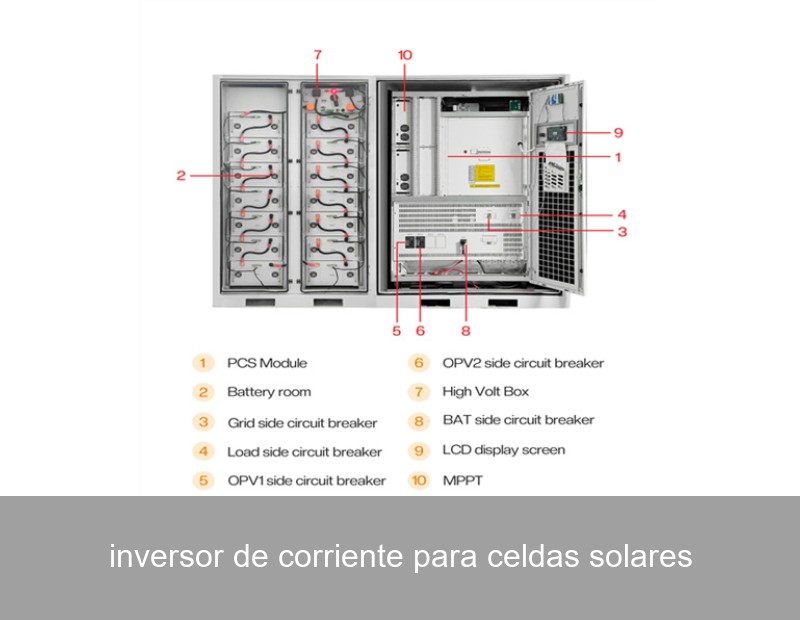
You've seen the solar panels gleaming on rooftops, a symbol of clean, independent energy. But have you ever wondered how the sun's raw DC power becomes the AC electricity that powers your home or business? That critical transformation happens in a box called an inversor de corriente para celdas solares, or solar inverter. It's the unsung hero, the intelligent brain and heart of any photovoltaic (PV) installation. As energy costs fluctuate and grid reliability becomes a growing concern, particularly in Europe and the US, understanding this key component is the first step to unlocking true energy independence and efficiency.
Table of Contents
What is a Solar Inverter and Why Does It Matter?
Simply put, an inversor de corriente para celdas solares converts the direct current (DC) electricity produced by your solar panels into the alternating current (AC) used by your appliances and the grid. But modern inverters do so much more. They are the central command unit, constantly optimizing performance, monitoring system health, and ensuring safety. Think of it this way: the solar panels are the muscles, but the inverter is the brain coordinating every movement.
The efficiency of this conversion is paramount. A high-quality inverter can achieve efficiencies over 98%, meaning almost all the precious solar energy you capture is used. Lower efficiency directly translates to lost power and a longer payback period for your investment. Furthermore, in regions like California or Southern Europe, where solar production can be high, grid stability services provided by advanced inverters are becoming invaluable.
Types of Solar Inverters: Choosing the Right Fit
Not all solar installations are the same, and neither are inverters. The right choice depends on your roof, shading, budget, and goals.
- String Inverters: The most common and cost-effective type. Panels are connected in series ("strings"), and the DC power is funneled to a single inverter. Best for simple, unshaded roofs.
- Microinverters: Small inverters attached to each individual solar panel. They allow each panel to operate independently, maximizing output if some panels are shaded. They also offer panel-level monitoring.
- Power Optimizer Systems: A hybrid approach. DC optimizers at each panel condition the power, which is then sent to a central string inverter. This offers many benefits of microinverters with a different system architecture.
- Battery-Hybrid Inverters: The cornerstone of a solar-plus-storage system. These intelligent devices manage energy flow between solar panels, a battery bank, your home, and the grid. This is where companies like Highjoule excel, providing integrated solutions that turn solar power into reliable, 24/7 energy security.
Beyond the Basics: The Advanced Capabilities of Modern Inverters
Today's premium inversor de corriente para celdas solares is a gateway to smart energy management. For instance, Highjoule's Helios IQ Series inverters are designed with these advanced features:
- Grid Services Support: They can provide frequency regulation and voltage support, helping to stabilize the local grid—a feature increasingly required by utilities in the US and Europe.
- Seamless Backup Power: In the event of a grid outage, they can automatically island your home or business, providing continuous power from solar and batteries.
- Intelligent Energy Routing: Their software algorithms decide the most economical path for every watt: use it now, store it for the evening peak, or sell it back to the grid when rates are highest.

Image Source: Unsplash (Professional installation of a modern inverter system)
Real-World Impact: A Spanish Industrial Case Study
Let's look at data from a real project. A medium-sized food processing plant in Valencia, Spain, faced high daytime energy costs and wanted to reduce its carbon footprint. They installed a 250 kW solar array. Initially, they used a standard string inverter.
The Phenomenon: They still imported a significant amount of grid power during evening operations, and occasional shading from a neighboring structure reduced morning yield.
The Data-Driven Upgrade: The system was retrofitted with a Highjoule Helios IQ Hybrid system, incorporating power optimizers and a 100 kWh battery储能系统. The results after one year:
| Metric | Before Upgrade | After Upgrade |
|---|---|---|
| Solar Self-Consumption | 68% | 94% |
| Grid Energy Import (Peak Hours) | Reduced by 82% | |
| Overall Energy Cost Savings | ~40% | ~78% |
| ROI Period | Projected 7 years | Projected 4.5 years |
The Insight: The right inversor de corriente and system architecture didn't just convert DC to AC; it transformed the business's energy profile. The intelligent inverter enabled load-shifting, peak shaving, and maximized the use of every generated kilowatt-hour, delivering far greater financial and operational resilience than the solar panels alone ever could.
Future Trends: The Inverter as a Grid Manager
The role of the inverter is rapidly evolving from a simple converter to a grid-interactive gateway. With the rise of electric vehicles (EVs) and heat pumps, home energy management is more complex. Future-ready inverters, like those in Highjoule's ecosystem, are designed to communicate with and control EV chargers, smart appliances, and even home heating systems, creating a truly autonomous energy ecosystem. For more on grid modernization, see this resource from the National Renewable Energy Laboratory (NREL).

Image Source: Unsplash (Integrated home energy system with solar, EV, and storage)
Choosing Your Inverter: Key Considerations for Homeowners and Businesses
Selecting the right inversor de corriente para celdas solares is a critical decision. Here are the questions you should ask:
- Is my roof prone to shading? If yes, consider microinverters or power optimizers.
- Do I want backup power or plan to add batteries later? Start with a hybrid inverter from the outset. Highjoule's systems are built with this expandability in mind.
- What are my local grid codes and utility requirements? In many parts of the EU and US, new inverters must have advanced grid-support functions. Ensure your provider's equipment is compliant.
- What monitoring and warranty are offered? Look for a system with intuitive, detailed monitoring (like Highjoule's Energy Insight platform) and a strong warranty (often 10+ years).
Ultimately, your inverter should be a partner in your energy journey for the next two decades. It's worth investing in a platform from a proven provider with a track record of innovation and support. For technical standards, the Institute of Electrical and Electronics Engineers (IEEE) provides extensive frameworks for grid-interactive equipment.
Where Does Highjoule Fit In?
At Highjoule, we don't just sell inverters; we deliver intelligent energy platforms. Since 2005, we've specialized in integrating high-efficiency solar conversion with sophisticated battery storage and energy management software. Whether for a residential home in Texas seeking backup power, a commercial facility in Germany aiming for peak shaving, or an industrial microgrid in Italy, our solutions are built around a core of robust, smart, and future-proof inversor de corriente technology. We ensure every component works in concert to maximize your investment and energy independence.
Given the rapid advancements in inverter technology and energy markets, what specific energy challenge—be it unpredictable utility bills, resilience during outages, or a sustainability target—is most pressing for your home or business right now?
 Inquiry
 Online Chat