


Inverters for Photovoltaics: The Intelligent Heart of Your Solar Power System
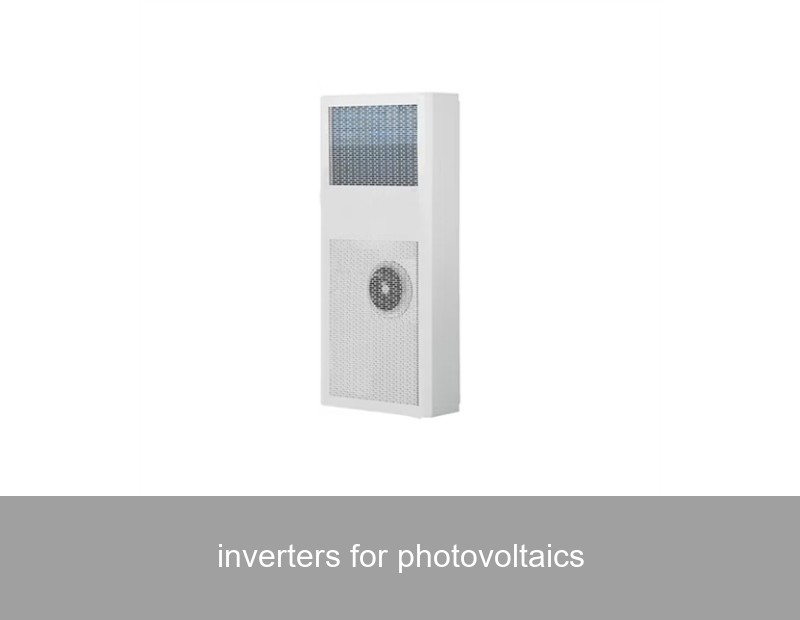
So, you've decided to harness the sun's power. You've researched solar panels, calculated your roof space, and dreamt of energy independence. But there's a crucial component in this equation that often doesn't get the spotlight it deserves: the photovoltaic inverter. Think of your solar array as the muscles, generating raw DC (Direct Current) power. The inverter is the brain and the heart, converting that DC into the AC (Alternating Current) your home or business appliances crave, while constantly optimizing performance and safety. Choosing the right inverter isn't just a technical detail; it's the decision that determines the efficiency, reliability, and intelligence of your entire solar investment.
More Than Just Conversion: A Look at Inverter Types
Gone are the days of one-size-fits-all inverters. Today's market offers solutions tailored to different needs and challenges, particularly shading and complex roof designs. Let's break down the main types:
- String Inverters: The traditional and cost-effective workhorse. Multiple panels are connected in a "string" to a single inverter. They are reliable but have a key limitation: if one panel is shaded or underperforming, it can drag down the output of the entire string.
- Microinverters: These are small units attached to each individual solar panel. This architecture allows each panel to operate independently, maximizing harvest even if part of the roof is shaded. They offer excellent panel-level monitoring but can have a higher upfront cost.
- Power Optimizers (DC Optimizers): A hybrid solution. Like microinverters, an optimizer is installed on each panel, conditioning the DC power and mitigating shading issues. However, they send optimized DC power to a central string inverter for conversion. This often offers a balance of performance and cost.
| Type | Best For | Key Advantage | Consideration |
|---|---|---|---|
| String Inverter | Unshaded, uniform roof planes; large-scale commercial arrays. | Proven reliability, lower cost per watt. | Performance limited by lowest-performing panel in a string. |
| Microinverter | Roofs with shading, multiple angles, or complex designs. | Panel-level maximization, enhanced safety (low voltage DC at roof), detailed monitoring. | Higher initial investment; components distributed on the roof. |
| Power Optimizer System | Shaded conditions where central inverter benefits are desired. | Panel-level optimization with central conversion, often strong warranty. | Still relies on a central inverter unit. |
Choosing the Right Inverter: Key Considerations for Homeowners and Businesses
Selecting an inverter goes beyond just type. Here’s what you should discuss with your installer:
- Efficiency: Look for peak and weighted efficiency (like European or CEC efficiency). A few percentage points translate to significant energy over 25 years.
- Monitoring and Connectivity: Can you track your system's performance in real-time on your phone? Smart monitoring helps detect issues early and understand your energy habits.
- Grid Services and Future-Proofing: Advanced inverters can provide grid support functions like frequency regulation. More importantly, ensure your inverter is compatible with battery storage if you plan to add it later. This is where the game truly changes.
The Critical Link: Inverters and Battery Storage
This is the most significant evolution. A modern, storage-ready inverter, or a hybrid inverter, is designed from the ground up to seamlessly integrate a battery. It doesn't just manage solar production; it becomes the conductor of your personal energy orchestra—deciding when to store solar energy, when to power your home from the battery, and when to draw from or export to the grid, all based on time-of-use rates and your consumption patterns.
Case Study: A Real-World Impact on a German Dairy Farm
Let's move from theory to practice. A medium-sized dairy farm in Bavaria, Germany, faced high and volatile energy costs for cooling milk and powering operations. Their existing 50 kW rooftop solar system used standard string inverters, but shading from a silo and an uneven roof layout caused significant losses. More critically, they operated most heavily in the early morning and evening when solar production was low.
The solution wasn't just more panels. Highjoule's system design included a retrofit with advanced power optimizers on the shaded sections to recover over 15% of lost yield. The core upgrade was the installation of Highjoule's H-Energy Hub, a hybrid inverter system, coupled with a 40 kWh lithium-ion battery storage unit.

The results, monitored over one year, were compelling:
- Self-Consumption Rate Increased: From 35% to 82%.
- Grid Energy Costs Reduced: By approximately €8,400 annually.
- ROI Period: The integrated system is projected to pay for itself in under 7 years.
- Resilience: The farm now maintains critical cooling operations during short grid outages.
The intelligent inverter was the key. It didn't just convert power; it made continuous, split-second decisions to maximize the farm's own renewable energy use, turning the solar array from a partial solution into a comprehensive energy asset. Data on grid services and battery performance can be explored through resources like the U.S. Department of Energy and the International Energy Agency (IEA).
Beyond the Basics: The Highjoule Approach to Intelligent Power
At Highjoule, we view the inverter not as a commodity, but as the central nervous system of a modern energy asset. Our products, like the H-Energy Hub for residential and commercial applications, are built on this philosophy. They are more than just highly efficient inverters; they are integrated energy managers.
Our systems are designed for the realities of the European and North American markets, featuring robust grid-compliance for functions like voltage and frequency support. For businesses, this intelligence translates to tangible value. Imagine your inverter automatically shifting your energy use patterns to avoid peak demand charges—a major cost for industrials—or participating in grid flexibility programs for additional revenue.

For homeowners, the Highjoule experience is about simplicity, resilience, and control. Our user-friendly app provides clear insights, while our hardware's built-in intelligence ensures you automatically get the most economic and sustainable value from every kilowatt-hour your panels produce, whether it's used immediately, stored, or exported under the most favorable conditions.
The Future is Intelligent and Integrated
The trajectory is clear. The future of solar energy lies not in isolated components, but in fully integrated, smart systems. The inverter is evolving into a sophisticated energy platform that orchestrates solar, storage, electric vehicle charging, and even home appliances. This isn't just about technology for technology's sake; it's about creating energy systems that are truly resilient, cost-optimizing, and supportive of a decarbonized grid.
So, as you plan your solar journey, we leave you with this question: Are you looking for a simple DC-to-AC converter, or are you ready to install the intelligent heart of your future energy ecosystem?
 Inquiry
 Online Chat