


Understanding Your Inversor de Placas Solares: The Brain of Your Solar Power System
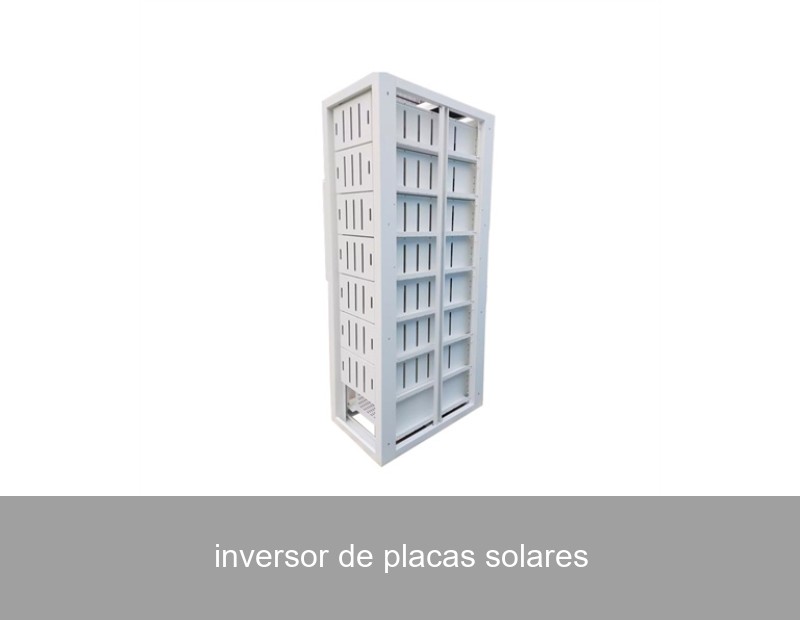
So, you've made the smart decision to go solar. You see the panels on your roof, silently harvesting the sun's energy. But have you ever wondered how that raw sunlight becomes the clean electricity that powers your home or business? The true hero of this story, the indispensable component that makes it all usable, is the inversor de placas solares, or solar inverter. Think of it as the brain and heart of your entire photovoltaic (PV) system. It's not just a box on the wall; it's the sophisticated piece of technology that determines the efficiency, reliability, and intelligence of your solar investment. In this guide, we'll demystify the solar inverter, explore why choosing the right one is critical, and look at how advanced solutions from companies like Highjoule are shaping the future of solar energy.
Table of Contents
- What Exactly is a Solar Inverter?
- The Main Types of Solar Inverters
- Beyond Conversion: Key Features of Modern Inverters
- Case Study: Maximizing Solar ROI in a Spanish Commercial Setting
- How to Choose the Right Inversor de Placas Solares for You
- Highjoule's Integrated Approach: Inverters as Part of a Smarter System
What Exactly is a Solar Inverter?
In simple terms, a solar inverter's primary job is to convert the direct current (DC) electricity produced by your solar panels into the alternating current (AC) electricity that powers everything in your home or business and is compatible with the public grid. But that's just the starting point. A modern inversor de placas solares is a multi-talented device. It performs maximum power point tracking (MPPT) to ensure your panels operate at their peak efficiency throughout the day, regardless of shading or temperature changes. It manages the flow of energy between your PV system, your property, and the grid. And in many cases, it provides critical safety functions, like automatic shutdown in case of a grid outage (anti-islanding protection).
The Main Types of Solar Inverters
Choosing the right type of inverter is a foundational decision for your system's performance. Here are the three most common configurations:
- String Inverters: The most traditional and cost-effective option for standard installations. All panels are connected in a series "string," and a single inverter converts the DC power for the entire array. Their performance can be impacted if one panel is shaded or underperforming.
- Microinverters: These are small inverters attached to each individual solar panel. They allow each panel to operate independently, maximizing output even if others are shaded. They offer excellent panel-level monitoring and often come with longer warranties.
- Power Optimizer Systems (DC Optimizers): A hybrid solution. A power optimizer is installed at each panel (like a microinverter), but it conditions the DC power before sending it to a central string inverter. This combines panel-level optimization and monitoring with the simplicity of a central inverter.
| Type | Best For | Key Advantage | Consideration |
|---|---|---|---|
| String Inverter | Unshaded, uniform roofs; cost-conscious projects | Lower upfront cost, proven technology | Performance limited by lowest-performing panel |
| Microinverter | Complex roofs with shading, desire for panel-level data | Maximum energy harvest, design flexibility, enhanced safety | Higher initial cost per watt |
| Power Optimizer | Rooms for future expansion, moderate shading issues | Panel-level optimization with central inverter efficiency | Slightly more complex system than string alone |
Beyond Conversion: Key Features of Modern Inverters
Today's top-tier inversor de placas solares offers much more than just DC-to-AC conversion. When evaluating options, look for these capabilities:
- Advanced Monitoring & Connectivity: Cloud-based platforms and user-friendly apps that show you real-time energy production, system health, and historical data. This isn't just for curiosity—it's essential for diagnosing issues and verifying performance.
- Grid Services & Compatibility: As grids modernize, inverters can provide stability services like voltage and frequency regulation. Ensuring your inverter is compliant with local grid codes (like UL 1741 SA in the US or specific EN norms in Europe) is non-negotiable.
- Battery Readiness & Hybrid Functionality: This is where the future lies. A hybrid or battery-ready inverter can seamlessly integrate a battery storage system, allowing you to store excess solar energy for use at night or during a power outage, maximizing self-consumption.

Image: A modern hybrid inverter, the core of an intelligent energy system. Source: Unsplash
Case Study: Maximizing Solar ROI in a Spanish Commercial Setting
Let's look at a real-world example from southern Europe. A medium-sized winery in Andalusia, Spain, installed a 100 kWp solar array on its warehouse roof in 2020. The initial system used a standard string inverter. While it provided savings, the winery's energy manager noticed a significant dip in afternoon production due to partial shading from a neighboring structure.
The Data-Driven Decision: In 2023, they partnered with Highjoule to retrofit the system. We replaced the old inverter with our Highjoule H-I Series Hybrid Inverters coupled with DC power optimizers on every panel. The optimizers mitigated the shading losses at the panel level, while the hybrid inverter prepared them for future battery storage.
The Result: The system's overall energy yield increased by 18% in the first year post-upgrade. Furthermore, the granular monitoring data pinpointed underperforming modules for proactive maintenance. The hybrid capability allowed them to seamlessly add a 50 kWh Highjoule battery bank six months later, reducing their grid consumption during expensive peak tariff periods by an additional 40%. This two-phase project, centered on a smarter inversor de placas solares, transformed their solar installation from a simple cost-saver into a strategic energy asset that delivers resilience and significant financial optimization.
How to Choose the Right Inversor de Placas Solares for You
Your choice depends on your unique situation. Ask yourself and your installer these questions:
- What is my roof like? (Shading, multiple angles, future expansion plans?)
- What are my primary goals? (Maximize savings now, ensure backup power, future-proof for an EV charger?)
- What is the local climate and grid policy? (Are there incentives for storage or requirements for grid interaction?)
Always work with a certified installer who can model different inverter options for your specific site. Reputable sources like the U.S. Department of Energy or the European Commission's PVGIS tool offer excellent, unbiased starting points for your research.
Highjoule's Integrated Approach: Inverters as Part of a Smarter System
At Highjoule, we view the inverter not as a standalone component, but as the command center of an integrated energy ecosystem. Our H-I Series Hybrid Inverters are engineered for intelligence and resilience. They are natively designed to work with Highjoule's modular battery storage systems, creating a unified platform for solar generation, storage, and consumption management.
For commercial and industrial applications, our Highjoule C&I Energy Management Platform takes this further. It uses the data from multiple inverters and meters across a site to execute automated, cost-saving strategies—like peak shaving and load shifting—without compromising operations. This means your inversor de placas solares becomes an active player in your business's financial and sustainability strategy, not just a piece of hardware.

Image: Utility-scale solar farm with centralized inverter stations. Source: Unsplash
Whether for a residential home in California, a factory in Germany, or a microgrid in a remote community, our technology ensures that every kilowatt-hour of solar energy is harvested, managed, and utilized with maximum efficiency and intelligence.
Ready to Transform Your Solar Investment?
The journey to optimal solar energy doesn't end with panel installation. The right inverter technology is the key to unlocking its full potential. What energy challenge—be it rising costs, reliability concerns, or sustainability goals—could a smarter inversor de placas solares system solve for you?
 Inquiry
 Online Chat