


Junma Solar Power Station: A Blueprint for Modern Renewable Energy Success
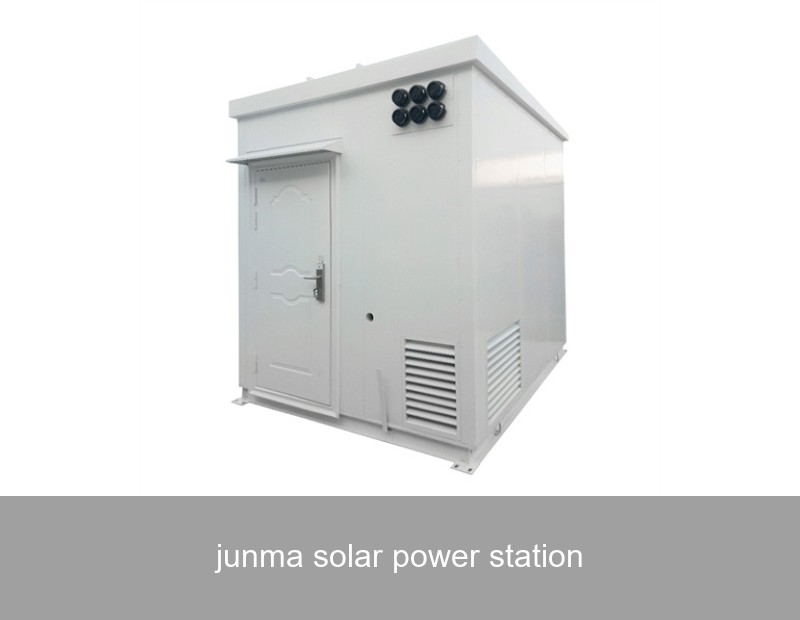
Have you ever wondered what makes a solar power station not just good, but truly exceptional? The answer lies beyond the sea of photovoltaic panels. It's in the intelligent system that ensures every kilowatt-hour generated is captured, stored, and utilized with maximum efficiency. This is where the story of the Junma Solar Power Station becomes a fascinating case study. As solar projects like Junma scale up globally, a critical challenge emerges: how to manage intermittent generation and deliver reliable, 24/7 power. The solution, increasingly, is advanced energy storage.
Table of Contents
The Phenomenon: Beyond Peak Sun Hours
Imagine a solar power station at noon—operating at full capacity, flooding the grid with clean energy. Now, picture that same station at 8 PM, or on a cloudy morning. This intermittency is the fundamental hurdle for renewable energy. Facilities like the Junma Solar Power Station represent a significant leap in scale, but their true value and grid stability depend on solving this mismatch between production and demand. The industry's focus is shifting from mere generation to holistic energy management, ensuring solar power is a dependable cornerstone of our energy mix, not just a fair-weather friend.

Credit: Unsplash / American Public Power Association. Solar farms need solutions for when the sun isn't shining.
The Data: Why Storage is Non-Negotiable
The numbers paint a clear picture. According to the International Energy Agency (IEA), global grid-scale battery storage capacity needs to expand 35-fold between 2022 and 2030 to meet climate targets. In markets like California and Germany, where renewable penetration is high, "duck curves"—where net demand plummets during the day and spikes in the evening—are becoming steeper, creating operational challenges for grid operators.
Let's break down the key value propositions a Battery Energy Storage System (BESS) brings to a solar asset like Junma:
| Challenge | Storage Solution | Direct Benefit |
|---|---|---|
| Intermittent Generation | Time-Shifting Energy | Deliver power during high-price evening peaks, not midday lows. |
| Grid Congestion & Curtailment | Localized Energy Buffering | Store excess energy that would be turned off, reducing revenue loss. |
| Grid Frequency Instability | Fast Frequency Response | Provide millisecond-level grid services for stability and additional revenue streams. |
| Backup Power Requirements | Resilient Energy Reserve | Ensure critical operations continue during grid outages. |
The Case Study: Junma Solar Power Station's Operational Evolution
While specific operational data from Junma is proprietary, we can examine a comparable real-world project to understand the transformative impact of adding storage. Consider the Slate Project in California, USA. Originally a 300 MW solar-only farm, it was retrofitted with a 140.25 MW / 561 MWh battery storage system using LG Chem batteries and Tesla Megapack technology.
The results, as reported in industry analyses, were significant:
- Revenue Optimization: The system stores low-cost solar energy produced midday and discharges it during the 4-9 PM peak period when California's electricity prices are often 200-300% higher.
- Curtailment Mitigation: The BESS drastically reduced the need to "turn off" solar generation during periods of grid oversupply, capturing revenue that would have been lost.
- Grid Services: Beyond energy arbitrage, the project provides essential grid services like voltage support and frequency regulation, creating a diversified income portfolio.
This mirrors the potential evolution for a facility like the Junma Solar Power Station. Integrating a similarly scalable and intelligent BESS would transform it from a daytime generator into a 24/7 dispatchable asset, enhancing its financial resilience and grid value.
The Insight: Intelligence is the New Infrastructure
The hardware—solar panels and battery racks—is only half the story. The true differentiator in modern projects is the software and system intelligence. An advanced BESS isn't just a container for energy; it's a predictive, adaptive asset that makes millions of data-driven decisions to maximize return on investment.
This is precisely where a company like Highjoule excels. With nearly two decades of experience since 2005, we don't just provide battery storage; we deliver integrated, intelligent energy platforms. For a solar power station operator looking to emulate the success of projects like Slate or to future-proof a new build like Junma, Highjoule's solutions offer:
- Highjoule HPS (Hybrid Power System): A fully integrated DC-coupled solution for new solar+storage projects. It maximizes efficiency by reducing conversion losses, allowing the Junma Solar Power Station to charge batteries directly with DC power from the solar arrays. Our AI-driven energy management system (EMS) forecasts weather, grid demand, and electricity prices to optimize every charge-discharge cycle.
- Highjoule C&I ESS: For commercial and industrial applications within or near solar plants, this modular system ensures critical infrastructure (like control centers or maintenance facilities) have backup power and can participate in demand charge management.
- Grid-Scale BESS Platform: Our containerized, utility-scale solutions are designed for durability and safety. They feature active liquid cooling for optimal battery lifespan and are equipped with our proprietary FleetOS platform for remote monitoring, performance analytics, and automated participation in grid service markets.

Credit: Unsplash / ThisisEngineering. Intelligent control systems are key to maximizing storage value.
Think of it this way: pairing a solar farm with a basic battery is like giving a smartphone to someone with no apps. Highjoule provides the operating system and the sophisticated applications—the arbitrage algorithms, the grid service interfaces, the predictive analytics—that unlock the full potential of the hardware investment.
The Future: Your Next Strategic Move
The journey of the Junma Solar Power Station from a generation asset to a comprehensive energy solution is a path many project developers are now navigating. The integration of storage is no longer a "nice-to-have" but a critical component for economic viability and grid support, as underscored by the latest NREL research on storage costs and benefits.
What Does This Mean for You?
Whether you are planning a new solar-plus-storage project, retrofitting an existing asset like Junma, or managing a portfolio of renewable generation, the question is not *if* you need storage, but *how* to implement it most effectively.
What specific grid challenges or market opportunities in your region—be it frequency regulation in the UK, capacity markets in Germany, or resilience against extreme weather in the US—could an intelligent storage platform turn into your most reliable revenue stream? We invite you to explore how Highjoule's tailored solutions can be the key to answering that question.
 Inquiry
 Online Chat