


Kit Solar 3500W: How Much Does a Complete System Really Cost?
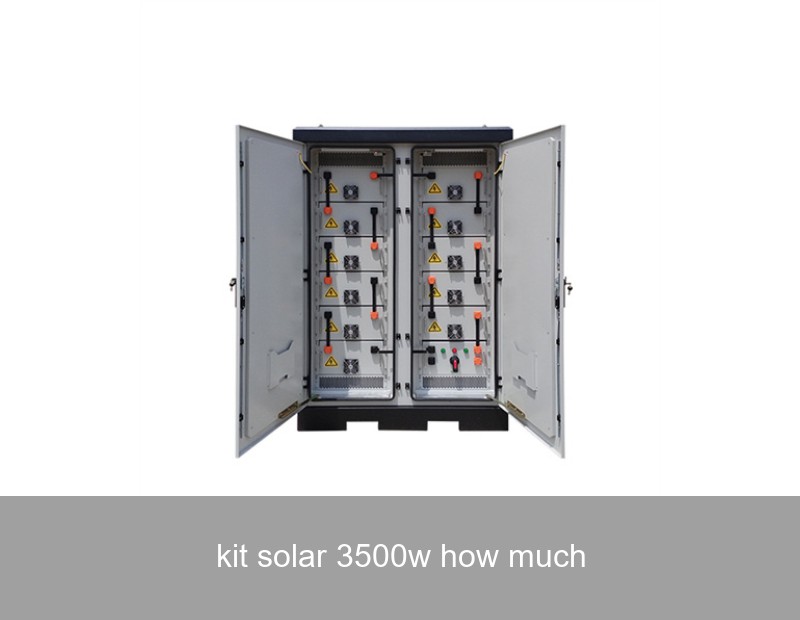
So, you're considering a 3500W solar kit. It's a popular choice for powering a substantial part of a modern home or a small business. The first question that comes to mind is, of course, "kit solar 3500w how much"? A quick online search might show a tempting price tag for the hardware alone. But here's the reality seasoned energy professionals know: the true cost of solar is about creating a reliable, efficient, and long-lasting power system, not just buying a box of components. The upfront price of the panels and inverter is just the beginning. Let's unpack what truly goes into the investment of a robust 3500W solar power system.
Table of Contents
Beyond the Box: A Realistic Price Breakdown
Let's start with the components. A typical 3500W (3.5kW) kit includes solar panels, a string inverter, mounting hardware, and cabling. As of 2024, you can expect the following rough market estimates for the hardware in Europe and the US:
| Component | Estimated Cost Range (USD/EUR) | Notes |
|---|---|---|
| 3500W Solar Panels (e.g., 8 x 440W) | $1,800 - $3,000 | Varies by panel efficiency (mono PERC, bifacial) and brand tier. |
| String Inverter (3.5-4kW) | $800 - $1,500 | Central inverter for the entire array. Microinverters would increase cost significantly. |
| Racking/Mounting System | $400 - $800 | Depends on roof type (tiled, metal, flat). |
| DC/AC Cables & Connectors | $200 - $400 | Often underestimated; quality here is crucial for safety. |
| Hardware Subtotal | $3,200 - $5,700 | |
| Professional Installation & Labour | $1,500 - $3,500 | The single largest variable. Includes electrical work, permits, and grid connection. |
| Permits & Grid Connection Fees | $200 - $1,000 | Highly region-dependent. Some utilities charge for interconnection studies. |
| Estimated Total Installed Cost | $4,900 - $10,200 | A realistic "all-in" range for a quality 3.5kW system. |
This table illustrates why the "kit solar 3500w how much" question has a layered answer. The hardware is often only 50-65% of the final cost. But the financial analysis shouldn't stop at installation.

Image Source: Unsplash - Professional installation ensures safety and performance, a critical part of your total investment.
The Hidden Cost Factors You Must Consider
Now, let's talk about the often-overlooked factors that impact your total cost of ownership:
- System Design & Engineering: A cookie-cutter kit might not be optimal for your specific roof shading, orientation, or local weather. Poor design can lead to 10-25% energy production loss, effectively increasing your cost per generated kWh.
- Inverter Lifespan vs. Panel Lifespan: High-quality solar panels can last 30+ years. Most string inverters, however, have a typical lifespan of 10-15 years. Have you factored in the replacement cost of an inverter (or two) over the life of your system?
- The Storage Question: A 3500W kit without batteries exports surplus energy to the grid, often at a low feed-in tariff. With rising electricity prices and grid modernization efforts, the value of self-consumption is soaring. Adding storage later can be costly due to additional labour and potential incompatibility.
- Performance Monitoring & Maintenance: Basic monitoring might be included, but advanced diagnostics, firmware updates, and proactive maintenance plans are what keep a system at peak performance for decades.
From Cost to Value: The Smart System Approach
The most advanced energy consumers are shifting their thinking from minimizing upfront cost to maximizing long-term value. This means evaluating:
- Energy Resilience: Can the system provide power during an outage? (Most basic grid-tied kits cannot).
- Financial Optimisation: Can it intelligently decide when to store energy, use it, or sell it based on real-time tariffs?
- Future-Proofing: Is the system modular to allow for easy expansion of panels or battery capacity?
This is where the integrated system approach from companies like Highjoule fundamentally changes the equation. Instead of piecing together a kit from disparate manufacturers, an engineered solution is designed to work seamlessly as one intelligent unit.
Real-World Insight: A German Household's Journey to Energy Independence
Consider the Müller family in Bavaria. In 2022, they initially priced a standard 3.8kW solar kit at around €7,200 installed. However, after a detailed analysis of their consumption patterns (available from sources like the Fraunhofer ISE), they realized over 60% of their solar generation would be exported to the grid during the day, only to buy expensive power back in the evening. The effective payback period was over 9 years.
They opted for an integrated solar-plus-storage system from the outset. The total installed cost rose to €14,500. But the outcome was transformative: their self-consumption rate jumped to 85%, drastically slashing their energy bills. More importantly, during a regional grid disturbance in winter 2023, their home remained powered. Their calculated payback period, considering rising energy costs, dropped to under 7 years. The value of resilience and predictability far outweighed the higher initial investment.
Highjoule's Integrated Answer: The Harmony ESS 3.6
For homeowners and businesses asking "kit solar 3500w how much", Highjoule offers a more intelligent and valuable proposition. Our Harmony ESS 3.6 is not just a kit; it's a pre-engineered energy storage system designed for seamless integration with solar arrays in the 3-5kW range.
Think of it as the brain and heart of your power system. It includes a hybrid inverter (handling both solar and battery), a modular lithium iron phosphate (LiFePO4) battery bank starting at 5.8kWh, and our proprietary EnergyOS management software. The system is designed for:
- Plug-and-Play Installation: Reducing on-site labour costs and complexity by up to 30% compared to component-based systems.
- Uninterruptible Power Supply (UPS): Providing sub-20ms switchover to keep critical loads running during blackouts—a feature absent in standard kits.
- Intelligent Energy Arbitrage: The system learns your habits and local utility rates, automatically optimizing when to charge, discharge, or export.
- Effortless Scalability: Need more storage? Simply add additional battery modules without replacing the core inverter.
While the initial investment for a Harmony ESS 3.6 with solar may be higher than a basic 3500W kit, the total cost of ownership over 20+ years is often lower, and the value delivered in control, resilience, and efficiency is incomparable. You're investing in a holistic energy solution, not just purchasing components.

Image Source: Unsplash - Modern, integrated energy systems provide a compact and intelligent hub for home power management.
Is Your 3500W Solar Kit Truly Future-Ready?
The energy landscape is evolving rapidly. With electric vehicle adoption, dynamic electricity pricing, and increasing climate volatility, your home's energy system needs to be adaptive. A basic kit locks you into a static setup. Before you fixate on the lowest upfront price for a "kit solar 3500w", ask yourself these broader questions: How will my energy needs change in the next 5 years? What is the real cost to me of a power outage? And how can my investment today position me to benefit from the smart grid of tomorrow?
We invite you to explore what an integrated, Highjoule-powered energy independence plan looks like for your specific home and goals. What's the one appliance or system in your home that you simply cannot afford to lose power to?
 Inquiry
 Online Chat