


Indonesia Solar: How Much Does It Cost and Is It Worth It?
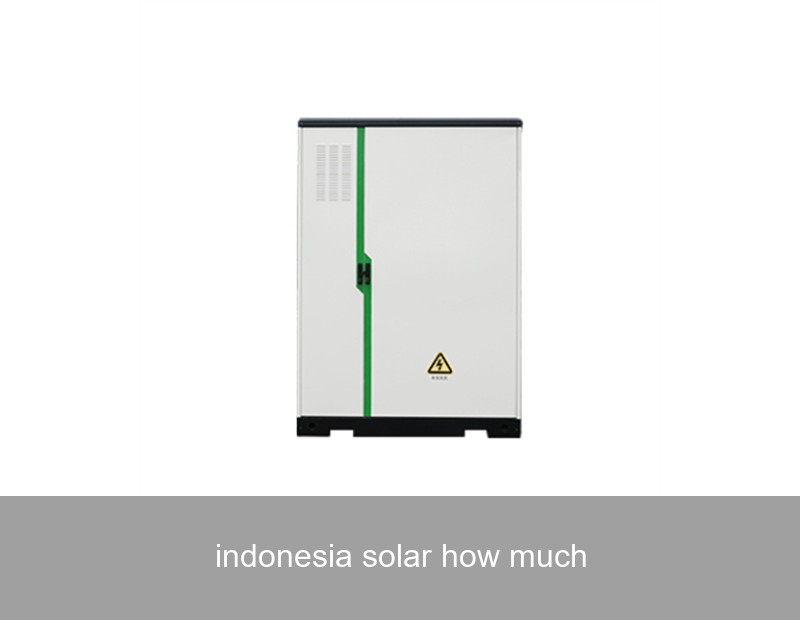
If you're a homeowner or business leader in Indonesia looking at the sun-drenched skies and wondering about solar power, you're asking the right question: Indonesia solar, how much? It's more than just a price tag for panels. It's about understanding the investment, the long-term savings, and the technology that makes it reliable. With abundant sunshine but also unique challenges like humidity and intermittent grid power, a solar solution needs to be smart, durable, and integrated. This article breaks down the costs, showcases real-world results, and explores how modern energy storage is turning solar from a simple supplement into a transformative power source.
Table of Contents
- The Real Cost Breakdown: Beyond the Price per Watt
- Why Storage is Non-Negotiable for True Value
- Case Study: A Jakarta Manufacturing Facility's Journey to Energy Independence
- The Highjoule Solution: Intelligent Systems for the Indonesian Climate
- Key Factors Influencing Your Solar ROI in Indonesia
- Is Your Roof Ready for a Smarter Energy Future?
The Real Cost Breakdown: Beyond the Price per Watt
Asking "how much" for solar in Indonesia typically yields a range of **$800 to $1,400 USD per kilowatt (kW) installed** for a standard rooftop system. But this figure is just the entry point. The total investment is shaped by several components:
- Equipment Quality: Tier-1 monocrystalline panels with high efficiency (21%+) command a premium but produce more power in limited space and degrade slower in tropical heat.
- System Size: A typical 5kW residential system will have a different total cost and cost-per-watt than a 500kW commercial installation.
- Balance of System (BOS): This includes inverters, mounting structures (which must withstand high humidity), wiring, and safety equipment.
- The Critical Add-On: Battery Energy Storage System (BESS). This is where the equation changes fundamentally. Adding storage increases upfront cost but massively boosts value, which we'll explore next.
According to the International Energy Agency (IEA), solar PV costs have fallen globally, but system integration is key in emerging markets. The levelized cost of electricity (LCOE) from solar in Southeast Asia is now highly competitive, especially when paired with storage to manage intermittency.

Image: Commercial solar installation in a tropical climate. Source: Unsplash
Why Storage is Non-Negotiable for True Value
Imagine a solar system without a battery. When the sun shines, you power your home or factory and maybe export excess to the grid (if net metering is available). But when clouds roll in or at night, you're back to buying expensive grid power. In regions with frequent grid instability, you're left in the dark.
A Battery Energy Storage System (BESS) changes this dynamic entirely. It captures surplus solar energy for use anytime, effectively:
- Maximizing Self-Consumption: Use more of your own cheap, clean solar power, reducing grid purchases by up to 80% or more.
- Providing Backup Power: Seamlessly power critical loads during grid outages, a valuable feature for businesses and households alike.
- Stabilizing the Grid: For larger systems, advanced storage can provide grid services.
So, when calculating "Indonesia solar, how much?", you must ask: "How much for a system that delivers reliable, 24/7 power?" The answer involves an integrated solar-plus-storage solution.
Case Study: A Jakarta Manufacturing Facility's Journey to Energy Independence
Let's look at real data. A medium-sized textile factory in Jakarta faced two problems: rising electricity tariffs from the grid (reaching up to $0.14/kWh) and disruptive power dips affecting sensitive machinery.
| Component | Specification |
|---|---|
| Solar PV Capacity | 750 kWp rooftop system |
| Battery Storage | 500 kWh integrated lithium-ion BESS |
| Key Goal | Reduce demand charges, ensure power quality, backup for critical lines |
| Result (12 Months Post-Install) | Grid electricity consumption reduced by 65%. Annual energy cost savings: $85,000 USD. Payback period estimated at under 7 years. Zero production downtime due to grid outages. |
This case, documented in part by the Asian Development Bank's reports on clean energy uptake, illustrates the transformative financial and operational ROI of a properly sized solar-plus-storage system in Indonesia's industrial sector.
The Highjoule Solution: Intelligent Systems for the Indonesian Climate
This is where Highjoule's expertise becomes critical. Not all storage systems are built for Indonesia's demanding environment. High-temperature, high-humidity conditions require robust engineering and intelligent thermal management to ensure battery longevity and safety.
Highjoule, as a global leader in advanced energy storage since 2005, provides all-in-one, containerized BESS solutions and modular residential/commercial units that are perfectly suited for this market. Our systems feature:
- Climate-Adaptive Design: Built-in cooling and humidity control to maintain optimal performance and cycle life in tropical conditions.
- Advanced Battery Management System (BMS): Ensures each cell operates safely and efficiently, maximizing the system's lifespan.
- Grid-Forming Inverter Technology: Allows the system to create a stable "mini-grid" during blackouts, a feature beyond simple backup.
- Smart Energy Management Software: Users can monitor, control, and optimize their energy flow—solar charging, battery usage, grid interaction—from a simple smartphone app, ensuring they get the maximum financial return.
For an Indonesian business or community, choosing Highjoule means investing in a complete, intelligent power solution, not just a battery box. We handle the complex integration, so you reap the benefits of reliable, low-cost solar energy day and night.

Image: Inside a modern containerized Battery Energy Storage System (BESS). Source: Unsplash
Key Factors Influencing Your Solar ROI in Indonesia
To accurately estimate your "how much," consider these variables:
- Location & Solar Irradiance: Bali and Java have different sunshine hours. A detailed site assessment is crucial.
- Current Electricity Tariff: The higher your grid rate, the faster solar pays for itself.
- Energy Consumption Pattern: Do you use most power during the day (good for solar-only) or evening (requires storage)?
- Regulatory Environment: Keep abreast of PLN's regulations regarding rooftop solar (PLTS Atap) and any available incentives.
- Technology Partner: The quality and intelligence of your storage system, like Highjoule's offerings, directly impact long-term performance and savings.
Is Your Roof Ready for a Smarter Energy Future?
The question "Indonesia solar, how much?" ultimately leads to a more profound one: How much value do you place on energy independence, predictable costs, and operational resilience? The initial investment is a gateway to decades of low-cost, clean power and a hedge against rising utility prices.
With partners like Highjoule providing climate-resilient, smart storage technology, the path to a sustainable energy future is clearer than ever. What would a 60% reduction in your monthly power bill and immunity from blackouts do for your home or business goals?
 Inquiry
 Online Chat